
第八章
11 March 2011 09:20
The Westminster Chimes that played over the school’s aged but functional internal tannoy system let the teachers and students know that the first lesson of the day had finished. I closed my maths textbook and slid it, together with my notebook, into the metallic tray that was fixed onto the underside of my desk.
The next lesson was English, something that slightly older children in Ōfunato had not studied until they were in junior high school but I remember the Kōchō-sensei, the headmaster, talking with us in assembly about how the government had decided that they wanted to roll out foreign language education to all students once they entered elementary school.
I had been quite nervous about studying English even though Okāsan helped me to get a head start by ordering a language course that we followed together on DVD. However, once I started lessons at school I really began to enjoy it.
Last summer, an American called Dwain had moved to Ōfunato and was employed by the local education board to work as an assistant language teacher who taught alongside Kinoshita-sensei. Dwain was still pretty young – he told us that he was twenty-one – and appeared keen on having lots of fun when we were studying so the lessons seemed to pass more quickly than they did for some of the other subjects.
The door towards the front of the class slid open and Dwain bounded in looking far too casual for a teacher as although he wore a shirt, it had not been ironed and was accompanied by a pair of equally creased chino trousers. His feet were jammed into some green slippers that the school provided for guests but which Dwain had taken, or perhaps misunderstood, to be his own. Nobody had the heart to tell him that he should have brought some indoor shoes to wear, especially as he seemed delighted whenever we approached him pointing at his slippers saying too small, too small!
‘Good morning, class,’ he said in an accent just the same as the ones I hear when watching American films on the television. ‘How are you?’
‘I’m fine, thank you. And you?’ I replied, chanting alongside all of my classmates.
‘I’m fine, too, thank you,’ Dwain said.
Stuck in the front cover of our English notebooks, we all had a print-out that had drawings of lots of different facial expressions with a corresponding response to the How are you? question. However, people inevitably resorted to the stock reply of I’m fine, thank you and Dwain had long since given up trying to get a varied answer out of us. Even on the occasions when he tried a one-on-one conversation with each student going up and down the rows of desks, most of us would be Fine, thank you, with the exception of Hiroshi who was always Very tired, thank you.
‘Today, children, let’s talk about our favourite food!’ Dwain then announced, expecting us to understand what he was saying. We responded with confused looks.
‘Today, children, let’s talk about our favourite food!’ he repeated doing an exaggerated mime holding something with both hands and shovelling it into his mouth.
Again, more confused looks. Kinoshita-sensei stepped in to rescue the class, and probably Dwain as well.
‘Kyo, ichiban suki na tabemono ni tsuite hanashimashō!’
‘What’s tabemono in English?’ Kinoshita-sensei then asked.
Foo-do, foo-do, a handful of students shouted excitedly to show just how much English they had learnt in the last few years.
‘Yes, that’s right,’ said Dwain. ‘My favourite food is hot dogs,’ he added and at the same time pulled a picture of a hotdog off the teacher’s desk and held it up in front of the class.
‘My favourite food is hotdogs,’ he repeated rubbing his stomach. ‘Yummy!’
This made me giggle and Dwain looked across and smiled.
Kinoshita-sensei wrote up the key sentence on the board in English and then added the katakana phonetic script above each word so that everyone could have a go at the sentence even if they couldn’t remember how to pronounce the words from Dwain’s example.
We spent the next ten minutes or so, asking Dwain how to say all of our favourite foods in English. I suspected that he could speak more Japanese than he let on as in most cases he was able to answer our questions. However, I never heard him speak any Japanese in our lessons but perhaps that was his way of making us learn.
‘Karaage, in English please.’
‘Japanese-style fried chicken.’
‘Hambāgu, in English please.’
‘Hamburger.’
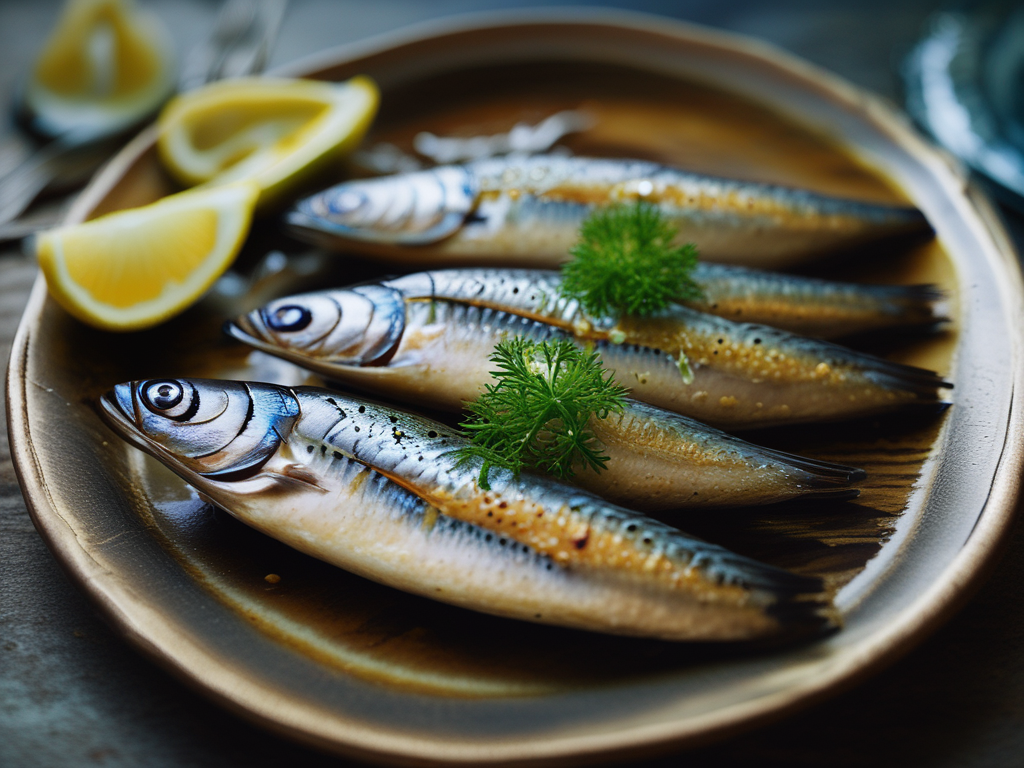
‘Saba, in English please,’ I asked as Dwain walked past my desk.
‘Err, I’m not sure Kimiko. Let me go and ask Kinoshita-sensei.’
I watched as he and Kinoshita-sensei communicated with each other using hand gestures and scribbles on a piece of paper before Dwain resorted to getting his Japanese-English dictionary out of his bag. After thumbing through the pages, he put the dictionary back and walked over to my desk with a pleased look on his face.
‘In English, we say mackerel.’
‘My favourite food is mackerel,’ I replied back.
‘That’s great!’ Dwain praised me and patted me on the shoulder. ‘Good job, Kimiko!’
I was very pleased with myself and tried to commit this latest sentence to memory to test out on Okāsan later.
Dwain went around the class listening attentively to every one of my classmates’ sentences. The one response that raised a laugh was Haruka’s whose favourite food was Noguchi Katsu a pork cutlet that was stuffed with cabbage, spring onion and shiitake mushrooms as served at the locally famous Noguchi restaurant.
‘I wanted to ask but we ran out of time,’ Haruka said with a frown, stamping her foot lightly on the ground under her desk.
‘OK, everyone. Please settle down,’ Kinoshita-sensei said, bringing the class back under control.
‘Thank you very much for your lesson today Mr. Dwain,’ he then said in English.
‘You’re welcome,’ Dwain replied. ‘And thank you class. Good job!’
He gave us a goofy smile and a thumbs up with both hands as he left the classroom.
As if on cue, the melody rang out again and the second lesson of the day came to an end.
***
…he’s gone off somewhere…
…now’s my chance…
…how big is this thing…
…can’t seem to shift it…
…weighs a tonne…
…must keep trying…
 nattoben