
Japan, Writing

Washing Over Me: Chapter 13

第十三章

25 August 2075

Shoichi got up from his chair, walked across the room, enjoying the chilled breeze from the air conditioner blowing over his back which again was damp from sweat, and opened the door. Turning left and heading down the corridor, the gents was about fifty metres away on the right hand side. 

In their home in Mito, they had a fairly standard toilet that did all the things that most models in Japan had been able to do for many years – bidet function with water temperature and pressure settings, warm air drier to cut out the need for paper, flowing water sound effects for modesty and a squirt of bleach that mixed with the water in the bowl on each flush keeping things nice and hygienic. However, the manufacturer Toto had outdone themselves with the latest versions installed in many public buildings, especially hospitals.

Having finished his business, the machine – it really had taken the next step in its design evolution to warrant being called this – took a small sample as it was flushed away and analysed it for protein, fat and fibre content as well as carrying out a basic microbiotic test to ensure that the gut and digestive tract were in good shape. The results, which were available by the time Shoichi had washed his hands, could then be downloaded onto electronic devices to analyse further using health apps or uploaded to medical records for doctors to access should the need arise. Shoichi, who was quite satisfied with the latest movement of his bowel, decided to pass on the additional information this time around.

***

Kimiko and Shoichi got back onto the coach and made their way to their seats carrying the strawberries that they just bought.

‘Do you want to eat these now?’ Kimiko asked.

‘Oh, yes please, give me one,’ said Shoichi who had surprised himself at the enthusiasm with which he replied.

Smiling, Kimiko handed over the tray, ‘There you go. Enjoy!’

‘Not bad at all!’ Shoichi said as he bit into one of the strawberries and chewed slowly to savour the sweet juice of the fruit.

He closed his eyes and allowed his mind to wander back to the strawberry farm in Chiba Prefecture that they had visited together and pictured Kimiko’s younger face as they ate strawberries at a small round metal table overlooking the greenhouses where many thousands of sweet red sachinoka variety were growing.

‘Mmmm, delicious!’ added Kimiko who had popped one into her mouth as Shoichi was enjoying being transported back fourteen years in time.

Barely five minutes later, they had eaten five strawberries each and the punnet was empty.

‘Great idea to get these,’ Shoichi said, swallowing the last mouthful.

‘Thank you,’ said Kimiko, assuming that Shoichi was acknowledging her gentle persuasion for him to part with his cash.

There was still a further five hours on the road before their arrival at  the Yoshidaguchi fifth station so both Kimiko and Shoichi opted for some more rest over gazing at the countryside of Tochigi and Saitama Prefectures. Stomachs full, they were soon asleep leaning against each other; Kimiko dreaming of Okāsan’s home-made birthday cakes topped with whipped cream and strawberries, Shoichi dreaming of getting to the fifth station and discovering that his rucksack was completely empty.
Shoichi awoke first this time, just as they were passing the Fuji-Q Highlands theme park. Rising high above the modern roller coasters and other rides for thrill seekers, Fuji-san stood majestically in the background. Although the still active volcano had been photographed from every possible angle and throughout the four well-defined Japanese seasons, seeing it this close and in such clear weather made Shoichi feel most humble as if in the presence of a powerful deity, which in essence it was.  The snow cap that covered more than a third of Fuji-san in the depths of winter had receded right back to the summit so that it was barely visible save for a few tracks that stubbornly remained unmelted, hidden from sunlight. The colour was rust, like the surface of Mars, with the base covered in a skirt of green from the trees that grew at lower levels. Surely there aren’t many views on the planet more impressive that this, Shoichi thought to himself as he looked on.

Moments later, as if sensing Shoichi’s excitement levels rising, Kimiko opened her eyes and was greeted with the same awesome sight.

‘Wow! Look at that!’ she said. ‘Seems I chose a great time to wake up.’

‘We’re finally here,’ Shoichi added, although in reality there was still another hour of the journey to go as the coach left the toll road and began its ascent up the winding road to the fifth station.

‘Do you think we are really going to be able to make it to the top?’ Kimiko asked as the reality of the climb ahead of them suddenly hit home.

‘Yes, I’m sure we will,’ Shoichi said. ‘It’s going to be tough and we’ll be hiking for a long time but don’t worry, we’ll get there in time for sunrise. If you think it looks beautiful now, just imagine how it’s going to feel at the summit waiting and watching for the sun to appear from below the horizon.’

‘Oh, I can’t wait. What an adventure!’ Kimiko said, shifting herself in tight to Shoichi so the two of them pressed against each other, holding hands in Kimiko’s lap.

A dull thud came through the PA system as the tour guide flicked a switch to turn on the microphone, ready to make an announcement.

‘Ladies and gentlemen, thank you for your patience on this long journey. I am pleased to let you know that the driver has informed me that we are less that forty-five minutes from the Yoshidaguchi fifth station. As you can see, we have begun our ascent of Fuji-san and therefore respectfully ask you to fasten your seatbelts for your safety and comfort.’

Her words were followed by a smattering of clicks and clunks as people complied with the request and settled back into their seats to take in the view as the coach dropped down through the gears and moved further and further up the mountain road.

‘I’m getting a bit nervous now,’ Shoichi confessed as he stared out of the window. ‘Do you remember when I suffered from altitude sickness during that trip with friends to Nagano Prefecture? Mount Ontake was just over three thousand metres above sea-level and I got a splitting headache about two hundred metres from the summit. I willed it to go away but it got worse as I kept going until I was forced to turn around and work my way down. We’ll be going seven hundred metres higher this time.’

‘Yes, but you said yourself that the speed at which you climbed was far too fast,’ Kimiko said. ‘No wonder you felt ill. This is going to be totally different as we are scheduled a stop at the eighth station to sleep for a few hours and I’ve heard that helps significantly.’

‘Thanks Kimiko,’ he said. ‘I expect I’m just worrying because I want to do this so much. Besides, I’ve got a couple of cans of oxygen packed in my rucksack for when the going gets tough.’

‘I hope you won’t need it. Let’s just relax, take it at an easy pace, and be honest if either of us starts to feel ill. Please don’t persevere if you’re struggling as it can be very dangerous. More than getting up to the top, I want to get back down again in one piece so no heroics, OK?’

‘OK,’ Shoichi said, stringing out the two syllables, his mouth betraying his efforts to mask his reluctance to agree. They say only a fool climbs Fuji-san more than once but he’d feel a fool if he didn’t make it to the top at the first time of trying.

As the coach continued to strain against the gradient of the road, the weather began to close in and the clear sky that had prevailed for the last leg of their journey, was replaced with cloud cover and light drizzle.

‘This is exactly why we need to be prepared,’ said Shoichi. ‘Just look at how quickly bright sunshine has turned to rain. No matter what the forecast says about the weather in general, it’s a completely different story when it comes to mountains.’

‘At least the rain will keep us cool,’ Kimiko said optimistically.

‘As long as it doesn’t rain too hard or the track, especially the rocky part, will become slippery.’

‘Let’s keep our fingers crossed then,’ Kimiko said, as she did exactly that behind her back.

The clouds didn’t clear for the rest of the driven part of the ascent and by the time they arrived at the fifth station it felt quite dark despite still being just after four o’clock in the afternoon.

The Yoshidaguchi fifth station was a wide open concourse where rail met road and that was dominated by an enormous Swiss-style chalet that contained a host of smaller shops selling mountain gear at inflated prices for those who had arrived underprepared, gift-wrapped boxes of mochi sticky rice cakes filled with azuki red-bean paste as well as food and drink for climbers to take with them on their trek up Fuji-san or for the journey home. There were also a number of restaurants housed in a handful of other larger buildings.

‘I can’t wait to get back down here again and be sitting in there with a beer in my hand!’ Shoichi said as he pointed across to a restaurant that was split over two floors in a dark-brown construction that had, painted on the side, a large picture of a bear wearing lederhosen.

‘One step at a time, Shoichi,’ Kimiko said. ‘We’ve got a long way to go before thinking about beer, although it does look nice in there. Shall we skip the climb and go straight for something to eat?’

Shoichi opened his mouth to answer and, when he realised that Kimiko was joking with him, closed it again.

There was a bustle of activity as coachload after coachload of people arrived at the site and began to unload their rucksacks, change into their hiking boots and layer-up against the noticeably colder weather. A number of visitors had brought along or purchased simple wooden climbing sticks that had mountain bells attached and these produced a series of jingles that made it sound like at an Alpine downhill skiing event.

Shoichi was waiting impatiently at the centre of the coach for the driver to open the storage compartment doors so that he could begin getting himself ready.

‘I don’t know why he’s taking so long,’ he muttered under his breath, shuffling impatiently from foot to foot. ‘Others who arrived at the same time as we did are almost ready to set off.’

‘Oh, don’t worry, Shoichi. There’s no rush and this is not a race, remember?’ Kimiko implored.

The door was finally opened and Shoichi reached in zealously to look for the two rucksacks in the hold that had green and black paisley patterned scarves tied around the handles at the top of each to help him identify his and Kimiko’s from within this multi-coloured sea of equipment.

After locating their bags, knocking several others onto the floor which Kimiko apologetically picked up before their respective owners had cause to complain, Shoichi walked away from the coach to a generous courtyard in the middle of the concourse that was marked out by about twenty granite stones large enough to sit on.

‘We need to make sure that we get this bit right. Putting on our boots correctly will save us from a lot of pain and discomfort later,’ he said.

Kimiko rolled her eyes and did not say anything but thought to herself Here we go again!

Having put on, removed and put on again his boots three times, Shoichi walked around the courtyard testing the fit and nodded to himself to indicate that he was finally happy. Kimiko undid her laces, slid her feet into the boots and tied a bow which she then double-knotted to ensure it did not come undone. Tapping her toecaps lightly on the tarmac told her that she had a secure fit.

‘Are you sure that those boots are on properly?’ Shoichi asked. ‘We’ve got a lot of climbing ahead of us and you don’t want to risk getting a blister early on in the hike.’

‘Yes, they’re fine thanks,’ Kimiko replied trying hard not to engage any further in this particular conversation.

Standard
Japan, Uncategorized, Writing

Washing Over Me: Chapter 12

第十二章

11 March 2011 10:30

The walk outside in the sunshine was just what I needed to clear my head and get ready for the next lesson which was Japanese. Kinoshita-sensei wanted us to practice our kanji characters and to help we would be writing them using traditional ink and fude calligraphy brushes. I went to get my writing set from the cupboard at the back of the classroom whilst two volunteers gathered up sheets of newspaper onto which we would practise until it was time to write on the thin washi paper that would be hung around the classroom to dry once complete.

‘OK, class 4-A, have you all got you brushes and ink ready?’ Kinoshita-sensei asked.

The class responded with a uniform Yes although this was followed by the voice of a boy called Rikimaru who sat close to the window.

‘I’m very sorry Kinoshita-sensei, I think that I have run out of ink,’ Rikimaru said holding up the empty bottle as evidence. 

‘It’s OK, Rikimaru-kun, don’t worry,’ Kinoshita-sensei reassured him. ‘Does anyone have any spare ink that they can lend to Rikimaru for today’s lesson?’

On account of him not being a particularly popular boy, the offers were not immediately forthcoming although I felt sorry for him so put up my hand.

‘He can use some of my ink, Kinoshita-sensei,’ I said.

‘Thank you, Kimiko-chan. Rikimaru-kun, could you come and get Kimiko’s ink bottle once she has finished?’ Kinoshita-sensei suggested.‘Hai!’ came the solitary affirmative reply from Rikimaru who, stood up and, with head down embarrassed about the attention he had brought upon himself, started to make his way across the classroom.

I loved the smell of the ink that we used for shūji and savoured the moment as I removed the blue cap from the bottle and squeezed gently as the deep rich black liquid flowed into the suzuri ink stone. I had watched Okāsan doing calligraphy at home and she still favoured the traditional way of making the ink using a stick that was gently ground into the water held at the deep end of the stone until it was the same thick consistency as the pre-mixed type in front of me. The smell was very pure and natural, almost earthy, which I guessed was because the soot used to make the ink was itself made from living things that had been squashed for millions of years underground.

‘Thank you very much,’ Rikimaru said as he took the ink bottle that I was holding out to him. ‘I’ll bring a new bottle next time and you can use some of my ink.’

‘Don’t worry, Rikimaru,’ I said. ‘I’ve only just opened this one so there’s plenty left.’

I knew that if his mother found out about him having to borrow from me, she would probably replace the small amount of ink I had just given to him with an entire bottle but I hoped that he didn’t mention it to her as I really didn’t want her to go to such trouble.

I finished my preparations by placing a felt mat under the piece of practice newspaper and then laying a paper-weight across the top to keep it firmly in place.

‘The kanji that we are going to be practising today are minato as we are going to be visiting the port later on this afternoon and as we will be able to see the ocean from there,’ Kinoshita-sensei explained.

On the blackboard, he drew the characters for port 港 and ocean 洋 making a point of talking us through the order of the strokes that we needed to follow as well as the importance of the shape at the start and finish of each of the lines, which was more difficult for him to do with chalk than it would be with the fude brush.

‘OK, children, now it’s your turn to try,’ Kinoshita-sensei said. ‘Don’t forget to take your time and move the brush in a single flowing stroke. Think of the character that you are writing and try to put some of your thoughts into the lines and the overall shape. Oh, and don’t overload your brushes with ink or they will drip.’

I checked that my paper was nice and straight and then picked up the fude in my right hand holding it close to vertical as we had been taught to do. Concentrating, I dipped the tip into the liquid that had pooled at the bottom of the stone and watched as the ink moved slowly up the bristles and turned them from greyish-brown to night-sky black. I then withdrew the brush and lightly pushed the end down on the flatter end of the ink stone and watched as the excess ink streamed down the slope of the stone to pool again at the bottom.

I thought of the port, of the concrete, of the ships, of the metal containers and took a couple of breaths to prepare myself. Then, as best as I could, I lifted the brush over the paper and started with the three strokes on the left-hand side called mizu-hen or water radical  氵 the third stroke with an upwards movement leaving a tail that got narrower as I lifted the brush off the paper. The next group of six strokes  共 formed the top right hand part of the kanji and was written in an across-down-down-across movement followed by diagonally down the to the left and then diagonally down to the right. Finally was the onore part 已 that finished off the character with three further strokes and an upwards flick right at the end. I looked at what I had just written and was pretty pleased with the results. I had always been good at learning kanji and was enjoying writing the characters in this way.

‘Kimiko-chan, that’s looking very good,’ Kinoshita-sensei praised me. ‘Just take care not to make the final stroke too long at the bottom or you’ll upset the overall balance of the character.’ 

He took his teacher’s brush and, using some light orange ink, wrote over my character as if it wasn’t there to show me how my lines compared with his. 

‘Can you see the difference?’

‘Yes, I can. Thank you.’

‘You’re welcome. Now keep practising.’

I wrote the character for minato about ten more times on newspaper before deciding that it was accurate enough to write on the washi paper. Going through the same ritual, I tried to let my mind go clear and not think too much about what I was doing so that my hand could move by remembering the strokes that I had drawn previously. It felt good and the brush moved across the paper taking little jumps like an ice skater to show distinction between the different parts of the character. Having completed this, I wrote my name on the left hand side of the paper using the hiragana phonetic script; my parents when they gave me the name Kimiko, itself rather old-fashioned and popular in the 1920s, did not want to use any kanji as they held the view that by giving meaning to my name people would make judgements about the type of person I was before they had even met me.‘How is everyone getting on?’ asked Kinoshita-sensei. ‘Have you all finished writing minato? If you have, then please hang up your sheets to dry and make a start on .’

I went through the same process for the next character and found myself completely zoning out from everyone else in the classroom. Writing kanji this way was like meditation, which is just how Okāsan had described it when I asked her why she continued to practise at home even though she knew her kanji and was no longer studying. As she put it, I like to clear my mind every once in a while and concentrate on one specific thing without the clutter of everyday concerns such as what to cook for dinner, paying the gas bill and remembering to talk with our neighbour about that tree that is growing through the fence.’

Over by the window, Rikimaru gave a shout and as I looked across I saw he had spilt his ink and that it had spread over his paper like a wave breaking on the beach.

‘I don’t believe it,’ he said slapping his palm down onto the desk. ‘That was my best go yet and now look at it. Completely ruined.’

‘Can somebody get me some paper towels please?’ Kinoshita-sensei requested before saying to Rikimaru, ‘Don’t worry, these things happen.’

One of the other boys in the class brought a small stack of paper towels over to Rikimaru’s desk and started to help Kinoshita-sensei mop up the spilt ink.

Sumimasen,’ said Rikimaru apologising for causing a commotion.

‘Don’t worry, it’s nothing. Have you got any on your clothes?’ Kinoshita-sensei asked.

‘No, I don’t think so,’ Rikimaru said as he inspected his lap and sleeves for signs of stray ink.

‘Right, that’s all done. Let’s throw away these sheets of paper and you can keep going.’

Panic over, everyone got their heads down for the remaining ten minutes before we had to stop to wash out brushes, throw away practice sheets and pack everything away.By the time the chime played, all the sheets of paper hung around the classroom demonstrating our hard work. Kinoshita-sensei’s choice of kanji was clever as it only served to heighten our excitement about the trip after lunch.

***

…now that’s more like it…

…half of my head is out…

…got to be easier from here on in…

…no sign of him yet…

…this’ll be a surprise when he returns from wherever the hell he is…

…not that I care…

…as long as he stays away for long enough…

Standard
Japan, Writing

Washing Over Me: Chapter 8

第八章

11 March 2011 09:20

The Westminster Chimes that played over the school’s aged but functional internal tannoy system let the teachers and students know that the first lesson of the day had finished. I closed my maths textbook and slid it, together with my notebook, into the metallic tray that was fixed onto the underside of my desk.

The next lesson was English, something that slightly older children in Ōfunato had not studied until they were in junior high school but I remember the Kōchō-sensei, the headmaster, talking with us in assembly about how the government had decided that they wanted to roll out foreign language education to all students once they entered elementary school.

I had been quite nervous about studying English even though Okāsan helped me to get a head start by ordering a language course that we followed together on DVD. However, once I started lessons at school I really began to enjoy it. 

Last summer, an American called Dwain had moved to Ōfunato and was employed by the local education board to work as an assistant language teacher who taught alongside Kinoshita-sensei. Dwain was still pretty young – he told us that he was twenty-one – and appeared keen on having lots of fun when we were studying so the lessons seemed to pass more quickly than they did for some of the other subjects.

The door towards the front of the class slid open and Dwain bounded in looking far too casual for a teacher as although he wore a shirt, it had not been ironed and was accompanied by a pair of equally creased chino trousers. His feet were jammed into some green slippers that the school provided for guests but which Dwain had taken, or perhaps misunderstood, to be his own. Nobody had the heart to tell him that he should have brought some indoor shoes to wear, especially as he seemed delighted whenever we approached him pointing at his slippers saying too small, too small!

‘Good morning, class,’ he said in an accent just the same as the ones I hear when watching American films on the television. ‘How are you?’

‘I’m fine, thank you. And you?’ I replied, chanting alongside all of my classmates.

‘I’m fine, too, thank you,’ Dwain said.

Stuck in the front cover of our English notebooks, we all had a print-out that had drawings of lots of different facial expressions with a corresponding response to the How are you? question. However, people inevitably resorted to the stock reply of I’m fine, thank you and Dwain had long since given up trying to get a varied answer out of us. Even on the occasions when he tried a one-on-one conversation with each student going up and down the rows of desks, most of us would be Fine, thank you, with the exception of Hiroshi who was always Very tired, thank you.

‘Today, children, let’s talk about our favourite food!’ Dwain then announced, expecting us to understand what he was saying. We responded with confused looks.

‘Today, children, let’s talk about our favourite food!’ he repeated doing an exaggerated mime holding something with both hands and shovelling it into his mouth.

Again, more confused looks. Kinoshita-sensei stepped in to rescue the class, and probably Dwain as well.

Kyo, ichiban suki na tabemono ni tsuite hanashimashō!

‘What’s tabemono in English?’ Kinoshita-sensei then asked.

Foo-do, foo-do, a handful of students shouted excitedly to show just how much English they had learnt in the last few years.

‘Yes, that’s right,’ said Dwain. ‘My favourite food is hot dogs,’ he added and at the same time pulled a picture of a hotdog off the teacher’s desk and held it up in front of the class.

‘My favourite food is hotdogs,’ he repeated rubbing his stomach. ‘Yummy!’

This made me giggle and Dwain looked across and smiled. 

Kinoshita-sensei wrote up the key sentence on the board in English and then added the katakana phonetic script above each word so that everyone could have a go at the sentence even if they couldn’t remember how to pronounce the words from Dwain’s example.

We spent the next ten minutes or so, asking Dwain how to say all of our favourite foods in English. I suspected that he could speak more Japanese than he let on as in most cases he was able to answer our questions. However, I never heard him speak any Japanese in our lessons but perhaps that was his way of making us learn.

Karaage, in English please.’

‘Japanese-style fried chicken.’

Hambāgu, in English please.’

‘Hamburger.’

Saba, in English please,’ I asked as Dwain walked past my desk.

‘Err, I’m not sure Kimiko. Let me go and ask Kinoshita-sensei.’

I watched as he and Kinoshita-sensei communicated with each other using hand gestures and scribbles on a piece of paper before Dwain resorted to getting his Japanese-English dictionary out of his bag. After thumbing through the pages, he put the dictionary back and walked over to my desk with a pleased look on his face.

‘In English, we say mackerel.’

‘My favourite food is mackerel,’ I replied back.

‘That’s great!’ Dwain praised me and patted me on the shoulder. ‘Good job, Kimiko!’

I was very pleased with myself and tried to commit this latest sentence to memory to test out on Okāsan later.

Dwain went around the class listening attentively to every one of my classmates’ sentences. The one response that raised a laugh was Haruka’s whose favourite food was Noguchi Katsu a pork cutlet that was stuffed with cabbage, spring onion and shiitake mushrooms as served at the locally famous Noguchi restaurant.

 ‘I wanted to ask but we ran out of time,’ Haruka said with a frown, stamping her foot lightly on the ground under her desk.

‘OK, everyone. Please settle down,’ Kinoshita-sensei said, bringing the class back under control.

‘Thank you very much for your lesson today Mr. Dwain,’ he then said in English.

‘You’re welcome,’ Dwain replied. ‘And thank you class. Good job!’

He gave us a goofy smile and a thumbs up with both hands as he left the classroom.

As if on cue, the melody rang out again and the second lesson of the day came to an end.

***

…he’s gone off somewhere…

…now’s my chance…

…how big is this thing…

…can’t seem to shift it…

…weighs a tonne…

…must keep trying…

Standard
Japan, Writing

Washing Over Me: Chapter 7

第七章

25 August 2075

A noise from the opposite side of the lake woke Shoichi from his daydream and, as he looked across the water, he could hear a toddler crying at the top of his lungs because he had dropped his onigiri, which now lay squashed and broken apart on the floor immediately in front of him. The mother was desperately trying to comfort the boy and prevent this developing into a full blown tantrum but her child was beyond listening and started to stamp his feet and scream until his breathing became disrupted. He was momentarily stuck in a state when he could make no sound at all, before sucking in huge gulps of air to make up for the few breaths he had missed. The mother’s relief when he commenced breathing was palpable and the two of them walked off to buy another rice ball to replace the one that has caused so much anguish.

He had not realised quite how long he had been sitting there on the edge of the lake thinking about his early life together with Kimiko. Lifting himself wearily from the bench, Shoichi walked slowly for the first few steps as his joints loosened up following this period of inactivity. The sky had clouded over and the shadows that fell onto the lake and park gave some relief from the direct ferocity of the sun but the latent heat that remained in the earth and concrete buildings continued to radiate into the air.

Shoichi retraced his steps back to their house and went inside to get a quick drink and to use the toilet before setting off on his latest journey into Tokyo. 

Mito station was much livelier than it had been when he had returned late last night and there was an audible bustle to the place as day trippers were collecting their pre-booked tickets which downloaded to their Suica travel chips as they walked past the virtual collection point positioned just inside the entrance. Shoichi had already added sufficient credit to his own chip that was embedded under the skin of his right palm; an entirely pain-free procedure that was carried out at home using a cartridge containing a needle pre-loaded with the chip that was suspended in a sterilised coating. The level of information storage required for such a basic type of e-transaction could be held in a nanochip the size of a grain of salt.

Holding his hand momentarily over the sensor, he passed through the barriers and made his way along the concourse to platform seven to get the 10:56 train back along the Jōban line to Ueno and the Yamanote line into Ikebukuro. A refreshing wall of cool air engulfed him as he stepped onto the train and found a seat to the left of the sliding doorway. Den-Den announced the imminent departure and shortly after the polite bow and resumption of advertising the doors swooshed shut and the train glided out of the station.

The rice fields that Shoichi could see as the train moved out of the city centre were swaying in the light breeze and the weight of the clusters of rice growing at the end of each of the plants had caused the tops to bend weightily towards the ground. As a result of the research that the Ministry of Food, Fisheries and Agriculture had commissioned from Tsukuba University in response to yet another rice shortage following an unusually dry rainy season, yields from Japan’s main staple had increased so much in the last decade that the country had again become self-sufficient in rice production. Although the cost of subsidising such farming put pressure on national budgets, already stretched by Japan’s ever-ageing population, public opinion gathered through big data analysis had shown that the vast majority of the country favoured such a position as being able to feed themselves and their families without relying too heavily on imports provided them with a sense of security and national pride.

Shoichi scanned the advertising currently projecting from the screen positioned above the window directly across from where he was sitting and noted that in spite of the many advances in technology that he had witnessed during his lifetime the products and services on offer had not fundamentally changed. Although hair transplants had become a relatively inexpensive and effective treatment for partial or complete baldness, the latest obsession was the pursuit of a more natural solution to the problem. To get hair to grow back without a need for physical transplant of hair follicles from other parts of the body had been the focus of the research and development activity of Meiji Pharma Corp and, according to the advertisement Shoichi was currently watching, they had found a breakthrough solution. Just one tablet a day would release a harmless mix of chemicals that worked with the part of the body’s DNA relating to hair growth to reverse any baldness and within three months re-establish a full head of hair.

Shoichi, whose hair had been thinning out gradually since his early forties, smiled as he realised that the advert had been transmitted specifically for his benefit and the very same screen would be showing a different set of important messages about products and services to others on the train fed by their unique profiles built up from a myriad of data about them collated as they went about their daily lives. There were some who went to great lengths to conceal their personal data footprints and under a variety of national and international laws it was possible but for the majority of the world’s population there was a general acceptance that their lives were no longer entirely private but rather driving a personalised commodity market.

Kimiko had, for many years, been concerned about the implications of a new data-rich society and even in the early days of social media and internet search, long before even the most visionary leaders in those companies realised how fast and how deep their businesses would infiltrate society, let alone seeing them enter the world of mainstream politics, she had been reluctant to sign up to and use the newly emerging services her friends had engaged with as their principal form of communicating with each other. Shoichi was less cautious about his online profile as he said that he had nothing to hide and, despite Kimiko’s gentle protests, was often most cooperative when agreeing to participate in schemes that would monitor his usage anonymously to improve services as well as the more obvious forms of data collection such as browsing history, social media posts, online purchases and store loyalty cards.

Outside, the cloud had thickened and the tinted glass on the train adjusted to allow for diminished natural light levels. This further clouding over of the sky had made the greens of the rice fields look more vivid than they had  under the direct sunlight which tended to wash out the spectrum of hues like paints that have been thinned out with water. Before too long, the landscape changed as rice fields became car parks and any office buildings got increasingly taller and more metallic as the train moved towards its destination. As he stared out of the window, Shoichi’s mind began to wander.

***

After they had spent the afternoon together, Shoichi and Kimiko agreed that they should keep in touch and exchanged telephone numbers.

‘It was really great to see you today Kimiko-san,’ Shoichi said. ‘It has been a while since I’ve been able to speak this openly with anyone about what happened. My friends at university can, of course, empathise to a degree as many of them had their own friends and relatives who were affected by the earthquake and tsunami but none who can fully understand what happened up here.’

‘Me too, Shoichi-san. I’m so pleased that we ran into each other. It’s like I’ve been through some kind of counselling this afternoon and feel much better for it,’ Kimiko replied. ‘I’ve clearly not spoken enough about that day.’

However, for both of them, and they would not realise this for years to come, the counselling to which Kimiko referred had only scratched at the surface of the emotions still locked away deep inside their hearts and minds.

‘Look, I’m going to be around for a few days, how about we arrange to have a bite to eat together?’ Shoichi suggested.

‘Yeah, that would be nice.’

‘Have you been to the Noguchi Katsu restaurant recently?’ Shoichi asked. ‘It’s been a while since I tried their signature dish.’

‘Last I heard, it’s still going strong although I’ve not had a meal there for about a year,’ Kimiko replied.

‘Well, that’s settled then. I’ll book us a table. How are you set for Thursday evening, about seven o’clock?’

‘Pretty sure that I’m free. It’s not as though I have boys queuing up to take me out on dates,’ Kimiko said. 

As soon as the words left her mouth, she realised the slip up which was possibly an expression of her feelings even before she recognised them fully herself. Kimiko tried desperately to fight back the colour that she could feel rising in her chest and spreading up her neck towards her face.

‘A date it is then,’ Shoichi said as he, too, struggled to remain cool as if he got dates all the time, although this was far from the truth. He smiled as he bid her farewell hoping Kimiko was unable to hear that the beating of his heart that was thumping in his ears.

‘Until Thursday. Bye Shoichi,’ Kimiko said turning her back. 

As she walked away, she smiled to herself and for a few moments at least forgot about the tragedy of loss and of hurt that had been the underlying beat to the day’s occasional lighter melodies of their conversation.

For the next two days, Shoichi was unable to think about much else and although he knew that this was not an official date, and that he was dining with his sister’s best friend, there had been something about the connection between them that gave him the feeling that at the very least they would become good friends in their own right.

Shoichi had not been involved with many women at all and his longest relationship, with a girl whom he had met at university, had lasted just short of six months before fizzling out like a candle that had run out of wick. Compared to his brothers, he had a shyness that had held him back from asking girls out on dates when at high school even though he had had a crush on a handful of students in his year who did not already have boyfriends of their own. For his friends also, talking with members of the  opposite sex had come naturally, but for Shoichi his awkwardness caused any interaction to become stuttered, unnatural, exchanges and he was under no illusion that he came across as what he could only describe as weird or geeky. At home, and with his friends, he had a much more relaxed manner and a natural sense of humour that would shine through later in life.

On Thursday morning, after a breakfast which he struggled to eat due to nerves, Shoichi searched through the clothes that he brought back with him from university and decided that he would need to get himself a new shirt; nothing too dressy that would make it obvious that he had just bought it especially for the occasion but smart enough to look like he had made an effort. There was a new branch of a national chain store that had opened in the out-of-town shopping district and Shoichi put on his shoes and headed out on his bicycle into the sunshine that shone uninterrupted in the clear blue sky.

After much deliberation, he settled on a purple and blue tight-checked button down shirt that could be worn with either long sleeves or with the sleeves rolled up and buttoned just below the elbow. He thought that this shirt would go nicely with a pair of branded denim-blue jeans he had been given as a present on his last birthday and a pair of light-brown soft leather shoes.

Taking much more care over his appearance than usual, he got dressed after his shower and even went to the trouble of digging out some Issey Miyake cologne he had bought but never used and which he applied sparingly in case Kimiko was sensitive to the smell.At six-thirty, giving himself plenty of time, he set out from the family home to Noguchi’s locally famous katsu restaurant. It wasn’t until he arrived at ten minutes to seven that he realised how much more nervous he had become. Thoughts flooded his mind: Had he seemed a little too casual in response to her comment about going on a date? Perhaps she would be too embarrassed and decide to cancel on him at the last minute? Worse still, perhaps mention of a date had been an entirely genuine slip and going on a date with Shoichi was the last thing on her mind? Had she really looked as beautiful as he had recalled almost constantly over the last couple of days?

This last question he had asked himself was answered as he caught sight of Kimiko crossing the road from the restaurant’s overflow car park. Wearing a blue and white patterned A-line dress with a knitted cream shawl draped over her shoulders and a tan belt with matching low-heeled shoes, Kimiko walked towards him smiling. Her face, to which she had applied more but still relatively little make-up was flawless and the ears, which he had noticed for the first time less that forty-eight hours ago, protruded subtly from the side of Kimiko’s head. Her dark brown hair was tied up in a simple but neat pony-tail. Shoichi’s mouth went dry.

After a slightly coy, but nonetheless comfortable greeting, they made their way towards the concrete steps leading up to the restaurant’s entrance where Shoichi walked slightly ahead to open the sliding door for Kimiko to pass through, ducking under the noren fabric curtains hanging above the entrance, and into the small foyer.

Looking across the tables of workmen still in their overalls, parents out with their children for a quick bite before juku evening cram school and local businessmen with ties undone, shirts open at the neck, Shoichi leaned across towards Kimiko and whispered, ‘I think we might be a little overdressed.’ 

As he did this, the perfume that Kimiko had put on whilst getting ready for the evening caught his senses and he realised for the first time in his life what it was like to feel his heart flutter.

As Shoichi had taken the time to book a table, they were shown through to the tatami room at the back of the restaurant. Taking off their shoes to step up into the slightly elevated space, they walked the few steps across the straw mats to a low table that was already set with some chopsticks and at one end a caddy that held napkins, some chilli seasoning and a thick fruity brown sauce. The mats in the room were rather worn but in a homely rather than shabby way and on the walls were collections of sun-faded signed photographs of local celebrities from past years who had at one time eaten in the restaurant. There were also some ornately carved wooden screens pushed to one side that would not be used tonight but which were useful when the place was more crowded and the tatami room needed to be divided into two seating areas.

Shoichi sat down cross-legged on one of the zabuton floor cushions whilst Kimiko opted to kneel in the polite seiza position opposite him.

‘I’ve been looking forward to tonight ever since we agreed the time on Tuesday afternoon,’ Kimiko said to break the silence.

‘Me, too,’ Shoichi replied eagerly. ‘It was so refreshing to catch up with you and I’ve felt more at ease with my thoughts than I have done for a long while.’A waiter arrived with a couple of menus, some sunomono vinegared cucumber and crab meat as a complementary taster dish, glasses of iced water and hand towels wrapped in plastic that were initially too hot to touch.

Can I get you anything to drink?’ he asked.

‘Do you know what you want?’ Shoichi asked Kimiko directly.

‘Yes, I’ll have some ulon-cha with ice please,’ Kimiko replied to Shoichi and the waiter at the same time who jotted the order for ulong tea down on his notepad.

‘And I’ll have a medium draft beer,’ Shoichi added.

He picked up one of the handtowels and tore off one end of the plastic wrapping which released some steam and cooled it down. He then used this to wipe his hands before picking up a glass of water and taking a sip. Kimiko followed suit and their date had begun.

Three hours later, as the waiter came across to the table to inform them that the place was getting ready to close, Shoichi and Kimiko looked away from each other and noticed that the restaurant was now empty except for the two of them and handful of staff.

‘Well, I guess we should get going,’ Kimiko said and at the same time began to laugh.

‘Yes, I suppose we should,’ Shoichi replied also beginning to laugh as he reached to fish his wallet out of his right-hand back pocket.

‘Let’s go Dutch,’ Kimiko offered. ‘I can’t let you pay for the whole meal.’

‘It would be my pleasure if you would,’ Shoichi said as he handed over a ten-thousand-yen note to the waiter.

‘Thank you so much, Shoichi,’ Kimiko said as she reached across to touch his hand lightly and affectionately. ‘Gochisōsama deshita.

‘I’ve had a great time, Kimiko,’ Shoichi said allowing their touching hands to linger. ‘I hope we can do this again sometime.’

‘I would be disappointed if we didn’t. I haven’t yet had a date as enjoyable as this one has been,’ Kimiko said as she squeezed his hand before letting go. ‘And yes, I did mean to say date this time.’They stepped down from the tatami room and put on their shoes before walking towards the doorway and sliding it open. Ducking under the noren, they walked out into the fresh night air and both looked up at the stars shining down on them.

Standard
Japan, Writing

Washing Over Me: Chapter 6

第六章

11 March 2011 08:20

Haruka and I reached the third floor and walked past the green felt-covered notice boards that displayed posters about how to wash your hands correctly, the importance of wearing a mask when you have a cold and what do in the event of an earthquake. We made many of these posters during our personal and social education lessons, an activity the budding artists in the class took part in wholeheartedly as it gave them the opportunity to try out the latest manga drawing techniques that they had been practising at home. I particularly liked the attention that Kumi-chan had given to drawing the face of a student crouched beneath a table, sheltering from the falling debris caused by an earthquake; peering out between the metal legs was a super-cute girl complete with long eyelashes and a glint emitting from a smile that was as wide as her face. Kinoshita-sensei had asked Kumi at the time if she thought that the  girl would look so happy as the earthquake rumbled on and suggested that perhaps a concerned look would be more realistic, with which she had agreed. However, on account of the clear level of effort that had gone into the artwork, the class still chose that poster to display on the board.

I inserted my fingers into the metal handle that was sunk into the door at the back of the classroom and with a heave managed to slide it open enough for us to pass through. All the doors in the school required some maintenance so much so that creeping into the classroom after the bell had rung was virtually impossible. The effort required to slide the door meant that even if you could avoid making a sound yourself then you would, most of the time, be unable to prevent one of the wheels that supported the door at its base from squeaking as it rolled along the runner. I thought that perhaps the teachers had left them this way to catch out those who had overslept or who dawdled back from break time.

A light breeze was blowing the curtains that had been pushed to one side of the window that ran the length of the classroom the opposite side to the door. Even though it was cold, the windows were always left open a crack as the school was heated by individual paraffin heaters in each of the rooms that gave off a powerful smell not to mention the  poisonous gases thrown out as the fuel burned. The warming effect was far from uniform and those nearest to the heater got uncomfortably hot whilst those sitting further away got no benefit whatsoever. 

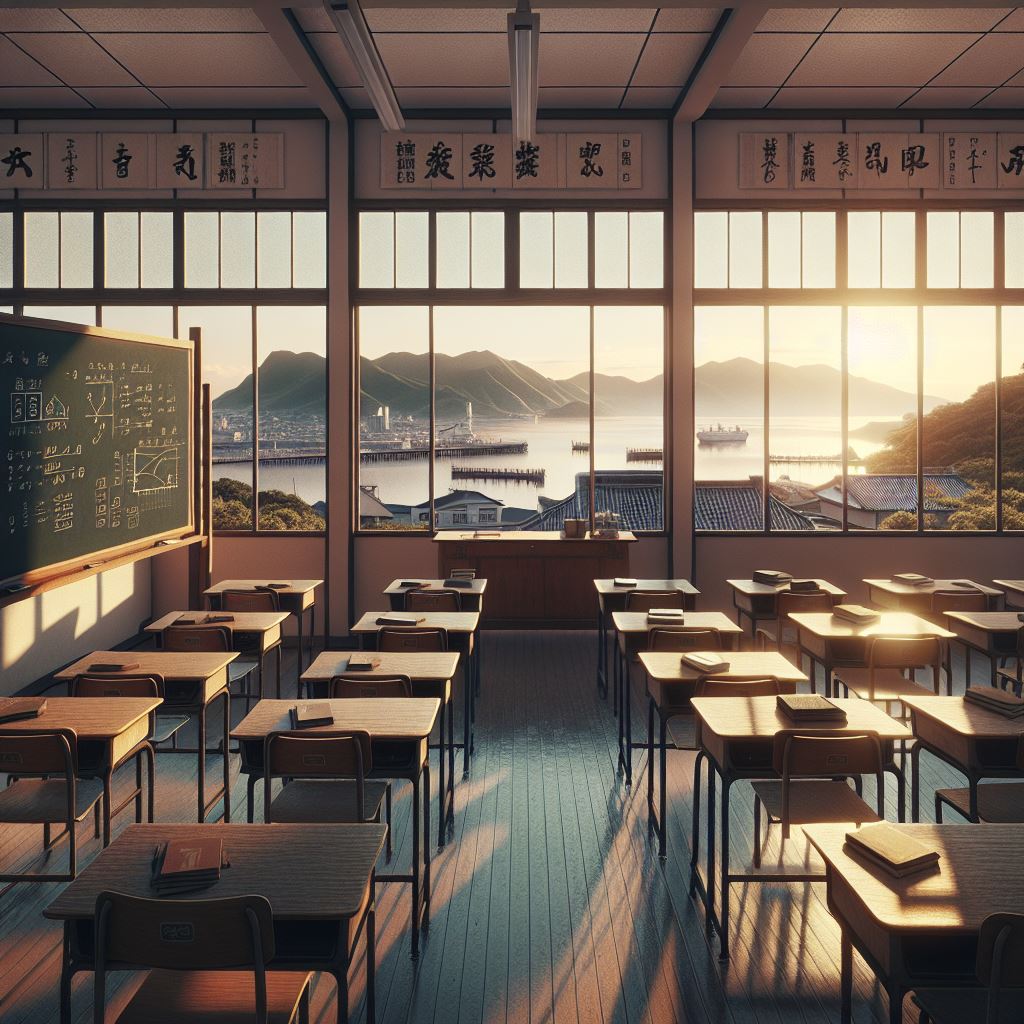
Not everyone had arrived yet but the class was more than half full. I loved the view from this floor; because the school was built on higher ground than most of the surrounding buildings, you could see right across Ōfunato Bay and out to the Pacific Ocean which filled the whole of the horizon. On a clear day, usually in winter, it was possible to see ships heading towards the port from many kilometres away as the sun glinted and glistened off the water and occasionally a ship’s window.

Students were congregating in groups, some standing, some sitting, and the room was alive with the buzz of chatter. In one corner of the classroom gathered the awkward, geeky boys with their long fingernails, unruly hair and eyes fatigued from clearly too much time spent in front of a computer screen the night before when they should have been either studying or sleeping. In this group was Hiroshi, the most socially competent amongst his friends, who had a developed a crush on Haruka although the feeling was far from mutual.

‘Hi, Haruka-chan. How are you today?’ he said not quite making eye contact. His friends started to laugh quietly, more with embarrassment than anything more malicious.

‘Fine thanks,’ Haruka replied abruptly whilst walking briskly to her desk at the front of the classroom.

‘I don’t know why he keeps on bothering me?’ she said through gritted teeth although quietly enough so that he couldn’t quite hear her slightly irritated tone.

‘It’s obvious, isn’t it?’ I whispered. ‘He thinks you’re cute!’

‘But all they talk about is computer games and online videos of people playing computer games,’ Haruka whispered back. ‘I have absolutely nothing in common with him.’

Not an unkind girl, Haruka had begun to get annoyed by the unwanted attention from Hiroshi. At ten years old, the boys and girls had begun to interact in a different way to how they had done in the previous three years at school, going from carefree conversation to more awkward, confused exchanges.

I was going to say that he’ll get the message eventually but was cut short by the entrance of Kinoshita-sensei who had arrived five minutes early.

 ‘Good morning,’ he said in a loud, authoritative but friendly voice as he placed a pile of books onto his desk at the front.

Ohayō gozaimasu,’ we all replied automatically as the groups slowly dispersed and the students found their way to their respective desks.

‘Now, I wonder how many of you have remembered?’ Kinoshita-sensei said with a smile on his face. ‘Do you recall the permission slip that you got your parents to sign and return to me last week? Well, today’s the day we’re going to be taking our afternoon lesson outside.’

Excited looks were exchanged across the room and a cry of Yes came somewhere from the back of the class.

‘As you know, we have been studying about our local area, and I thought that it was time we ventured out of the classroom to understand a bit more, through seeing first-hand, what makes up the place where we live,’ Kinoshita-sensei explained.

‘I have arranged for us to walk down to the port to see the cargo ships and to speak with one of the managers about the types of goods being sent from Ōfunato to countries around the world as well as the types of goods coming into Japan. We’ll be leaving here after lunch, to get there at about two o’clock.’

‘For now, though, I would like you to get out your maths homework for us to run through together.’

I opened my rucksack and took out the homework that I had completed the night before. Over the next forty minutes, we went through the challenging puzzles that we had been set and I was pleased to see that I had actually done well considering how hard I had found the assignment whilst working through it at the desk in my bedroom.

***

…why is this so heavy…

…must be getting old…

…think he knows what I’m up to…

…looking at me very suspiciously…

…nothing to worry about o great and mighty one…

Standard
Japan, Writing

Washing Over Me: Chapter 5

第五章

25 August 2075

Shoichi decided that he was going to brave the heat before it got too fierce and that a walk around the lake would do him some good. It had taken a few weeks following Kimiko’s stroke for him to get over the guilt of doing anything in his life other than being at the hospital waiting for a change in her condition. One of the nurses kindly suggested that as important as it was for him to be there to support his wife, it was equally as important for his own health to take a break from what, in all likelihood, would be a lengthy recovery process.

As he opened the front door, the air hit him like an industrial heater and although still early in the day the sun was getting ever brighter as it rose into the sky, causing him to squint. It smelled much fresher than when he had returned from Tokyo the night before and the fragrance from some sweet honeysuckle growing in an earthenware pot by the entrance caught his nostrils. The honeysuckle was given to his wife as a present by a neighbour in return for the help that Kimiko had given her when she had moved into the neighbourhood from the outskirts of Tokyo following the death of her husband. She had become very good friends with Naomi and over the years had spent many days together scouring the plant nurseries for flowers to brighten up their days as well as their respective gardens. Shoichi closed his eyes to picture their smiling faces and to recall their laughs as they sat in the shade at the front of the house drinking chilled wheat tea and gossiping about the local news which they had heard courtesy of the proprietor of the Beauty Wai Wai hair salon they both frequented.

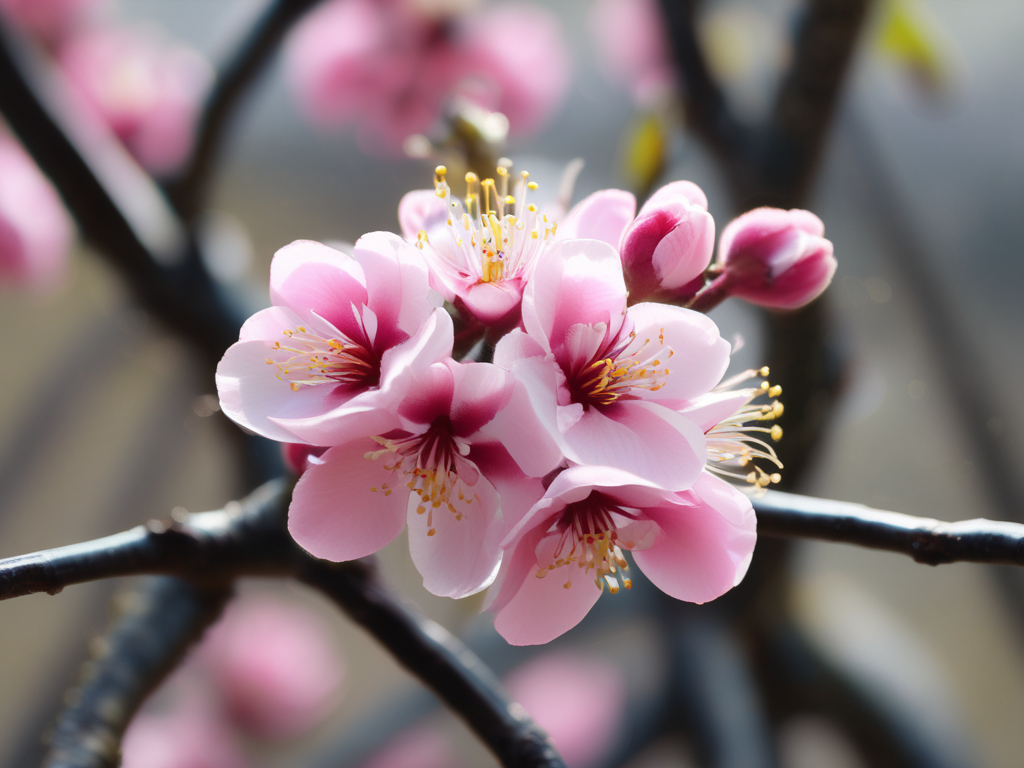
The cicadas seemed to be increasing in number and subsequently volume as he walked along one of the tree-lined streets from their house towards Lake Semba. Mito was a pleasant place to live; a decent sized city with a population of a quarter of a million that had all the shops and local amenities one could want but at the same time managed to retain a country feel that reminded Kimiko and him of their roots in Ōfunato. However, it was the sheer beauty of the plum blossom trees in Kairakuen Park, to the north east of the lake that had swung it for them when looking for a plot of land on which to build the home that they would live in through to retirement and, if fortunate enough, old age. Three thousand plum trees had been planted in what was still widely regarded as one of Japan’s top three landscaped gardens and home to the annual Ume Matsuri Plum Festival held in March to coincide with the opening of the buds to reveal a variety of blossoms from white through to dark pink. A somewhat more robust flower that the better known sakura cherry blossom, but equally as beautiful and evocative as visitors reflected on the year now coming to an end and cast their minds towards April and what the following year might bring. The trees were now cloaked in dark green leaves and some bore the beginning of what would later in the summer become plums to be picked and pickled in salt with akajiso leaves to give them a blood-red colour.

A light breeze had picked up providing some welcome relief to the heat and humidity that hung in the air. Shoichi stopped at a vending machine and bought a bottle of sports drink to keep himself hydrated before making his way towards the lake that had started to ripple with the wind.

Sitting on a bench, Shoichi thought about the first time that he had paid any attention to Kimiko as a person in her own right and not just identified with her as the best friend of his little sister, Haruka. 

When they had all been growing up, he was already in his third year of elementary school by the time that Haruka and Kimiko had even started in formal education and, for much of his early childhood, his only interaction with her was perfunctory politeness whenever Kimiko came around to their house after school. It was not until he was twenty years old and visiting his parents during the spring holiday from university, that seventeen-year-old Kimiko caught his eye in a very different way.

She had always been a very happy child which somewhat surprised him considering that her father had left when she was young but her mother had done a fabulous job of bringing Kimiko up on her own. She had been heavily into volleyball throughout her time in education and as a result had a very athletic physique from years of training before and after school.  This healthy build together with an attractive face – large tear-shaped brown eyes, a small nose with a flat bridge and broad base and a shapely mouth with pale pink lips – that could be described as almost feline meant that perhaps it was no surprise that he would feel some physical attraction towards her. However, even during his early teenage years when rampant hormones sparked an interest in a variety of girls, many far less pretty than Kimiko, she was always off his radar.

He was at the Ōfunato Tsunami Remembrance Monument paying his respects to friends and relatives who had lost their lives in the earthquake and tsunami that had wiped out large parts of the town in 2011, when Kimiko tapped him on the shoulder.

‘Shoichi-san?’ she asked, peering up at him unsurely.

‘Yes,’ Shoichi replied without turning his head, slightly distracted as he was deep in thought, before realising who was standing in front of him. ‘Kimiko-chan. Is that really you? Great to see you, it’s been a while.’

‘When did you get into town?’ Kimiko asked.

‘Oh, I arrived on the train this morning,’ Shoichi replied. ‘How are you?’

‘I’m great thanks,’ Kimiko said. ‘How are you?’ 

‘I’m alright, thank you,’ Shoichi replied.

‘And how are your family? Are they all well?’

‘They’re all fine, thank you.’

‘That’s good. And is your father still fishing?’

‘Well, not commercially, as it was getting too tough for him, but now he spends most of his days sitting by a river with a fishing rod in his hand.’

‘Why am I not surprised to hear that?’ Kimiko said letting out a small laugh.

‘Some things never change, you know.’

‘Yes, that’s true.’

‘They’ve done a great job with this monument, don’t you think? A really beautiful and fitting tribute.’

‘Yes, they have,’ Kimiko agreed. ‘Is this the first time you have been here?’

‘No, I’ve visited a few times now, always in spring,’ Shoichi said.

‘But it’s hard at this time of the year, isn’t it?’ Kimiko said whilst shaking her head. ‘As the blossoms start to open it’s like nature’s way of reminding us all of what happened back then and I can’t avoid feeling a great sadness thinking about so many of the people in our town who lost their lives.’

‘I know. No matter how many years pass, it seems just like yesterday,’ Shoichi added as he turned towards the monument again silently reading the names of those confirmed dead. ‘I walked around the town earlier and there are many buildings that have not yet been rebuilt. How many years will it be before Ōfunato fully recovers?’

‘So, so sad,’ Kimiko said thinking about the event that changed the face of not just Ōfunato but towns and cities up and down the east coast of Japan. ‘Do you know, I’ve considered leaving so many times to make a clean break but this is where I’ve grown up and I want to stay to see out my childhood here. To leave would feel like a betrayal, like I was walking away to forget, which is something I’m not ready to do.’

‘But you can understand those who did move on. So many difficult memories, a town so different to the one that existed before the earthquake,’ Shoichi replied, now looking out across the bay.

As they continued to talk, Shoichi noticed that Kimiko had not got any taller than when he had last seen her, at a distance, a couple of years ago but her body was no longer the slender angular frame of a volleyball player, it had become more curved and soft-edged. He momentarily tuned out of their conversation as his brain started to tingle – experiencing something he would later find out is called an “Autonomous Sensory Meridian Response” – and focused in on her face as he found himself transfixed, looking at her features with a new and different perspective, noticing things about her like the small freckle on the left side of her nose and the angle of her ears that stuck out ever so slightly through her hair, things that he had never noticed before now. Her face was still unmistakeably Kimiko but the kitten had become a cat. 

Perhaps after the intense experience that they had shared, there was almost an inevitability that the two of them would get together but it was not until he was in his late twenties had Shoichi plucked up enough courage to ask his then girlfriend for her hand in marriage.

They both knew that day in April 2018 that they would not speak about their personal losses. The strong emotion of overwhelming sorrow that lay deep inside them would come rushing out through mention of name alone and they were not yet close enough to share such raw feelings with each other.  

Knowing that they would never again see those whom they had both loved so dearly was still too much to come to terms with.

***

Can’t wait to find out what happens next?


Washing Over Me is available as a download for Kindle or as a printed paperback, both from Amazon:


Kindle Version – Amazon UK
Paperback – Amazon UK
Kindle Version – Amazon US
Paperback – Amazon US

Or search for “Washing Over Me Benjamin Brook” from your country’s Amazon homepage.

Standard
Japan, Writing

Washing Over Me: Chapter 4

第四章

11 March 2011 07:58

I stepped out of the door and into the small garden at the front of our house. Running alongside the garden was a narrow driveway which led out onto the road that wound down the hill to my school, Ōfunato Elementary, along which I walked every weekday. Although the front garden really was quite modest, Okāsan spent lots of her time out here tending to the plants she had carefully nurtured, many from seeds and saplings: fragrant pine bonsai, dwarf azaleas and Japanese maple as well as many others that I had not yet learnt the names of. Later in the year, the sakura cherry tree that she had planted to celebrate my first day at school would be in full bloom and no doubt we would sit out here with our bentō lunchboxes eating and chatting with each other as we had done every year since then. For now, the garden was neat and tidy but in the main lying dormant until the weather warmed up a bit and coaxed it into life.

After about five minutes I was at my friend Haruka’s house, a fairly large traditional Japanese farmhouse with wood panelling around much of the base and swooping curved roofs that were covered in green-grey tiles and finished with open mouthed fish end-tiles. She was already outside waiting for me so that we could walk to school together. Haruka had three older brothers, two who were in junior high and one who was in the final year of elementary school. They had already left to get there in time for the early morning clubs that they had signed up for; Shōki and Shōta did baseball whilst Shoichi – named in memory of his great-grandfather and so had a name that was typically associated with the first- not third-born son – played clarinet in the school band.

‘Morning, Kimiko. How are you?’ Haruka asked, waving to me as I approached.

‘I’m fine thanks,’ I replied. ‘How are you?’

‘Oh, a little tired but I’m good, thanks.’

We started to walk back towards the main road, the gravel drive crunching beneath our feet. To the east and in the distance, the mountains that sat further inland behind Ōfunato rose into the sky looking like scenery in a play, mainly green on account of the generous covering with matsu pine trees, but most still topped with snow as a reminder that winter had not quite let go.

After a few minutes more, we passed “The Living House,” as we liked to call it. For some reason it was surrounded in scaffolding and it was actually difficult to see the building itself because in every available space were pots of flowers and plants growing wildly as they sat  on platforms at different levels created by whatever the owners could get their hands on: old pieces of wood, bricks, breeze blocks, plastic crates. Even the scaffolding was adorned with hanging baskets and winding vines. Although we had passed this house hundreds of times, it always made us happy and I enjoyed watching the flowers come into bloom as winter moved into spring and then into summer.

‘It’s so cold isn’t it? I couldn’t get of bed this morning,’ I said. ‘If it wasn’t for Okāsan making my favourite breakfast I think I would have stayed there all day long!’

‘Me, too. I can’t wait for spring to arrive and for the weather to warm up a bit,’ Haruka said turning towards me. ‘I really don’t like our old paraffin heaters and dad refuses to pay for more modern ones. He says that the heaters we’ve already got do the job and why should he replace them with newer ones that have a built-in fan.  He even suggested that if I wanted blown hot air so badly that he would get my brothers to take it in turns to sit behind the heater and manually fan the air in my direction. He’s really missed the point.’

‘Although you have to admit, that’s pretty funny and such a typical thing for your dad to say!’ I said with a smile.

Her father was a local fisherman and tougher than most. Since his early childhood, he had followed in his own father’s footsteps entering the fishing trade and had made a decent living out of the abundance of saury fish found out in the Pacific. The arrival of a girl after three boys came as a bit of a shock, although I’ve seen that way that he treats her, she’s just like a princess to him.

‘By the way, how did you get on with the maths homework that we were set yesterday?’ I asked as I thought about my efforts from the night before.

‘Oh, it was really hard,’ Haruka replied. ‘It took me twice as long as Kinoshita-sensei suggested it would take and I got a headache by the time I had finished.’

‘Phew, glad it wasn’t just me!’ I said, genuinely relieved as I did find it very challenging.

I thoroughly enjoyed spending time with Haruka. We’d known each other since nursery and as both of our families had close ties with the area, we were pretty certain that we’d be moving up through junior high and then high school together. There was also a sense of balance that we brought to each other’s lives. I was an only child and my father had left Okāsan for another woman a year after I was born so as long as I can remember it has been just the two of us. I wasn’t lonely but I did sometimes dream of having a big family and whenever I went to her house after school to study or more often talk about the latest pop sensation or sentimental soap-opera it was like walking into a zoo and I loved it! Likewise, whenever Haruka wanted some peace and quiet or a bit of girl-only time, she would come to visit me.

Turning right at the bottom of the slope and then immediately left, we walked past a couple of empty plots of land that were waiting to be built on and eventually become someone’s home. A little further on, once we had passed the apartment building where some of our teachers lived, the wide open ground and the L-shaped three-storey concrete school building came into view. The weak sun gradually became obscured by cloud, just as the weather forecast on the television last night had said it would. It seemed that the day was going to be a little dreary and overcast but I wouldn’t let a bit of grey weather dampen my spirits.

I walked with Haruka through the teachers’ car park into the school’s genkan, changed from my outdoor shoes into white indoor plimsolls, marked with my family name Yasuda, and started to make my way up to our classroom on the third floor.

‘I wonder what sort of day we’re going to have?’ Haruka asked.

‘I don’t know but whatever happens I’m going to enjoy it!’ I replied, bounding ahead of her up the stairs.

***

…I wonder where I’ll go this time…

…it was fun going west…

…but perhaps I’ll head north if I can…

…somewhere a little cooler…

…if only I could get this damn stone off my head…

Standard
Japan, Writing

Washing Over Me: Chapter 3

第 三 章

25 August 2075

A genderless electronic voice from his watch told him that it was 07:25. The patterned flannel blanket that he had used to cover himself when he went to bed had been kicked towards the bottom of the futon and was now twisted around his feet. Although he had slept for longer than usual, it had not been a restful sleep and Shoichi recalled hazily having woken up frequently during the course of the night, sweating from the heat and becoming disorientated on account of his choice to sleep in the tatami room after last night’s hospital visit. The air conditioner could be set to come on if the temperature and humidity rose above a certain level, but Shoichi had chosen not to use this feature as it left his throat and nose feeling dry by the time morning came around.

The cicadas were singing in the trees. The drone of the kumazemi cicada interplayed with the high pitched revving motorbike of the minminzemi cicada; a swarm of insect-sized Hells Angels, different but equally complementary.

Waah waah waah waah !

Weee-oh weee-oh weee-oh weee-oh weeeeeeeeee!

If summer could have a sound it would be this; it was already heating up again outside.

Having freed his feet from the manacles of the blanket, Shoichi rose from the futon and loosened his back by stretching towards the wood panelled ceiling with both arms, leaning over to his right side then his left, enjoying the muffled clicks from his vertebrae. He felt thirsty so walked to the kitchen for a glass of water before heading through into the wet room for a lukewarm shower to wash away the latest film of sweat that had formed on his skin.

The bathroom had cost him a small fortune when the house was built. The construction company managing the build had included a very basic model of wetroom and standard acrylic bath in their original design, which Kimiko had quickly dismissed. She was not looking for something luxuriously appointed or ostentatious, rather, a design that would remind her of the bathroom that she enjoyed using as a child when she lived in Ōfunato, a coastal town about four hundred and fifty kilometres further north of Mito. The bath she recalled fondly had been made of hinoki cypress wood and gave off a wonderful fragrance as it filled with hot water. Using some pictures Kimiko provided of her childhood bath, the company went to great lengths to source a tub that came from the same region of Japan and that was made by local craftsmen as opposed to mass-production. Money was tight back then and Shoichi was reluctant to put them into an even more precarious financial position considering the size of the mortgage they were about to take on. However, later that evening, over dinner and a bottle of wine, Kimiko explained the sentimental value of the type of bath she wanted in their home, after which he had no further reservations about digging deeper into his pockets to pay for this pricey customisation to the build.

Temporarily refreshed from his shower, Shoichi walked upstairs and got dressed in front of a fan to try to get the fresh sweat to evaporate from his body before it had chance make his clothes damp, but which proved to be a thankless task. He then went down to the kitchen to make a drink and get something for breakfast.

To start, he ground up some coffee beans and spooned these into an antique looking metal stove-top espresso maker he had bought from a small family-run shop he came across whilst using up some spare time he had gained from a cancelled meeting during a business trip to Naples. There were modern versions of these available that ground the beans automatically and then extracted the coffee using a direct steam feed from the hot water system but the taste was somewhat too clinical, too perfect, lacking the rustic flavour that he was able to achieve from this low-tech model. He had also not fully washed his espresso maker for years, preferring instead to rinse out the bottom half that held the water and leaving the grounds in the upper bowl until he used it again the following day. Like an unwashed wok, where the flavours from the previous meals served to enrich the next one being cooked, the coffee contained a depth that he found comforting in a world where instant gratification continued to be the flavour of the day.

Not wanting to spend too much time on breakfast as he was not especially hungry, his appetite suppressed by the heat, Shoichi decided to make some toast which he ate with fresh butter from Hokkaido and a Tiptree brand of strawberry jam that he had picked up from the food court of a high-end department store in the Kichijōji district of Tokyo. The jam was made in England and while he ate he wondered about a life thousands of kilometres from his own, of someone working in the factory that produced this jam he had just spread onto his toast; an existence very different from his current daily routine travelling from home to hospital and back again.

How long would his life, their life, be on pause?

Standard
Japan, Writing

Washing Over Me: Chapter 2

第 二 章

11 March 2011 07:15

I could tell that it was time to get up and start getting ready for school as the sun had begun shining through a small gap in the curtains where I had not closed them fully the night before. It was cold outside and cold in the house but really warm in my bed.

 ‘Kimiko, it’s already past seven o’clock,’ Okāsan called up to me. ‘Wake up please!’

Just five more minutes, I thought to myself, head and body buried under a thick down quilt and two blankets.

If I wasn’t so hungry, and if the wonderful smell from her cooking hadn’t begun drifting up the stairs and under the bedroom door, I might have tried to sneak five minutes more but with a deep breath I threw back the covers and swung my legs out of bed and onto the floor. Wriggling out of my thick winter pyjamas, I shivered as the cold hit me but this made me move quickly and heave a thick grey sweater over my head and then pull on and fasten my jeans. The wool socks I had slept in last night weren’t coming off until later. I can’t stand having cold feet.

I opened the door and walked down the steep flight of wooden stairs into the open plan living room and kitchen.

Ohayō gozaimasu,’ Okāsan greeted me with a big smile and her usual cheerful voice. ‘Did you sleep well?’ 

‘Morning,’ I replied, rubbing the sleep out of my eyes. ‘Yes, I slept well, thanks.’

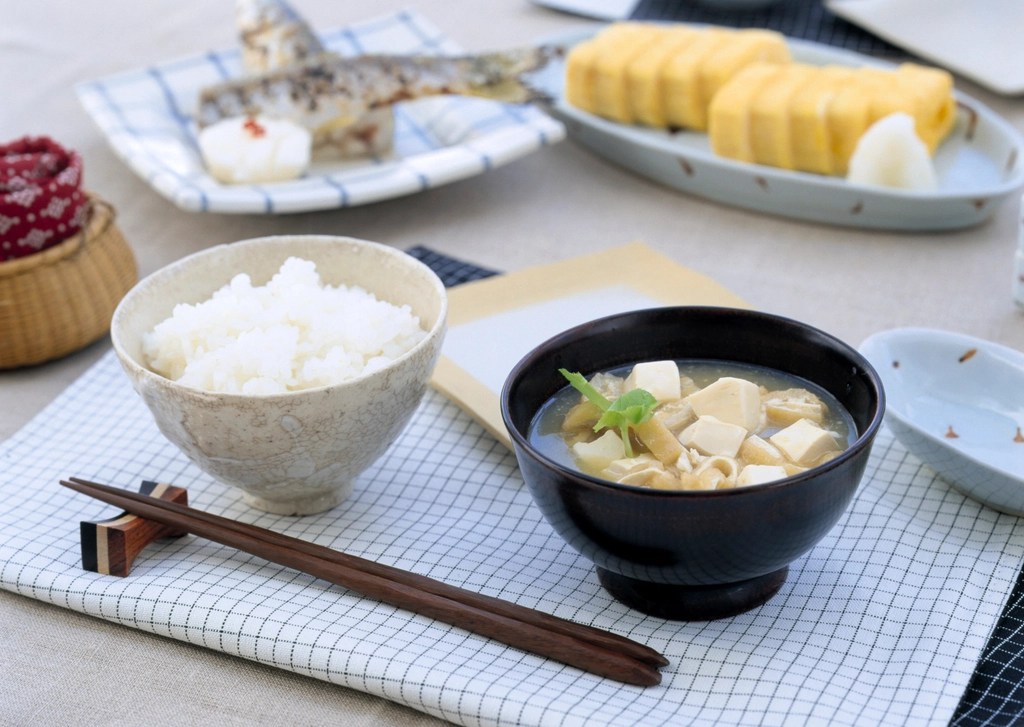
Breakfast was my favourite: grilled salmon, tamago-yaki sweet rolled omelette, nattō fermented soya beans, rice and miso soup. Many of my friends favoured a more Western-style breakfast of cereal or even toast with sausages and eggs, laughing at my preference for something very Japanese but then they hadn’t tasted Okāsan’s tamago-yaki which was to die for. I began devouring the food just put in front of me. In just ten minutes, I had eaten the lot and washed it all down with a cup of green tea from my favourite red and white Hello Kitty mug.

‘Don’t forget Kimiko that I have to work late tonight so you’ll have to let yourself into the house after school,’ she said. ‘I’ll set the rice cooker before I leave and there’s some leftover beef and vegetable stir-fry in the fridge for you to heat up in the microwave. Do you think that you’ll be OK?’

‘Mum, I’m ten years old now and this is not the first time that you’ve had to work late, is it?’

‘I know, but I’ll always think of you as my little baby,’ she said as she walked across the room and kissed me on the head.

Gochisōsama deshita ‘Thanks for cooking,’ I said as I got down from the table and went to the bathroom to have a quick wash, straighten out my hair, which was sticking out badly from where I had slept on it, and to clean my teeth.

It was approaching eight o’clock and I would have to leave shortly so I ran upstairs to change out of my sleeping socks and put on fresh ones for school. I grabbed my rucksack, hurried back down the stairs and, having given Okāsan a quick hug, put on my shoes in the genkan and opened the front door.

Ittekimasu! ‘I’m off now, see you later!’Itterasshai! ‘Have a good day!’

***

…I’ve got a blinding headache…

…can’t believe that it’s been over fifteen years since I last got out…

…I need a chance to stretch again…

Standard
Japan, Writing

Washing Over Me: Chapter 1

第 一 章

24 August 2075

Kimiko Tanaka lay in her bed in a private room in a hospital in central Tokyo. She had been in a coma for the past three months following a serious haemorrhage to the left side of her brain that struck as she was preparing a simple dinner of grilled mackerel, miso soup, pickled daikon radish and rice for herself and her husband.

Shoichi sat at the bedside holding his wife’s hand as it lay on top of the smooth white sheet, staring at the face that had remained unchanged since that day, unchanged since he heard  the crash of  plates from the kitchen and came running to find Kimiko lying on the wooden floor. Outside, the heat and humidity of summer was oppressive, even late into the evening. Inside, the air was cool and dry.  The only sounds were the gentle hum of the air conditioner mounted on the wall and the slow rhythmic beep emitting from the machine keeping Kimiko alive.

 ‘When will you wake up, Kimiko?’ he asked in a weary voice that was nevertheless still laced with hope.

Each time he mouthed the question, he longed desperately to see her eyes open slowly, for a smile to form across her face and for the doctors and nurses to come running into the room to congratulate the patient on a remarkable against-the-odds recovery. But this was not a Hollywood film, it was real life and this time, like the hundreds of times before, his question went unanswered.

Shoichi checked the time – the projection on the wall showed 22:17 – and he knew that he should make a move to get home for some sleep.

‘Goodnight,’ he whispered and kissed her gently on the cheek, in the space between the ventilation tube supporting her breathing and the myriad of wires running around her face that were monitoring the activity of Kimiko’s brain.

He left the room and made his way along the corridor, with its shiny slate-grey linoleum floor and whitewashed walls, towards the overnight nurses’ station where he was bid farewell by a droid that watched over the entrance as well as monitoring the vital signs of all the patients under its care, ready to alert the medical teams who slept in pods, like bees in a hive, located away from the wards but still on the hospital site.

Ikebukuro station was a short walk away but in no time the light cotton summer shirt he was wearing had begun to stick to his body, especially his back. This year the rainy season had come late and even by mid-August the annual tsuyu was holding on. But the summer had finally arrived and all the moisture now hung in the ether as it evaporated from the sodden ground which made moving around in any non-climate-controlled environment an uncomfortable experience, rather like being stood, fully clothed, at the edge of a heated indoor swimming pool.

The transition from the relative darkness of night – his walk was punctuated by headlights from an occasional passing car and red paper lanterns hanging outside izakaya bars – into Ikebukuro station made his eyelids narrow as the bright overhead banks of LEDs and plethora of advertising images flooding into his pupils. Although he knew the way to the train, having done this journey many times before, he allowed himself to be led by the personalised under floor directional lighting, snaking from the entrance barrier to platform three to board the 22:38 Yamanote line train to Ueno where he would change to a Jōban line train to their home in central Mito.

The sleek metal tube glided into the station at 22:37 and as it did he recalled reading something in a newspaper recently that it had been twenty years since the last late arrival across the whole of Japan, such was the reliability of the fully-automated computer controlled and operated JR network. A minute later the train left Ikebukuro and Shoichi sat in the middle of a bench seat that ran the full length of the carriage. He spent the journey to Ueno staring at the window opposite him which, due to the dark, was like an elongated mirror in which all he could see was his own reflection. He noted that he looked tired, an empty shell such was his life at present. Once the train pulled into Ueno station, Shoichi stepped off the carriage and walked across the platform to board the Jōban line train that was already there waiting to depart.

The carriage he was now on was relatively empty, perhaps not surprising considering the time, and he was joined by about a dozen other passengers, mostly snoozing, as they made their way out through the sprawling suburbs of the metropolis into the wide open spaces of rice fields to the north east. As he began to fall asleep he could vaguely hear a conversation being held in what he guessed was English between two Caucasian foreign men also making their own journey from the sensory overload of Tokyo back to a slower-paced life in the countryside.

The vibration on his wrist shook Shoichi out of his slumber just seconds before the animated Den-Den customer host bowed respectfully and announced their arrival in Mito. The travel companion timepiece was a present from his wife to celebrate his seventieth birthday and retirement, given to him with more than a hint of mischief as he had, during his working life, frequently fallen asleep on the train home either from exhaustion as an overworked middle-manager or due to one too many beers at the end of the day, causing him to miss his stop and end up in Hitachi, six stations further north than his intended destination. He hadn’t needed it much since retiring but was grateful he hadn’t been left to sleep through tonight especially as he was on the last train and a ride back in a driver-less Navi-cab would have been an unnecessary expense and delay to getting home.

The doors opened noiselessly, he stepped off the train onto the platform, ascended the stairs to the exit gates which he passed through with a touch of his hand on the scanner and out again into the night. The station clock’s analogue hands showed just after midnight. The air smelt damp, heavy, and slightly rotten as he made his way up a shallow slope, heading back to their home which stood at the edge of Lake Senba, close to Kairakuen Park. There were a handful of karaoke bars and hostess pubs still open and the silence of the night was broken by an opening door through which passed a group of drunk but cheerful work colleagues who piled out onto the street in search of a steaming hot bowl of ramen noodles, gyōza dumplings and more heavily chilled beer.

As Shoichi turned off the main road that ran from the station in the south of the city towards the northwest and then directly west towards the traditional Japanese ceramics town of Kasama, the light levels dropped and he had to stop momentarily to allow his eyes to re-adjust to the darkness. The densely populated residential districts were characterised by narrow streets cluttered with bicycles, pot plants on multi-tiered aluminium shelving and vending machines selling e-cigarettes, synthetic alcohol and sugar-free soft drinks. The sky was clear and even with some light pollution from the street lamps and neon advertising panels further back on the main road, there were plenty of stars visible. He picked out some of the constellations that he found easy to locate such as Cassiopeia, The Plough and Hercules as well as those that were trickier, including Boötes, Cygnus and Delphinus. Although Shoichi had often thought about, but never made the commitment to buying a telescope, he nevertheless found staring up towards the heavens a peaceful and calming experience that brought some perspective on any challenges he may be facing in his life.  Kimiko in hospital in a serious but stable condition was by far his biggest personal challenge to date. The movement of a cat jumping off a grey mottle-textured brick wall broke his moment of contemplation of life and the workings of the universe and brought his head back down to earth as he made his way further into the neighbourhood of mainly high-end pre-fabricated kit houses of which his own home was one.

Opening the small gate next to the sign on the border wall to the house that let everyone know this was where the Tanakas lived, Shoichi walked up the short path to the front door, positioned his eye in front of the retina scanning equipment – installed as state-of-the-art domestic security when the house was built forty years ago – and pulled open the door once the cartoon bulldog security guard in the small screen mounted under the scanner confirmed his identity, saluted and welcomed him home.

Motion sensors picked up his presence, the lights turned on and the air conditioner beeped, the small flap at the front to direct the air flow opened and emitted the familiar creak of gases moving as the unit fired into life. Shoichi removed his shoes in the genkan entrance, stepped up into the house and padded across the perfectly smooth and level dark-brown stained wooden floorboards into the kitchen to wash his hands and gargle before fetching himself a beer from the refrigerator. As he removed the can from the shelf, a Z-code scanner registered the beer as the second from last one and sent an order through to the local supermarket to add to the list for the next grocery delivery in a few days’ time. Twisting the lid, a hole opened in the top of the can and he poured two-thirds of the beer into a cut-crystal glass given to him as part of a gift set commemorating one hundred and fifty years of the Kirin brewery that also contained twelve cans of Kirin Original Brew.  He ran his fingers over the laser etching of a mythical Chinese chimerical creature called a Qilin, after which the company was named, before bringing the glass to his lips and taking a couple of deep drafts. The chilled liquid was almost painful as it ran down his throat but it was a welcome sensation, in contrast to the numbness of recent months, and he closed his eyes to savour this small sensory pleasure.

Moving through to the living room area of the house and flicking on the holovision with a wave of his hand, he caught the tail end of a late night news broadcast. There was a feature about a man who had been arrested for killing three of his neighbours over a five year period. The familiar shots of police investigators carrying out sealed boxes of evidence from the man’s apartment filled the image field and the story concluded with a summary of events leading up to the arrest from the station’s visibly sleep-deprived reporter. Shoichi felt detached from the emotion he knew he should be feeling towards yet another murder case, his body drained.

Beer finished, Shoichi was too tired to climb the stairs to the bedroom he shared with Kimiko let alone have a shower, so instead unfolded a futon in the Japanese-style tatami room on the ground floor, got undressed, crawled under a light blanket and fell asleep as soon his head hit the buckwheat-filled pillow.

***

Back at the hospital, a part of Kimiko’s brain was waking up. Deep inside the hippocampus were electrical pulses so weak that the doctors would not notice them for another day through the scans they were running routinely to check for any signs of healing but strong enough for Kimiko to start to recall memories from long ago.

Standard