Japan, Writing

Washing Over Me: Chapter 16

第十六章

11 March 2011 12:20

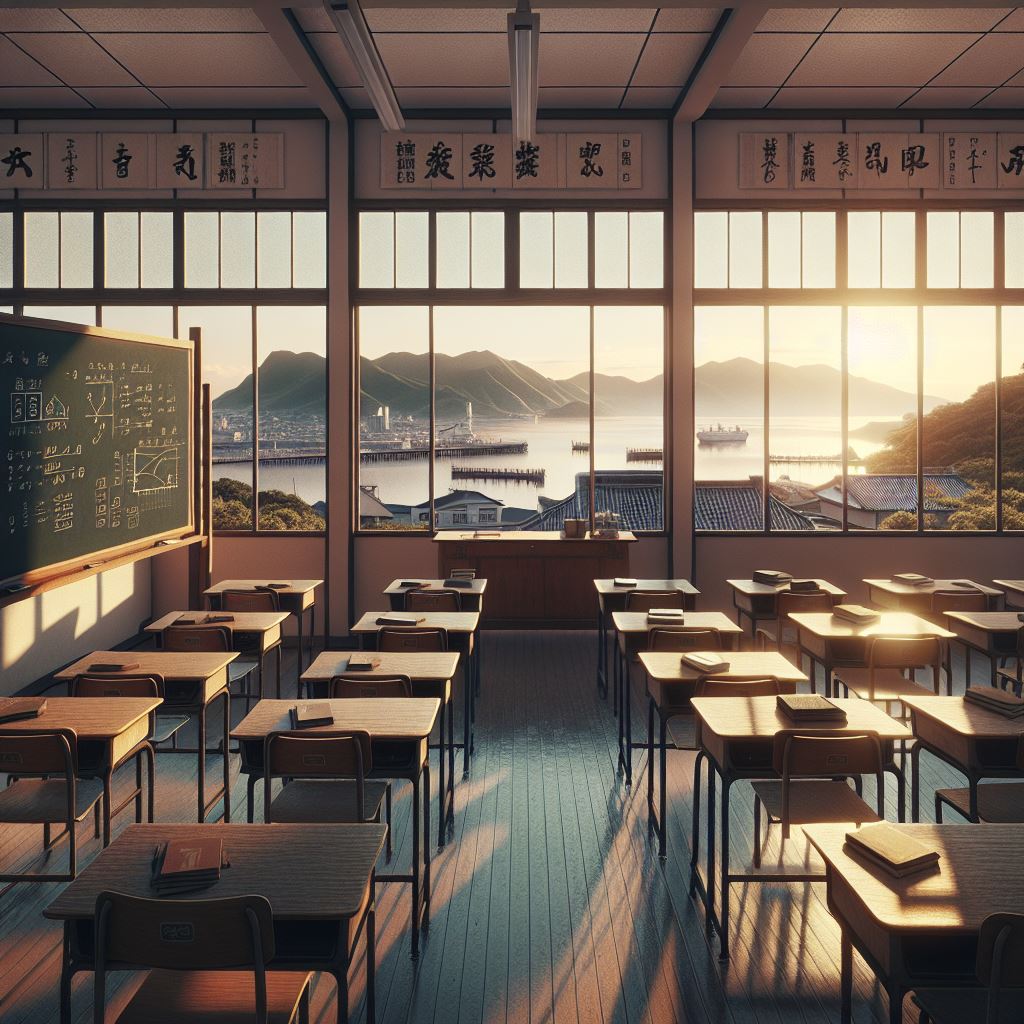
Finally, we had made it through to lunchtime! I was glad that my stomach hadn’t been rumbling too loudly during the last lesson as I was really enjoying myself and didn’t want it to distract me, or my classmates. As Kinoshita-sensei rolled the television and DVD player back into the corner of the room he spoke to the class over his shoulder.

‘Whose turn it is to serve lunch today?’ he asked and six arms shot up into the air, accompanied by shouts of ‘Hai.’

‘Thank you,’ he continued. ‘Please go and wash your hands.’

They stood up and walked out of the front door of the classroom, returning in convoy a few moments later all with slightly wet hands as if to prove that they really had done as they were told and not just pretended, especially the boys.  Kinoshita-sensei was waiting for their return and handed out an apron, hat and mask to each. I always thought that the aprons had a medical look to them as they were made from the same thin, light blue material that you would see worn by the nurses and doctors in hospitals.

‘Thank you. Now will four of you, and the group can decide who, go down the old kitchen to collect today’s food?’ Kinoshita-sensei added.

After a brief conversation, all three of the boys in today’s group, Kaito, Takumi and Hiroki together with one girl, Natsumi, went down the six flights of stairs to the former kitchen that was towards the back of the school.

In the years before I had started at Ōfunato Elementary, the food had been prepared on site by a team of cooks who were employed by the local council. However, this was no longer the case and the food was now cooked centrally by a company called “Ōfunato Kyūshoku Service” and then delivered to all the schools in the local area. Okāsan had said that there was a time that my school had a reputation for the best meals in town as one of the cooks had previously worked as a chef in Tokyo and added a personal touch to the menus that he was asked to prepare. I have always liked school dinners, although some of my classmates would disagree with my view. My only complaint is that by the time the food arrives in the classroom it is sometimes a little cold.

Whilst they were gone, the two remaining helpers, Yuka and Asuka, put up tables at the front of the classroom from where the group of six would serve the food. The rest of us put away our belongings from the last lesson and went to fetch our chopsticks from our school bags. My chopstick set had a Mickey Mouse design; Okāsan had bought for me when we visited Tokyo Disneyland last summer. As I laid out a handkerchief across my desk, I was really hungry and wished that they would hurry up with the food.

‘Now, everybody else, please go and wash your hands before our helpers arrive back,’ Kinoshita-sensei said.

There was a general hubbub as the remaining twenty-two of us set off to wash our hands in the metal trough sinks that lined the corridors before returning – with some hands cleaner than others – to our desks.  Natsumi and Hiroki entered the classroom carrying the insulated blue box that had Ōfunato Kyūshoku Centre written on the side and which contained one class’s worth of rice. They were followed by Takumi who carried the plastic bucket full of miso soup and lastly Kaito who entered with the deep metal tray that held our gobō chicken. Two year four boys from one of the other classrooms suddenly rushed into the room.

‘Excuse me, Kinoshita-sensei, but we’ve been asked to bring the milk as there were not enough people to carry these as well as the food,’ one of the boys said as together they placed the crate down on the table

‘Oh, thank you very much. That’s my fault, I didn’t realise that there was so much to carry. Please say thank you to Onuma-sensei from me.’

‘Hai,’ came the reply from both as they rushed out again.

Yuka and Asuka took it upon themselves to pass the milk out to us, walking up and down the rows of desks handing out the small glass bottles. The four others had put down and opened the lids of the rice, miso soup and gobō chicken and were waiting, ready to serve. We went in rows and I was in the second one to go, my stomach making a gurgling noise as I stood up. I picked up a tray from the stack that was sitting on the right hand side of the serving tables and moved along collecting my dishes as I went. I wondered if Hiroki had heard my stomach as he gave me an extra helping of rice with a knowing look on his face which made me go slightly red but I was still grateful as I got disappointed when given small portions. The miso soup smelt nice but seemed to lack much besides the miso although unusually it was still steaming so I thought that it must be nice and warm. Finally, the gobō chicken, which was individually wrapped in foil and cooked in a teriyaki sauce,  passed to me on a small plate with some green beans on the side. I walked carefully back to my desk and placed the tray of food gently on top of the handkerchief that I had laid out earlier.

Now was the difficult part. We couldn’t start eating until everyone had their food and Kinoshita-sensei led us into saying itadakimasu. This always seemed to take forever and was like torture as the food’s smells mixed and twirled in front of me before dancing into my nose. Hurry up, hurry up, I thought. Finally, everyone was ready.

Itadakimasu ‘Let’s eat,’ said Kinoshita-sensei.

Itadakimasu,’ echoed the students, loudly.I opened up my chopstick set, enjoying the satisfying click as the case came open.  Taking out my chopsticks and holding them in my right hand, I picked up the bowl of miso soup with my left and gave it a stir to remix the miso and the broth together. I then brought the bowl to my mouth and took a long sip. Although not brimming with aburaage fried tofu and naganegi Japanese leeks there was enough in there now that I had stirred it to make this more than just a plain liquid soup. Not as good as Okāsan’s but not bad at all. Having drunk about a third of the miso soup, I then wanted to get a bite of the gobō chicken that was still wrapped in foil. Fortunately, it wasn’t too hot and I was able to undo the package fairly easily after which I folded up the foil and put it to one side on the tray. The five pieces of gobō burdock stood upright like thin cylinders and you could make out the fibres of the plant if you looked closely enough. The colour was close to white in the middle darkening gradually through to the light brown of the outside of the root.

Holding them in place were thin cuts of chicken thigh wrapped tightly around the burdock. The teriyaki sauce pooled around the bottom and mixed slightly with the green beans which would give them a better flavour. I picked up the chicken with my chopsticks and took a bite, it was delicious; the chicken was moist and fell apart in my mouth. However, my favourite bit was the burdock which had a naturally smoky taste to it, made even smokier by the teriyaki sauce. Taking my time over each mouthful, I chewed the recommended twenty times before swallowing. I must have been making a real point of enjoying the meal as when I looked towards Haruka she was staring back at me with a grin on her face, watching me as I ate.

‘Delicious!’ I mouthed across to her.

‘It looks like it!’ Haruka mouthed back.

Being so far north, we got some wonderful rice in Ōfunato as the climate was not too different from Akita Prefecture which was famous in Japan for its rice and sake rice wine. Even in our school dinners, it was of good quality and cooked very well considering how much they must be making for all the elementary and junior high schools in Ōfunato. I lifted up the bowl and breathed in the sweet aroma from the steam that drifted upwards from the short pearly-white coloured grains. Taking a scoop with my chopsticks, the sticky grains of rice clung to each other and I was able to get a good mouthful which I again chewed nice and slowly.

Around me, many of my classmates had eaten all of their lunch and were popping open the cardboard lids on their milk. I also noticed that there had been some trading going on; Kaito who was not so keen on milk had swapped with Hiroki who had quite loudly pronounced shortly after starting that he did not fancy eating the chicken. Kinoshita-sensei was keen on getting his students to eat everything that was on offer for the day but did turn a blind eye when trading of this kind took place as long as it didn’t get out of hand. I remember once he got cross when Rikimaru ended up with four bottles of milk on his tray as he had given away all of his food. On that occasion, Kinoshita-sensei had made everyone return Rikimaru’s food and then gave us a lecture on the importance of a balanced diet.

About five minutes later, I had finished eating and set to work opening my milk. There were two ways that you could get the cardboard lid off: either push it down on one side with your thumb until the cardboard rotated so that you could pull it out with your thumb and forefinger or pick at the edge of the cardboard with your fingernail until enough of the lid had lifted up to grip and prise off gently. The first of these was the quickest, and therefore the more popular method, but it was risky. I always opted for the slower method as every time I tried to push the cardboard down into the neck of the bottle I was unable to control the force and ended with my thumb diving into the milk or occasionally even knocking over the whole bottle. It was nicely chilled and as I drank I could feel the milk sliding down my throat and into my stomach.

Gochisōsama deshita ‘That was a feast,’ I said quietly to myself as I put down the empty bottle onto my tray. I was the last in the class to finish and was getting some glares from those who wanted to go outside to play.

‘Now that everyone has finished, please put your chopsticks back in their cases and take them home to be washed,’ Kinoshita-sensei said. ‘Starting from my right, so your left, please bring your trays to the front of the class and help to tidy things away.’

In turn, we filtered to the front to tip uneaten food into the miso soup bucket, stacking bowls, plates and trays neatly to be taken back downstairs by today’s helpers.

‘Before you go outside,’ Kinoshita-sensei added, ‘please note that we will  be leaving here at one forty-five so please be back in the classroom at one-thirty to give us time to get ready and wrap ourselves up properly. The sun may have started shining but it’s still cold and you will feel it even more once we get down to the water’s edge.’

***

…blessed barbels…

…what a design…

…great for searching out food…

…bloody terrible things to have when you’re trapped by a stone…

…think he’s coming back…

…one last tug…

…heave-ho…

Standard
Japan, Writing

Washing Over Me: Chapter 14

第十四章

11 March 2011 11:30

Talking about lunch earlier with Haruka had made me hungry especially now that I knew that gobō chicken was on the menu. Despite the big breakfast that I had eaten this morning, my stomach had started to gurgle and I hoped it would not get any louder or people would be able to hear it.

Before lunch, we had moral education which was always interesting as it got the whole class thinking and talking about what was good and bad behaviour although we were beginning to understanding that for some dilemmas it was not that straightforward.

Kinoshita-sensei returned from the staffroom with a DVD in his hand. Having wheeled out the television and player from the corner of the classroom and plugged it in, he pushed the disc into the slot at the front of the machine. A rather old-fashioned film appeared on the screen and I watched a story about a little boy called Tatsuya who was walking along the street in the middle of summer when he came across a wallet lying on the pavement. He picked up the wallet and looked inside to see if he could find a name and address of the owner but when he did so noticed that there was fifty thousand yen tucked into the notes section at the back.

It was at this point that Kinoshita-sensei paused the film.

‘So, class, what do you think Tatsuya should do next?’ he asked.

A hand shot up from the third row of desks, it was Rikimaru.

‘I think that he should take the wallet back to the owner straight away,’ he said.

‘OK, thank you Rikimaru-kun,’ Kinoshita-sensei said. ‘What do the rest of you think? Who agrees?’

There was a murmur of conversation and slowly a number of hands rose into the air until about a third of the class indicated that they agreed. I was not sure so kept my hand down by my side.

‘Thank you everyone. You can put them down now,’ he said with a wave of his arm.  ‘So, of those who did not raise your hands just now, do you disagree with Rikimaru-kun or are you still thinking?’

One of the video game boys, Kenta, raised his hand to talk and was acknowledged by Kinoshita-sensei.

‘I think that trying to return the wallet is the right thing to do,’ Kenta began. ‘But what if the person who dropped the wallet was dangerous? You shouldn’t go to their house on your own in case the person kidnapped you.’

I was pretty impressed with this point and had not considered that dangerous people could drop their wallets in just the same way as kind people could. There was further background noise that indicated broad agreement.

‘Very good, Kenta-kun. Thank you. You should be very careful going to the house of somebody whom you don’t know, especially if a long way from your neighbourhood. If you ever get invited into a stranger’s home, even if they are promising you something nice like a cold drink or a chance to play with their pets you should politely refuse and then tell your parents or a teacher about it,’ Kinoshita-sensei added. ‘What else do you think you could do with the wallet if taking it to the person’s home is not a good idea?’

I thought for a little while and was about to try an answer when Haruka beat me to it.

‘You could take the wallet to the nearest kōban police box,’ she said. ‘The policeman would then be able to find the owner and telephone them to arrange its return.’

‘Does this sound right?’ Kinoshita-sensei asked us, again testing the class to make sure that we were all involved in the lesson.

There were further sounds of agreement which Kinoshita-sensei detected without having to ask again for a show of hands.‘Yes, that’s right Haruka-chan,’ he said as he walked back over to the DVD player. ‘If you ever find anything that isn’t yours then you should either take it to a policeman in the nearest kōban or take it home to your parents. Now let’s watch some more.’

The film re-started but with another scene that was entitled “Earlier that day” and we were watching Tatsuya back at home with his family. Over breakfast, his mother and father were having a conversation about Tatsuya’s grandmother who lived with them and was still asleep in the small tatami room at the back of the house. Through this part of the film we learnt that Tatsuya’s obāchan was not well and needed an operation on her eyes which she could no longer see with because she had something called a cataract on each one. Tatsuya’s parents wanted to help but did not have enough money to pay the forty thousand yen contribution towards the operation as Tatsuya’s father had recently lost his job and was struggling to find work. The family had used nearly all of their savings and had only enough money left to pay for essentials like food and electricity.

Tatsuya said ittekimasu as he left the house and we were back to the same scene of him finding the wallet on the floor. As he picked it up, Tatsuya’s grandmother with her poorly eyes appeared in a big thought bubble above his head. It was here that Kinoshita-sensei paused the film again.

This is exactly why I love these lessons. Just when I thought we had come to an answer that everyone agreed with, suddenly there is a whole new meaning to the story.

‘It really would be great for Tatsuya’s obāchan to have that eye operation, wouldn’t it?’ Kinoshita-sensei asked to provoke some further discussion.

‘I still think that he should take the wallet to the policeman,’ Haruka said, not wanting to concede her earlier position.

‘I agree,’ said a voice. Everyone turned around. It was Hiroshi who had spoken which came as a surprise to many as he often kept very quiet during lessons. ‘Even though his grandmother is sick, it’s not his money and he would still have to tell his parents where he got it from. Although they really could use the money I don’t think that they would spend it without knowing where it came from.’

‘That’s right,’ said Haruka. ‘Even though his grandmother needs an operation it doesn’t have to be straight away and I’m sure that Tatsuya’s father will get a job soon and then they will be able to pay for it themselves.’

Kinoshita-sensei had sat down at the teacher’s desk and had a look on his face that showed us he was enjoying the conversation that the film had prompted.

‘Even so, it really looked like he loved his grandmother, and that thing over her eyes looked horrible. Poor obāchan,’ Kumi the manga artist chipped in. ‘It’s easy for us to sit here and say that we would give the money to the policeman but what if it were your own grandmother?’

‘I know, Kumi-chan, and it would be more difficult if it were my grandmother but taking something that isn’t yours is stealing no matter what it is for,’ Haruka replied to this challenge.

‘But poor obāchan!’ Kumi pleaded.

‘No, I’ve made up my mind,’ Haruka said with some resolve. ‘He should take the wallet to the kōban.

Whilst this conversation was going on, I had been thinking about what I would do if in Tatsuya’s shoes. I was not sure. Of course, I knew that stealing was wrong and even more than that I knew that Okāsan would never let me offer her money without knowing exactly where it came from. I decided to make a suggestion anyway.

‘What if Tatsuya just borrowed the money until his father got a new job and could pay it back?’ I said. ‘The family could keep hold of the wallet until then, replace the money they borrowed and then hand it into the police after a month or so.’

‘That still isn’t right,’ Haruka said as she looked at me with slightly disbelieving eyes. ‘Besides, his parents would need to agree to that and I don’t think that they would.’

 ‘Let’s have a look and see what Tatsuya does,’ Kinoshita-sensei said, standing up from his chair, walking over to the DVD player and pressing the play button once more.

The film continued and we were all expecting Tatsuya to pick up the wallet and take it to the kōban, as we all now knew that this was the right thing to do no matter how difficult circumstances were for him at home. However, the film cut to another scene of a man breaking into a house, stealing some money that was in an envelope sitting in the genkan by the front door. There were a few gasps as we watched the close up of five ten-thousand-yen notes being slipped into the wallet that Tatsuya would later find on the pavement.

‘What do you think now?’ Kinoshita-sensei asked.

‘I still think that Tatsuya should take the wallet to the police,’ Haruka came straight back with. ‘Although I did feel sorry for the man who dropped the wallet, now I know that it was not his money in the first place I am angry with him and feel sorry for the family whose money he stole.’

‘How about anyone else?’ Kinoshita-sensei asked.

‘I think that we shouldn’t worry too much about where the money came from,’ said Hiroshi. ‘What matters is Tatsuya doing the right thing and that still means taking the wallet to the police.’

Kinoshita-sensei turned around to look at the clock that was hung above the blackboard.

‘I’m afraid class we have run out of time for today. However, I have been very impressed with the discussion and I think that the last point made by Hiroshi-kun is a very important one when thinking about moral dilemmas. In many cases, decisions that you have to make in life won’t always be clear cut and you will need to apply your judgement to these decisions. When you do, be guided by your own morals and try your best to do the right thing. Shall we see how it ended for Tatsuya?’

The film started again and we saw Tatsuya pick up the wallet and hand it to a local policeman. The policemen then took the wallet back to the kōban to begin to track down its owner. He frowned as he took out the driving licence and looked at the picture of the man as if he recognised him from somewhere. Sitting on the fax machine behind him was a freeze-frame of some footage from a CCTV camera and the words “Wanted” written below in bold. It was the same man whose wallet had just been handed in. The final scene of the film was Tatsuya at home with his grandmother who, from the healthy look of her eyes, had been into hospital for the operation and as the camera panned out we saw a newspaper cutting stuck to the wall in the kitchen with a picture of Tatsuya right in the middle.

Local Boy A Hero

Young Tatsuya-kun helps police to track down local criminal and receives a forty thousand yen reward from one of the victims whose paintings were returned to him following a search of the burglar’s home…

***

…just a touch more then I’m off…

…can’t wait…

…this is going to be fun…

Standard
Japan, Writing

Washing Over Me: Chapter 13

第十三章

25 August 2075

Shoichi got up from his chair, walked across the room, enjoying the chilled breeze from the air conditioner blowing over his back which again was damp from sweat, and opened the door. Turning left and heading down the corridor, the gents was about fifty metres away on the right hand side. 

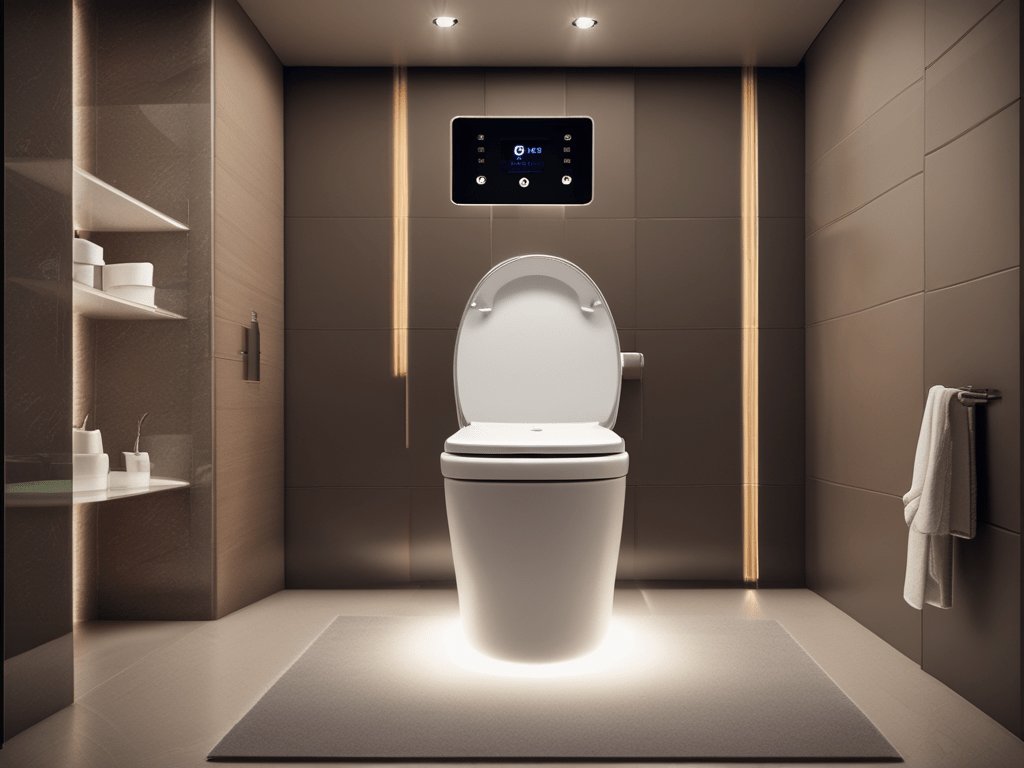
In their home in Mito, they had a fairly standard toilet that did all the things that most models in Japan had been able to do for many years – bidet function with water temperature and pressure settings, warm air drier to cut out the need for paper, flowing water sound effects for modesty and a squirt of bleach that mixed with the water in the bowl on each flush keeping things nice and hygienic. However, the manufacturer Toto had outdone themselves with the latest versions installed in many public buildings, especially hospitals.

Having finished his business, the machine – it really had taken the next step in its design evolution to warrant being called this – took a small sample as it was flushed away and analysed it for protein, fat and fibre content as well as carrying out a basic microbiotic test to ensure that the gut and digestive tract were in good shape. The results, which were available by the time Shoichi had washed his hands, could then be downloaded onto electronic devices to analyse further using health apps or uploaded to medical records for doctors to access should the need arise. Shoichi, who was quite satisfied with the latest movement of his bowel, decided to pass on the additional information this time around.

***

Kimiko and Shoichi got back onto the coach and made their way to their seats carrying the strawberries that they just bought.

‘Do you want to eat these now?’ Kimiko asked.

‘Oh, yes please, give me one,’ said Shoichi who had surprised himself at the enthusiasm with which he replied.

Smiling, Kimiko handed over the tray, ‘There you go. Enjoy!’

‘Not bad at all!’ Shoichi said as he bit into one of the strawberries and chewed slowly to savour the sweet juice of the fruit.

He closed his eyes and allowed his mind to wander back to the strawberry farm in Chiba Prefecture that they had visited together and pictured Kimiko’s younger face as they ate strawberries at a small round metal table overlooking the greenhouses where many thousands of sweet red sachinoka variety were growing.

‘Mmmm, delicious!’ added Kimiko who had popped one into her mouth as Shoichi was enjoying being transported back fourteen years in time.

Barely five minutes later, they had eaten five strawberries each and the punnet was empty.

‘Great idea to get these,’ Shoichi said, swallowing the last mouthful.

‘Thank you,’ said Kimiko, assuming that Shoichi was acknowledging her gentle persuasion for him to part with his cash.

There was still a further five hours on the road before their arrival at  the Yoshidaguchi fifth station so both Kimiko and Shoichi opted for some more rest over gazing at the countryside of Tochigi and Saitama Prefectures. Stomachs full, they were soon asleep leaning against each other; Kimiko dreaming of Okāsan’s home-made birthday cakes topped with whipped cream and strawberries, Shoichi dreaming of getting to the fifth station and discovering that his rucksack was completely empty.
Shoichi awoke first this time, just as they were passing the Fuji-Q Highlands theme park. Rising high above the modern roller coasters and other rides for thrill seekers, Fuji-san stood majestically in the background. Although the still active volcano had been photographed from every possible angle and throughout the four well-defined Japanese seasons, seeing it this close and in such clear weather made Shoichi feel most humble as if in the presence of a powerful deity, which in essence it was.  The snow cap that covered more than a third of Fuji-san in the depths of winter had receded right back to the summit so that it was barely visible save for a few tracks that stubbornly remained unmelted, hidden from sunlight. The colour was rust, like the surface of Mars, with the base covered in a skirt of green from the trees that grew at lower levels. Surely there aren’t many views on the planet more impressive that this, Shoichi thought to himself as he looked on.

Moments later, as if sensing Shoichi’s excitement levels rising, Kimiko opened her eyes and was greeted with the same awesome sight.

‘Wow! Look at that!’ she said. ‘Seems I chose a great time to wake up.’

‘We’re finally here,’ Shoichi added, although in reality there was still another hour of the journey to go as the coach left the toll road and began its ascent up the winding road to the fifth station.

‘Do you think we are really going to be able to make it to the top?’ Kimiko asked as the reality of the climb ahead of them suddenly hit home.

‘Yes, I’m sure we will,’ Shoichi said. ‘It’s going to be tough and we’ll be hiking for a long time but don’t worry, we’ll get there in time for sunrise. If you think it looks beautiful now, just imagine how it’s going to feel at the summit waiting and watching for the sun to appear from below the horizon.’

‘Oh, I can’t wait. What an adventure!’ Kimiko said, shifting herself in tight to Shoichi so the two of them pressed against each other, holding hands in Kimiko’s lap.

A dull thud came through the PA system as the tour guide flicked a switch to turn on the microphone, ready to make an announcement.

‘Ladies and gentlemen, thank you for your patience on this long journey. I am pleased to let you know that the driver has informed me that we are less that forty-five minutes from the Yoshidaguchi fifth station. As you can see, we have begun our ascent of Fuji-san and therefore respectfully ask you to fasten your seatbelts for your safety and comfort.’

Her words were followed by a smattering of clicks and clunks as people complied with the request and settled back into their seats to take in the view as the coach dropped down through the gears and moved further and further up the mountain road.

‘I’m getting a bit nervous now,’ Shoichi confessed as he stared out of the window. ‘Do you remember when I suffered from altitude sickness during that trip with friends to Nagano Prefecture? Mount Ontake was just over three thousand metres above sea-level and I got a splitting headache about two hundred metres from the summit. I willed it to go away but it got worse as I kept going until I was forced to turn around and work my way down. We’ll be going seven hundred metres higher this time.’

‘Yes, but you said yourself that the speed at which you climbed was far too fast,’ Kimiko said. ‘No wonder you felt ill. This is going to be totally different as we are scheduled a stop at the eighth station to sleep for a few hours and I’ve heard that helps significantly.’

‘Thanks Kimiko,’ he said. ‘I expect I’m just worrying because I want to do this so much. Besides, I’ve got a couple of cans of oxygen packed in my rucksack for when the going gets tough.’

‘I hope you won’t need it. Let’s just relax, take it at an easy pace, and be honest if either of us starts to feel ill. Please don’t persevere if you’re struggling as it can be very dangerous. More than getting up to the top, I want to get back down again in one piece so no heroics, OK?’

‘OK,’ Shoichi said, stringing out the two syllables, his mouth betraying his efforts to mask his reluctance to agree. They say only a fool climbs Fuji-san more than once but he’d feel a fool if he didn’t make it to the top at the first time of trying.

As the coach continued to strain against the gradient of the road, the weather began to close in and the clear sky that had prevailed for the last leg of their journey, was replaced with cloud cover and light drizzle.

‘This is exactly why we need to be prepared,’ said Shoichi. ‘Just look at how quickly bright sunshine has turned to rain. No matter what the forecast says about the weather in general, it’s a completely different story when it comes to mountains.’

‘At least the rain will keep us cool,’ Kimiko said optimistically.

‘As long as it doesn’t rain too hard or the track, especially the rocky part, will become slippery.’

‘Let’s keep our fingers crossed then,’ Kimiko said, as she did exactly that behind her back.

The clouds didn’t clear for the rest of the driven part of the ascent and by the time they arrived at the fifth station it felt quite dark despite still being just after four o’clock in the afternoon.

The Yoshidaguchi fifth station was a wide open concourse where rail met road and that was dominated by an enormous Swiss-style chalet that contained a host of smaller shops selling mountain gear at inflated prices for those who had arrived underprepared, gift-wrapped boxes of mochi sticky rice cakes filled with azuki red-bean paste as well as food and drink for climbers to take with them on their trek up Fuji-san or for the journey home. There were also a number of restaurants housed in a handful of other larger buildings.

‘I can’t wait to get back down here again and be sitting in there with a beer in my hand!’ Shoichi said as he pointed across to a restaurant that was split over two floors in a dark-brown construction that had, painted on the side, a large picture of a bear wearing lederhosen.

‘One step at a time, Shoichi,’ Kimiko said. ‘We’ve got a long way to go before thinking about beer, although it does look nice in there. Shall we skip the climb and go straight for something to eat?’

Shoichi opened his mouth to answer and, when he realised that Kimiko was joking with him, closed it again.

There was a bustle of activity as coachload after coachload of people arrived at the site and began to unload their rucksacks, change into their hiking boots and layer-up against the noticeably colder weather. A number of visitors had brought along or purchased simple wooden climbing sticks that had mountain bells attached and these produced a series of jingles that made it sound like at an Alpine downhill skiing event.

Shoichi was waiting impatiently at the centre of the coach for the driver to open the storage compartment doors so that he could begin getting himself ready.

‘I don’t know why he’s taking so long,’ he muttered under his breath, shuffling impatiently from foot to foot. ‘Others who arrived at the same time as we did are almost ready to set off.’

‘Oh, don’t worry, Shoichi. There’s no rush and this is not a race, remember?’ Kimiko implored.

The door was finally opened and Shoichi reached in zealously to look for the two rucksacks in the hold that had green and black paisley patterned scarves tied around the handles at the top of each to help him identify his and Kimiko’s from within this multi-coloured sea of equipment.

After locating their bags, knocking several others onto the floor which Kimiko apologetically picked up before their respective owners had cause to complain, Shoichi walked away from the coach to a generous courtyard in the middle of the concourse that was marked out by about twenty granite stones large enough to sit on.

‘We need to make sure that we get this bit right. Putting on our boots correctly will save us from a lot of pain and discomfort later,’ he said.

Kimiko rolled her eyes and did not say anything but thought to herself Here we go again!

Having put on, removed and put on again his boots three times, Shoichi walked around the courtyard testing the fit and nodded to himself to indicate that he was finally happy. Kimiko undid her laces, slid her feet into the boots and tied a bow which she then double-knotted to ensure it did not come undone. Tapping her toecaps lightly on the tarmac told her that she had a secure fit.

‘Are you sure that those boots are on properly?’ Shoichi asked. ‘We’ve got a lot of climbing ahead of us and you don’t want to risk getting a blister early on in the hike.’

‘Yes, they’re fine thanks,’ Kimiko replied trying hard not to engage any further in this particular conversation.

Standard
Japan, Uncategorized, Writing

Washing Over Me: Chapter 12

第十二章

11 March 2011 10:30

The walk outside in the sunshine was just what I needed to clear my head and get ready for the next lesson which was Japanese. Kinoshita-sensei wanted us to practice our kanji characters and to help we would be writing them using traditional ink and fude calligraphy brushes. I went to get my writing set from the cupboard at the back of the classroom whilst two volunteers gathered up sheets of newspaper onto which we would practise until it was time to write on the thin washi paper that would be hung around the classroom to dry once complete.

‘OK, class 4-A, have you all got you brushes and ink ready?’ Kinoshita-sensei asked.

The class responded with a uniform Yes although this was followed by the voice of a boy called Rikimaru who sat close to the window.

‘I’m very sorry Kinoshita-sensei, I think that I have run out of ink,’ Rikimaru said holding up the empty bottle as evidence. 

‘It’s OK, Rikimaru-kun, don’t worry,’ Kinoshita-sensei reassured him. ‘Does anyone have any spare ink that they can lend to Rikimaru for today’s lesson?’

On account of him not being a particularly popular boy, the offers were not immediately forthcoming although I felt sorry for him so put up my hand.

‘He can use some of my ink, Kinoshita-sensei,’ I said.

‘Thank you, Kimiko-chan. Rikimaru-kun, could you come and get Kimiko’s ink bottle once she has finished?’ Kinoshita-sensei suggested.‘Hai!’ came the solitary affirmative reply from Rikimaru who, stood up and, with head down embarrassed about the attention he had brought upon himself, started to make his way across the classroom.

I loved the smell of the ink that we used for shūji and savoured the moment as I removed the blue cap from the bottle and squeezed gently as the deep rich black liquid flowed into the suzuri ink stone. I had watched Okāsan doing calligraphy at home and she still favoured the traditional way of making the ink using a stick that was gently ground into the water held at the deep end of the stone until it was the same thick consistency as the pre-mixed type in front of me. The smell was very pure and natural, almost earthy, which I guessed was because the soot used to make the ink was itself made from living things that had been squashed for millions of years underground.

‘Thank you very much,’ Rikimaru said as he took the ink bottle that I was holding out to him. ‘I’ll bring a new bottle next time and you can use some of my ink.’

‘Don’t worry, Rikimaru,’ I said. ‘I’ve only just opened this one so there’s plenty left.’

I knew that if his mother found out about him having to borrow from me, she would probably replace the small amount of ink I had just given to him with an entire bottle but I hoped that he didn’t mention it to her as I really didn’t want her to go to such trouble.

I finished my preparations by placing a felt mat under the piece of practice newspaper and then laying a paper-weight across the top to keep it firmly in place.

‘The kanji that we are going to be practising today are minato as we are going to be visiting the port later on this afternoon and as we will be able to see the ocean from there,’ Kinoshita-sensei explained.

On the blackboard, he drew the characters for port 港 and ocean 洋 making a point of talking us through the order of the strokes that we needed to follow as well as the importance of the shape at the start and finish of each of the lines, which was more difficult for him to do with chalk than it would be with the fude brush.

‘OK, children, now it’s your turn to try,’ Kinoshita-sensei said. ‘Don’t forget to take your time and move the brush in a single flowing stroke. Think of the character that you are writing and try to put some of your thoughts into the lines and the overall shape. Oh, and don’t overload your brushes with ink or they will drip.’

I checked that my paper was nice and straight and then picked up the fude in my right hand holding it close to vertical as we had been taught to do. Concentrating, I dipped the tip into the liquid that had pooled at the bottom of the stone and watched as the ink moved slowly up the bristles and turned them from greyish-brown to night-sky black. I then withdrew the brush and lightly pushed the end down on the flatter end of the ink stone and watched as the excess ink streamed down the slope of the stone to pool again at the bottom.

I thought of the port, of the concrete, of the ships, of the metal containers and took a couple of breaths to prepare myself. Then, as best as I could, I lifted the brush over the paper and started with the three strokes on the left-hand side called mizu-hen or water radical  氵 the third stroke with an upwards movement leaving a tail that got narrower as I lifted the brush off the paper. The next group of six strokes  共 formed the top right hand part of the kanji and was written in an across-down-down-across movement followed by diagonally down the to the left and then diagonally down to the right. Finally was the onore part 已 that finished off the character with three further strokes and an upwards flick right at the end. I looked at what I had just written and was pretty pleased with the results. I had always been good at learning kanji and was enjoying writing the characters in this way.

‘Kimiko-chan, that’s looking very good,’ Kinoshita-sensei praised me. ‘Just take care not to make the final stroke too long at the bottom or you’ll upset the overall balance of the character.’ 

He took his teacher’s brush and, using some light orange ink, wrote over my character as if it wasn’t there to show me how my lines compared with his. 

‘Can you see the difference?’

‘Yes, I can. Thank you.’

‘You’re welcome. Now keep practising.’

I wrote the character for minato about ten more times on newspaper before deciding that it was accurate enough to write on the washi paper. Going through the same ritual, I tried to let my mind go clear and not think too much about what I was doing so that my hand could move by remembering the strokes that I had drawn previously. It felt good and the brush moved across the paper taking little jumps like an ice skater to show distinction between the different parts of the character. Having completed this, I wrote my name on the left hand side of the paper using the hiragana phonetic script; my parents when they gave me the name Kimiko, itself rather old-fashioned and popular in the 1920s, did not want to use any kanji as they held the view that by giving meaning to my name people would make judgements about the type of person I was before they had even met me.‘How is everyone getting on?’ asked Kinoshita-sensei. ‘Have you all finished writing minato? If you have, then please hang up your sheets to dry and make a start on .’

I went through the same process for the next character and found myself completely zoning out from everyone else in the classroom. Writing kanji this way was like meditation, which is just how Okāsan had described it when I asked her why she continued to practise at home even though she knew her kanji and was no longer studying. As she put it, I like to clear my mind every once in a while and concentrate on one specific thing without the clutter of everyday concerns such as what to cook for dinner, paying the gas bill and remembering to talk with our neighbour about that tree that is growing through the fence.’

Over by the window, Rikimaru gave a shout and as I looked across I saw he had spilt his ink and that it had spread over his paper like a wave breaking on the beach.

‘I don’t believe it,’ he said slapping his palm down onto the desk. ‘That was my best go yet and now look at it. Completely ruined.’

‘Can somebody get me some paper towels please?’ Kinoshita-sensei requested before saying to Rikimaru, ‘Don’t worry, these things happen.’

One of the other boys in the class brought a small stack of paper towels over to Rikimaru’s desk and started to help Kinoshita-sensei mop up the spilt ink.

Sumimasen,’ said Rikimaru apologising for causing a commotion.

‘Don’t worry, it’s nothing. Have you got any on your clothes?’ Kinoshita-sensei asked.

‘No, I don’t think so,’ Rikimaru said as he inspected his lap and sleeves for signs of stray ink.

‘Right, that’s all done. Let’s throw away these sheets of paper and you can keep going.’

Panic over, everyone got their heads down for the remaining ten minutes before we had to stop to wash out brushes, throw away practice sheets and pack everything away.By the time the chime played, all the sheets of paper hung around the classroom demonstrating our hard work. Kinoshita-sensei’s choice of kanji was clever as it only served to heighten our excitement about the trip after lunch.

***

…now that’s more like it…

…half of my head is out…

…got to be easier from here on in…

…no sign of him yet…

…this’ll be a surprise when he returns from wherever the hell he is…

…not that I care…

…as long as he stays away for long enough…

Standard
Japan, Writing

Washing Over Me: Chapter 11

第十一章

25 August 2075

As Shoichi had been reminiscing about their trip to Fuji-san, he had leant back in his chair, closed his eyes and, such was the strength of the memory, momentarily forgot where he was.

Coming back around to the reality of the situation he wondered how much of his story was getting through to her. As Aoyagi-sensei had suggested, anything that might spark a memory for Kimiko could help with her recovery but as he looked at her face and the rest of her motionless body he began to doubt, even with the glimmer of good news about the detection of some low-level brain activity, that Kimiko was ever going to come out of this coma. Even if she did, what quality of life would she be left with?

He thought it would be a good idea to go and get himself a drink and have a walk around the hospital to clear his head. He could then decide if he would come back and continue talking about their anniversary trip.

There was a small cafeteria that sold drinks and light meals which was located in another part of the hospital, about a two minute walk from Kimiko’s ward. He got up from the chair to which his back had stuck such was the non-breathable nature of the material that covered the foam padding – functionality taking priority over comfort – and opened the door to the corridor which was at least five degrees warmer than the constant twenty degrees at which Kimiko’s room was being maintained. In the foyer, the light from outside shone through the glass doors and although the triple glazing prevented the foyer from heating up like a greenhouse, the sheer brightness of the rays gave away the fact that outside was going to be even hotter. The final relief, before the inevitable onslaught, came from a ceiling-mounted fan that blew a wall of cool air downwards to try to prevent the heat and humidity from outside entering the building. As the second of the doors slid open the transition was complete and beads of sweat formed instantly on Shoichi’s brow and the back of his neck.

The hospital grounds were tidy although lacking in any greenery. It gave the place an institutional feel that a few well-placed plants and other topiary would have significantly softened. A row of trees might have also helped to dampen the noise of traffic coming from nearby roads.In the two decades that followed the nuclear fallout from the reactor in Fukushima caused by the tsunami in 2011, the environmentally-sympathetic political parties, in particular Green Wind and  the Tomorrow Party of Japan had begun to gain some traction in a political system that had been traditionally dominated by the ruling Liberal Democratic Party. During this time, the country had moved to urge political leaders to pay more attention to green issues and not just the usual manifesto promises around the economy, immigration and national security. There was significant interest in renewable energy and a big push from automobile manufacturers towards electric cars. There was also a boom in what was being called guri-tate which was a shift in architectural trends towards buildings that made best use of green technologies. The national mood change led to retro-fitting out of buildings across Japan and pictures taken by satellites showed a remarkable increase in the number of high-rises that had landscaped gardens on their roofs using mosses to cleanse and purify the air as well as adding a layer of organic matter to absorb some of the sunshine that would otherwise have heated up the concrete, turning the buildings of Tokyo and other cities into gigantic storage heaters.

For many in the country, this gave them hope that the warning sent out by nature from the Great East Japan Earthquake and the events that followed had finally been heeded. However, this was not permanent and a serious downturn in the economy from 2032 to 2040 nudged the political pendulum back the other way. Green adaptations and improvements were now seen as an unnecessary cost to businesses and modest family incomes. This fiscal pressure plus the discovery by a Japanese mining company of a fresh underwater oil field in the Gulf of Thailand that had potential to deliver forty-five billion barrels seemed to shake people awake from their temporary flirtation with green policies and the Liberal Democratic Party restored the tight grip on Japanese politics that they had held since 1955.

The signage to the cafeteria directed him around the side of Kimiko’s building and then across a wide courtyard which was also devoid of plant life save for a few stubborn weeds that had made their way up through cracks in the paving slabs. There were some benches that had been installed but Shoichi wondered why anyone would want to come out here to sit and stare at concrete.

A couple of minutes in the sun was enough and he was pleased to enter the single sliding door that brought him into the air-conditioned cafeteria which was a smaller-than-expected room with a functional counter and five rectangular tables that seated six people per table. Only four others were using the facility, at least one of whom was an in-patient on account of the drip he was wheeling beside him as a member of staff walked alongside carrying a green plastic tray on which a solitary cup of coffee was placed. It was the middle of the afternoon, so in all likelihood Shoichi had missed the lunchtime rush and was too early for those who would come in later for dinner.The lunch he had eaten was still sitting on his stomach so he did not need anything more to eat but even so decided on a cup of green tea and a slice of yōkan azuki-bean jelly. Wandering over to the ticket dispensing machine in the corner of the room, he pressed the on-screen button for “Japanese Teatime Set Menu” passed his wallet over the payment contact point and waited as the machine printed and spat out a ticket into the aluminium trough at the bottom of the unit.

He moved to the counter where he was greeted by a young and rather plump lady who was wearing the catering company’s sky-blue uniform that stretched across her ample bosom and stomach revealing her under shirt in the openings that formed between the straining buttons. Underneath the Tasty Food logo Shoichi saw that Ubakai-san had a full array of medals and he wondered what made for a five-star server.

Onegaishimasu,’ he said as he handed over the ticket.

Arigatō gozaimasu,’ Ubakai replied.

‘It’s really hot today isn’t it?’ Shoichi added to try to strike up a conversation as much for her sake as his. The thank you he had just received was politely delivered but barely veiled the underlying boredom she was experiencing in this repetitive job. It seemed that the robots which had replaced many of the manual jobs in Japan were fussy about their employment and increasingly only moved into skilled professions that utilised the full extent of their ever-expanding capabilities. It was as if the programmers did not want to waste their time writing code for machines to serve in restaurants, clean the streets or answer telephones in a call centre. Rather, as if to cement existing social strata, these types of jobs were left to human beings who, unlike robots, could not readily shut themselves off from the mundane nature of their daily tasks.

‘Oh, yes. I’m rather relieved to be inside where we have the air conditioning on. Could you imagine working outside in this heat?’ she said once she had got over the initial shock of someone actually engaging in a conversation with her.

‘It would be just unbearable, wouldn’t it?’ Shoichi agreed.

From across the kitchen that was beyond the counter, Ubakai’s supervisor shot out a stare that told her and Shoichi that non-scripted conversations were forbidden and Ubakai’s eyes glazed over as she snapped back into character, fearful of losing a star and subsequent drop in her already pitiful hourly rate of pay.

‘Your order will shortly be ready and served from the collection point at the end of the counter. Have a nice day and thank you for choosing Tasty Food catering today,’ she said monotonously.

Shoichi tried a smile but the supervisor was still watching and his last-ditch attempt to inject some warmth and friendliness into Ubakai’s day was scuppered. The green tea and yōkan was served, as he had been informed it would, from the collection point and Shoichi picked up the tray before walking over to a table at which none of the other customers sat. The tea was a pleasant surprise and tasted much closer to the sort that he would brew at home rather than the more bitter powdered kind that had permeated into most of the lower-end food establishments for reasons of convenience and no doubt cost. The yōkan had a nice firm consistency with a balanced sweetness and was filled with a generous portion of whole azuki beans added towards the end of the mixing process and that provided an interesting contrast of textures.

Nevertheless, the cafeteria had a depressing feel to it. Shoichi thought that this was because it was located in hospital grounds and therefore the customers were either recovering from illness themselves or visiting friends and relatives who were patients of the hospital. In other words, it served the purpose of providing somewhere to go for food and drink but made no attempt to create a friendly atmosphere where people would come just to have a chat. The silence was deafening and everyone there, including Shoichi, sat with a vacant expression on their faces as they stared into the middle distance in a contemplative state. If being happy helps with the recovery process then this was not a place where one should spend too long, he thought to himself.

Taking his own advice, having finished the rest of his green tea and yōkan, Shoichi stood up and winced as the metal legs from his chair scraped over the floor. It reminded him of the cacophony of noise in classrooms from his childhood as thirty students all stood up at the same time. In all the years that had passed since graduation from high school he still found that the sound sent shivers down his spine even more than the squeak of chalk on a blackboard.

Gochisōsama deshita,’ he said to Ubakai as he handed over the tray through a small hatch in the wall from where it was taken and dropped unceremoniously into a sink full of steaming, soapy water. 

He managed to raise at least the beginnings of a smile from her and decided that his good deed for the day was done, hoping that when she returned home from work she would have more to say to her family about her day than was usually the case.

Out through the sliding door, across the concrete courtyard and back into the Nakamura ward, Shoichi now felt somewhat refreshed. Kimiko lay just as he had left her. He pulled up a chair close to her bedside and gently held her hand before continuing.

***

As the coach drove out of the car park the sense of anticipation was palpable and, like children setting off on a school trip, excited chatter and laughter rose into the air; all the passengers were in good spirits and full of energy considering the early hour.

There was an abundance of food that had been brought onto the coach for breakfast and so a variety of homemade and homegrown products were passed up and down the rows of seats. Shoichi and Kimiko particularly enjoyed the unusually coloured tomatoes – yellow, purple and brown – that had been cultivated in someone’s garden greenhouse and brought along to share.

‘Wow, these really are delicious!’ Kimiko exclaimed and then said in a quieter voice, ‘I feel bad that we haven’t got anything to give back in return. Not really sure that we can share our convenience-store sandwiches with anyone.’

‘That’s true. You know, I wasn’t sure when I saw the colour but they are the sweetest tomatoes I think I’ve ever eaten,’ Shoichi replied. ‘Just goes to show how much our minds are conditioned on colours and tastes. I’ve eaten yellow ones before but not purple and brown. I was expecting them to taste like aubergine and chocolate!’

‘Well, now that we’ve starting eating, do you want one of these sandwiches?’ Kimiko asked as she dug into the cool bag containing their food.

‘Oh, yes please. Need to get my strength up.’

Kimiko unwrapped the sandwich by pulling the tab in the middle of the cellophane wrapper and guiding this around two of the three sides of the triangle before the packet opened up. She held the sandwich towards Shoichi who picked out one half gently so as not to spill its contents into his lap or onto the floor.

The crustless white bread sandwiches sold in convenience stores up and down Japan had not changed much in the last twenty years and although there were, on occasion, attempts to introduce new and more exotic flavours most places had stuck to the tried and tested formulae of ham and cheese, ham and lettuce, potato salad, fruit salad, tuna mayonnaise, egg mayonnaise and a variety of katsu breadcrumb-covered meats. Shoichi had always favoured the hamu-katsu sandwiches as these reminded him of a time as a child when his mother used to make such sandwiches at home for him, his brothers and Haruka when they went on picnics together. The sweet fruit sauce in these shop-bought versions was not a patch on the sauce his mother used to make by boiling down vinegar, sugar, tomatoes, apples, dates and spices but it was nevertheless a nostalgic taste for him.

Kimiko finished the other half of the sandwich and they both followed their food with the canned coffee which was sweeter and milkier than you would ever make at home.

After over two hours on the coach, Kimiko decided that she was going to shut her eyes and get some more sleep before they arrived. There was going to be a long stretch ahead of them before reaching the eighth station of the climb where they would bed down for a few hours to get used to the altitude and to time the final ascent to the summit in order to get there just before sunrise.

Whilst she slept, Shoichi looked out of the window of the coach at the countryside that passed before them as they travelled down the Tōhoku Expressway. They were now in Miyagi Prefecture and driving towards Sendai, the largest city in the northeast of Japan with a population of over one million and well known for woven silk, pottery and traditional washi paper. It also boasted something of a reputation for serving the best grilled cow tongue in the country and, on account of being close to major fishing ports, served excellent sushi and sashimi. If you wanted to come somewhere to eat, then you could do a lot worse than Sendai. However, like many villages, towns and cities in this part of Japan, the earthquake and tsunami in 2011 had left a permanent scar on both the landscape and the people who lived there. Shoichi knew that, like Ōfunato, the road to recovery was long.

The scenery outside had not changed dramatically since leaving Ōfunato although the topography was slightly flatter in this part of the Tōhoku region with the taller mountain ranges that ran up the spine and east coast of Japan visible only in the distance. The one thing that caught his attention, and he was surprised that he had not noticed this before, was the abundance of Japanese knotweed that had totally covered large swathes of the countryside, enveloping trees leaving monstrous hanging vines, with leaves shaped like the spades in a deck of playing cards, where the branches used to be. Rain had started to fall and streak across the windows. Shoichi was feeling tired himself having woken up earlier than necessary and so drawing the pleated orange patterned curtains across the window, he leant back into the headrest, closed his eyes and drifted off to sleep.

When Shoichi awoke, he found that he had managed to sleep right through Fukushima Prefecture and they were now in the north of Tochigi Prefecture just outside a small town called Nasu. The coffee he had drunk earlier had gone through him and he felt a familiar pressure in his bladder. Fortunately, the tour guide announced that they would be making the first of their scheduled stops at the Nasukōgen services to allow passengers to use the facilities, stretch their legs and browse the local produce.

‘Phew!’ Shoichi said in a quiet voice so as not to be overheard by the others. ‘I really need the toilet and was panicking there for a moment that I had missed the chance to go.’

‘Yes, you were sleeping really well,’ Kimiko replied ‘Thankfully you didn’t snore or dribble!’

‘How long have you been awake for?’ Shoichi asked ‘I thought that you would have slept for much longer yourself.’

‘Oh, I woke up about half an hour ago, just as we were passing through Sukagawa,’ Kimiko said. ‘It was getting uncomfortably warm in here.’

The coach pulled into the service station and most of those who were still sleeping awoke as the driver made a wide turn into one of the parking spaces. Rubbish from the morning’s sustenance was gathered together and placed in small plastic bags ready to be disposed of in the rubbish bins that lined up in the sunshine outside the entrance to the main building.

‘Right, let’s get out and stretch our legs,’ Shoichi said.

‘And go to the toilet,’ Kimiko whispered teasingly.

‘Do you think that we need some more food and drink to take with us?’ Shoichi asked, choosing to ignore her last comment.

‘No, I don’t think so,’ Kimiko said. ‘We don’t want to be carrying too much up the mountain with us. I’m sure that we have overdone it already looking at the size of others’ bags.’

‘You’re probably right about not getting more food and drink. However, don’t worry about what others have packed,’ he added. ‘I’ve followed the information we were given by the tour company and mountains are dangerous places, as you should well know. Do you remember when we got caught out on Mount Zaō?’

‘Oh yes, that was frightening,’ Kimiko said recalling the incident in her mind. ‘I can’t believe how quickly the clouds closed in. Thank goodness for the walkie-talkies or some of the group would have definitely got lost.’

‘Exactly, so although it might make our bags a little heavier than necessary, I’d rather be over prepared than under,’ Shoichi concluded his argument.

‘OK, point taken,’ Kimiko conceded. ‘Anyway, we’ve only got fifteen minutes so you’d better get off to the toilet. In fact, I need to go myself.’

Having used the facilities, they had some time left before setting off again, so Kimiko and Shoichi walked together to the market stalls that had been set up outside of the service station to see what local produce was on sale at a price at least double what you would pay in the local towns from where it came. Although it was late in the season for strawberries and a little early for pears, both were available and beautifully displayed in presentation boxes that carefully protected the fruits which clearly had been grown with a great deal of care.

‘They look delicious!’ Kimiko said. ‘Shall we get some strawberries to eat on the coach?’

‘They certainly do look good,’ Shoichi replied, picking up a tray to inspect it more closely.  ‘Little bit pricey though, don’t you think?’

‘Oh come on, live a little!’ Kimiko encouraged him. ‘They’re not going to break the bank and you do like strawberries.’

It was true, Shoichi had fond memories of the fruit as they had visited a strawberry farm for their first wedding anniversary and he had often talked about how they tasted much sweeter because he was there with Kimiko.

‘Alright then, but don’t get a large tray,’ he said trying to maintain the impression, to himself if nobody else and certainly not Kimiko, that he was in control of the decision.

Kimiko took a little time to select the tray that looked the closest to perfect she could find and paid the leather-skinned farmer who was tending the stall.The other products were nothing out of the ordinary, although there was a selection of micro-brewery beers that looked like they might be worth a try on account of the smart looking design of an owl on the label. The service station also drew much attention to the proximity of a variety of onsen hot springs and you could buy a box of bath salts that had been mixed to exactly the same mineral content as the nationally famous Shikano-yu Deer Spa.

‘Looks like the others are heading back to the coach,’ Shoichi said as he checked his watch.

‘Let’s go then,’ Kimiko said as she took hold of Shoichi’s hand and strode across the car park.

Standard
Japan, Writing

Washing Over Me: Chapter 10

第十章

11 March 2011 10:20

I was ready for a break from studying and pleased that I had ten minutes before the next lesson began. I packed away my books and pencil case leaving my desk clear.

‘Haruka, do you want to come outside?’  I called across to her as she was also just finishing tidying up her things. ‘I want to feel some warmth from the sun.’

‘Yes, of course,’ she replied. ‘Let’s go!’

I removed my down jacket from the peg it was hanging on at the back of the classroom and slipped into it before wrapping a long and multi-coloured wool scarf around my neck. Even though the earlier grey clouds had thinned out allowing the sun to break through the gaps, it was still cold outside and the only part of my body that was in any danger of catching a few precious rays was my face. Nevertheless, I didn’t want to miss this chance as the days had been fairly gloomy of late and rain had meant that many of our breaks in between lessons were spent indoors.

‘That last lesson was fun wasn’t it?’ I said. ‘Dwain doesn’t look anything like a teacher but he really makes me want to study hard in his classes.’

‘I didn’t have much fun at all,’ Haruka replied. ‘How embarrassing not to be able to say all of my sentence in English. Everyone laughing at me was terrible.’

‘Oh, don’t worry about it too much. I’m sure that they will have forgotten about it by the time the break is over.’

Just behind us, as we got to the top of the stairs, I could hear some stupid boys mocking Haruka saying My favourite food is Noguchi Katsu, followed by boisterous laughter and hoped that she could not hear them.

‘Oh, just listen to those idiots,’ Haruka said pursing her lips, having also clearly heard their taunts. ‘It makes me mad.’

As I walked down the stairs with Haruka, the chanting slowly died away, or at least got increasingly out of earshot. When we reached the ground floor, we turned along the corridor to the school entrance where our outdoor shoes were stored safely in the pigeon holes as we had left them at the start of the school day. I pulled my trainers out, dropped them on the floor and stepped into them from the raised platform. If Okāsan were here, she would have told me off for not undoing them properly before sliding in my feet but too late as I had already half trodden down the backs of the shoes. For the next dozen steps, I tapped the toe of the trainers on the ground to get my feet to move towards the front so that my heels were in far enough for the backs to spring up again. Haruka, who had taken the time to put on her shoes properly, caught up with me and put an arm around my shoulder.

‘All that talk of food has made me hungry,’ she said. ‘I can’t believe that we’ve got another couple of hours until lunchtime.’

‘Did you see the menu for today?’ I asked eagerly.

‘Yes, I had a look as we were leaving the classroom. Something you’ll like for sure as it’s quite a traditional menu. Gobō wrapped in chicken served with rice and miso soup.’

‘Mmmm, yum. Sounds delicious!’ I said and rubbed my tummy just as Dwain had done earlier.

‘For you maybe,’ Haruka said as she cast her eyes upwards thinking about something else that she would prefer to eat. ‘I was hoping for spaghetti and meat sauce.’

As I walked with Haruka around the side of school and towards the open cinder-covered sports ground, the sun shone in our eyes and I could feel not only the brightness but the warmth that I had been longing for.

‘That feels good!’ I exclaimed.

‘Yeah, it sure does,’ Haruka agreed. ‘It’s incredible that the heat from something so far away is able reach us.’

I closed my eyes and stopped walking for a while to enjoy this moment while it lasted. Haruka did the same and, whilst stood next to me, linked her arm with mine.

‘Best friends, right, Kimiko?’ she said.

‘Best friends forever,’ I replied as I looked at her and smiled.

The school grounds were tended to by Uchida-san who was officially the caretaker but turned his hand to most things, including clipping, pruning and shaping the branches of the pine trees that had been planted along one of the perimeters of the school. They all looked very neat and tidy, like a smart haircut, and I could see that Uchida-san had taken great care in his job of keeping these in order. In fact, judging by the many outstanding tasks around the school, I wondered if he preferred the gardening more than the maintenance part of his work. As I walked past these trees with their rough dark green clumps of needles, the scent reminded me of walking with Okāsan through the pine forest that surrounded Kumano Shrine. I always feel relaxed and calm at the shrine and got the same feeling as I stood here.

‘Haruka-chan. What do you want to do when you are older?’ I asked.

‘I really don’t know,’ she replied with a furrowed brow. ‘I think that dad would be happy for me to find a nice husband here in Ōfunato – preferably a fisherman – and settle down to a quiet life.’

‘And is that what you want?’ I challenged, perhaps a little too abruptly.

‘I don’t know. Seeing how happy mum is looking after her children makes me think that I could do a lot worse. But…’ Haruka tailed off.

‘But what?’ I asked looking towards her in anticipation.

‘I’m not sure that I want to stay in this town forever,’ Haruka explained. ‘All the people I care about live here but there is a part of me that is excited about going to university somewhere else in Japan and then getting a job in a big city.’

‘Where you’ll meet your Prince Charming?’ I teased.

‘No, not that!’ Haruka replied, puffing out her cheeks with indignation.

‘Do you know what type of job you want to do?’ I asked, quickly changing the subject.

‘No, not really. I suppose I’ll end up becoming an office worker somewhere,’ Haruka said.

‘You can do much better than that! What about becoming a writer?’ I suggested. ‘I love listening to your stories.’

All over Haruka’s bedroom and even in her bed were piles of books that she dipped into whenever she had a spare moment. I had also seen on her desk that she had started a notebook of writing ideas and when we spent time together she would tell me stories that she had made up. The one I remember best was called “The Last Bee on Earth” which she wrote after watching a programme on television about the importance of the bee in keeping the people of the world alive as they played a key role in over one third of all food produced. She told me about a village in China where farmers have to mix pollen with the flowers on the almond trees by hand using feathers tied to the end of bamboo canes as the bees were no longer present to carry out this job.

After years of using too many chemicals to make plants grow and to stop insects eating the plants, the world’s bee population had been almost entirely wiped out.

Betsy the Bee had spent most of her life living high in the Himalayan Mountains where the air was pure and no chemicals were used. She had no idea what was going on but had wondered why she hadn’t seen any bee tourists in recent months.

One day, she decided that she would go on an adventure to find out what had happened.

Flying down from the top of the mountain was hard work and it took Betsy many days and many nectar stops to make it to the bottom. When she got there, she couldn’t believe her eyes. The blossom on the trees had withered but no fruit was growing in its place. The same for the cucumber plants. The same for the aubergine plants. The same for the bushes of beans. This isn’t right, she thought to herself.

Over in the corner of a field, she noticed a colony of ants had gathered and were looking rather anxious. She buzzed over to see if she could catch what they were saying. It seemed that because of the lack of fruit and vegetables, the aphids were no longer gathering on the trees and plants and because of the fall in the number of aphids the poor ants had none of their sweet juice to drink.  This made the ants thirsty and sad.

Betsy asked what had happened to all the bees and she was shocked to hear about the fate of millions of her cousins. She couldn’t quite believe that the humans could be so stupid and so greedy.

She then panicked and thought it was up to her to do something about this terrible situation. Like a mad bee she flew from flower to flower, picking up pollen on her hairy legs and mixing it about as Mother Nature taught her she should.

The ants were rather interested in this strange behaviour. 

‘Hey Bee!’ they shouted. ‘What are you doing?’

But Betsy was too busy and buzzing too loudly to hear them. She was also so occupied that she didn’t see the child with a water gun walking towards her…

I never got to hear the rest of the story as her mother had called us down for dinner and when I asked her about it later that evening she said that she hadn’t yet decided how it was going to end.

‘Oh, I don’t know,’ Haruka said. ‘They’re fun but I’m not sure that anyone would pay me for writing that kind of stuff. I’m just messing around.’

‘No, really, you are good. Just keep on writing and I’m sure that you will find a great story somewhere in your heart.’

I was glad that the chime for the next lesson rang out at that point as I was not sure I was ready to answer the inevitable question that was coming from Haruka about what I wanted to do when I grew up. Truth is, as much as I had encouraged her to follow her dreams, I wasn’t clear at all what I wanted myself. However, unlike Haruka, I could see myself staying in Ōfunato. Okāsan no longer had any other family nearby and even though she joked about growing old on her own, I felt an obligation to stick around to look after her, just as she had devoted her life to looking after me.

***

…come on…

…think I’m getting loose…

…scratching the hell out of my scales…

…he’ll be back soon…

…don’t want to be imprisoned here anymore…

***

Can’t wait to find out what happens next?


Washing Over Me is available as a download for Kindle or as a printed paperback, both from Amazon:


Kindle Version – Amazon UK
Paperback – Amazon UK
Kindle Version – Amazon US
Paperback – Amazon US

Or search for “Washing Over Me Benjamin Brook” from your country’s Amazon homepage.

Standard
Japan, Uncategorized, Writing

Washing Over Me: Chapter 9

第九章

25 August 2075

As the train glided into Ueno station hovering on its electro-magnetic track, Shoichi’s wristwatch vibrated again to indicate that he needed to change lines. Den-Den thanked customers leaving the Jōban line, reminded them not to leave anything on the train and wished them a happy, healthy and safe onward journey.

Shoichi stepped down from the train and headed off in the direction of the Yamanote line following the overhead signs rather than the under-floor lighting he had used when returning the night before. He could feel his stomach rumbling gently as he walked and he thought to himself that the light breakfast he had eaten that morning was not going to sustain him for the duration of his visit to the hospital. 

There was a variety of restaurants tucked into the most unimaginably small spaces serving everything from food substitute shakes to more traditional handmade soba and udon noodles for those looking to remember a time when the pace of life was much slower and eating was more about a balance of different foods rather than living off custom-made cocktails of lab-produced nutrients that gave you exactly what you needed to maintain a healthy diet.

Choosing nostalgia over convenience, Shoichi ducked under the noren of a noodle restaurant, having perused from outside the plastic reconstructions of the dishes on offer – even these were evocative of a world gone by as many establishments had long since replaced plastic models with virtual images viewed through digital spectacles – and waited by the entrance to be seated. Despite his seventy-six years, he was still relatively young compared to the rest of the customers in the restaurant, some who looked like they had already passed a century of life on the planet, a not unusual occurrence as the average life expectancy in Japan currently stood at ninety-three for men and ninety-seven for women.

‘Good afternoon, sir,’ a waitress greeted him with a bow. ‘How many of you will be dining with us today?’

‘Just me, thank you.’

‘Please come this way.’

He was led to a seat by the window at the front of the restaurant and sat down at a small square table made out of solid pine. Laid on the table was a paper place mat embossed with the flowing kanji of the name of the restaurant, Hana, and a rather beautiful print of a watercolour painting of a salmon pink garbella. The waitress brought him a glass of water heavily filled with ice and a hand towel that was rolled up and placed on a shallow lacquered tray.

‘Are you ready to order, sir?’ she asked.

‘Please give me a few more minutes to have a look at the menu,’ Shoichi replied. ‘It all appeared so delicious when I was having a look at the display in the window and I’m struggling to decide.’

‘Very well, sir. Once you’re ready, please press this button and I’ll come straight back,’ she said and walked off to clear some dishes away from another table.

Shoichi scanned the menu in case there was something on there that he had not noticed when looking at the plastic food from outside. He was torn between ordering zaru-ten soba cold buckwheat noodles served with tempura king prawn and vegetables or the hot kitsune-udon noodles that came with Japanese onions and deep-fried tofu. In the end he decided to go for the soba as he thought that this dish would provide him with more sustenance and would mean that he could get a light snack later that evening for dinner. Taking a sip of the water, he leaned across the table to press the call button that was set in a domed wood-effect plastic container. The satisfying click triggered an electronic bell that rang just above the entrance to the kitchen.

The food was beautifully presented; buckwheat noodles curled into mouthful-sized portions and laid on a bamboo mat that sat on top of a deep tray into which the excess water drained. The dipping sauce was in a glass bowl that had a swirl of white running through it and the tempura, arranged on folded white blotting paper, was served in a woven bamboo strip basket, accompanied by a thumb-sized pile of grated daikon white radish.

The taste had not disappointed and once Shoichi started to eat, he then realised quite how hungry he had been and tucked into the meal with some gusto. Not holding back, he started with the noodles, immersing them into the chilled dipping sauce before pulling them into his mouth three slurps at a time. Having set a fast pace, he consciously slowed down but nevertheless, in just fifteen minutes, had cleared every plate in front of him, put the disposable chopsticks back down on their rest and sat back in his chair savouring the tastes lingering on his palette before washing them away with a final mouthful of his water which by now had just chips of ice floating on the surface.

The restaurant had begun to fill up as more travellers filtered in to have some food. It was also the beginning of the lunchtime visits from those working in the many shops that existed in this underground world.

Shoichi pressed the call button again and asked for the bill which, rather quaintly, was printed out from the same device used earlier to input his order. The restaurant was happy to take paper money – all part of the authentic traditional dining experience – but Shoichi opted to pay by waving his wallet into the payment field that existed around the till area. He noticed that there was even a soroban abacus for calculating how much change to give customers although he wondered how long it had been since anyone had actually carried out a cash transaction in this restaurant, or across the whole of Japan for that matter.

Moving through the station towards the Yamanote line, he used the escalator to get up to the platform and bought himself a can of ulon cha to take with him to drink on the train. The floor-to-ceiling glass partitions that had been installed to minimise suicide attempts meant that the platforms had become partially enclosed areas and therefore could be climate controlled, making waiting for a train a more comfortable experience no matter what the weather. He sat down on a bench and enjoyed the sensation of the cold can of tea pressed against the inside of his wrist.

The remainder of the journey to Ikebukuro passed uneventfully except for when an elderly lady took umbrage with a teenage girl who did not give up her seat. The teenager was not expecting such a verbal assault from the cantankerous woman whose sharp tongue more than made up for her weakened body which was almost bent double at the waist.

Once the train had come to a halt at his station, he stepped off, walked down the stairs and exited onto the street which was busy with taxis, bicycles and, he noted, a large number of people walking around laden like pack horses with bags full of the evidence of their morning’s shopping.

Taking a slightly different route to the one he had used late the night before, Shoichi soon reached the University Hospital and walked across the site to the Nakamura ward. The main glass doors at the entrance slid open as he approached and Shoichi walked directly to the reception to collect the visitor smart-stamp that would afford him access to the communal parts of the hospital and, most importantly, the room where he hoped Kimiko was making some progress in her recovery.

The lights were on low and the windows set to an opacity that prevented too much sunlight coming through. It was cool compared to outside, cooler even than within the hospital which felt humid. Kimiko lay there serenely, resting with her head supported by a stack of soft pillows, motionless beneath the sheet that covered her body. As before, machines continued to blink and beep supporting her life whilst her brain stem was unable to carry out the vital job of regulating breathing, heart rate, blood pressure and body temperature. The distraction of the journey and having a morning that had some semblance or normality were forgotten as he was back here by Kimiko’s side hoping that today was going to be the day that something changed.

Konnichiwa, Kimiko-chan,’ Shoichi said as he stroked her hair with the back of his fingers.

‘Well, that watch you bought me for my retirement saved me last night as I fell asleep on the train on the way home and would have surely gone to the end of the line if it hadn’t awoken me in time,’ he added.

‘I was fast asleep and having a dream about travelling in space, you know like they are advertising now in all the travel agents. Forget Hawaii, make your next holiday a trip that gets you closer to the real stars.

The air pressure in the room changed momentarily as the seal around the door was broken, pushed open by Aoyagi-sensei who was the doctor overseeing Kimiko’s treatment. A young lady, not many years out of medical school but who had already established a sound reputation amongst the medical faculty and was quickly developing into something of a pioneer in coma treatment research and care techniques.

‘Good afternoon, Tanaka-san,’ she greeted Shoichi. ‘I’m pleased to see you here again today.’

‘Good afternoon, Aoyagi-sensei,’ Shoichi replied before asking rather directly. ‘Has there been any improvement overnight in Kimiko’s condition?’

‘Well, as you know, this is going to be a slow process and your wife is still in the phase of the coma where her body has completely shut down to allow her brain to do some deep healing,’ she said.

There was a look of disappointment on Shoichi’s face. He knew that there was every chance that nothing would have changed in the relatively short time he was away from her bedside.

‘However,’ Aoyagi-sensei continued, ‘I was looking at the brain activity charts earlier and at about one o’clock this morning the machines picked up a very slight change in the magnetic field around the hippocampus part of the brain which could have been caused by some electrical activity.’

It was the glimmer of hope that Shoichi had been looking for and he pounced. ‘So, is she finally beginning to recover?’

‘I think that it is too early to begin to draw such strong conclusions as we do sometimes pick up changes to the brain’s magnetic field that are not directly related to brain activity although I am hopeful that this could be the start of something positive,’ she asserted. ‘The hippocampus is the part of the brain that helps with memory formation, organisation and storage, connecting other senses such as sound and smell to these memories. Ordinarily, we would expect to observe early signs of activity in the brain stem as the subconscious actions such as breathing and beating of our hearts recommence but I have seen some evidence recently published that suggests other deep-functioning areas of the brain can repair earlier than the stem.’

‘So how quickly will the other parts start to work again?’ Shoichi asked in anticipation, eager for more good news.

‘It really is on a case-by-case basis and I wouldn’t want to get your hopes up although this is a good sign,’ Aoyagi-sensei said. ‘Please feel free to stay with your wife as long as you like. And don’t forget to keep talking to her. If there are some memories being reconstructed inside the hippocampus then talking about anything to do with her past could help.’

‘Thank you doctor,’ Shoichi said with a bow towards Aoyagi-sensei who left the room.

‘Did you hear that Kimiko? Aoyagi-sensei thinks that your brain has started to come to life again. I wonder if you can hear what I am saying?’ he said, slightly self-conscious that he was probably just talking to himself.

However, as suggested by the doctor, Shoichi reflected on the many wonderful moments that they had spent together in their lives. He settled on one trip that remained special to him, when, for their fifteenth wedding anniversary, they travelled south from Ōfunato to take a short break in Yamanashi Prefecture which started with a hike to the top of Mount Fuji.

***

The alarm went off at just after four o’clock in the morning, although he was so excited about finally climbing up Fuji-san – a lifelong dream – that there was no danger of him oversleeping. In fact, he had laid on his futon for the last forty-five minutes wondering how much longer before he could get up and start the final preparations for their trip. The alarm had come as a relief and he pushed back the light blanket and rolled on his front before easing himself up to a standing position. Kimiko was still sleeping and he left her that way as they did not need to leave the house for another hour.

Gently sliding open the door from the tatami room, he slipped through into the living area and pulled the cord hanging from the square lampshade made of paper and wood that was positioned in the centre of the ceiling. It was another hot August morning and he took the remote control from its clip on the wall, pointed it at the ageing air conditioner mounted to the left of the French windows and pressed the orange rubber button to turn it on. He thought to himself that he should really get around to changing the filter as the first few litres of air that were pulled through the unit smelled musty.

On the low kotatsu heated table, were the two twenty-five litre day rucksacks that he had packed meticulously the night before, using as a guide the suggested inventory provided by the travel agency through which the trip had been booked. Although there was no chance that anything he had put in there with his own hands merely hours earlier would have been removed or fallen out, he still took it upon himself to unpack and repack one more time. At the bottom of the rucksack was a pair of wet-weather trousers and jacket with a spare pair of wool walking socks in case the ones he was going to be wearing got worn or damp. In a draw string bag, he had placed plasters, talcum powder, muscle spray, painkillers and some anti-bacterial handwash. This bag sat upon the items already in the rucksack.

He then carefully folded a fleece jumper that would, the guidebook had said, be invaluable once they reached the summit of Fuji-san in the early hours of the morning. Although it was exceeding thirty-five degrees Celsius at sea level, temperatures fell to a much cooler  fifteen to twenty degrees at the Yoshidaguchi fifth station from where they would start their ascent and could drop to below freezing at the three-thousand-seven-hundred-metre high summit. On top of the fleece he placed a head-mounted light for the early morning part of the hike. Shoichi re-checked that he also had his energy bars, energy drinks and salted onigiri rice balls that would see him and Kimiko through what he anticipated was going to be a tougher hike than many of the other trips they had been on together. In the side pockets of the rucksack, he had stuffed a pair of white gloves dimpled with yellow rubber for grip and three folded plastic bags.

Finally, was a small coin purse containing a plentiful supply of hundred-yen coins for the toilets that got more expensive the higher you go.

He repeated this task with Kimiko’s rucksack, zipped up the pockets, fastened the clips and put the two bags by the front door next to their walking boots and walking poles. Fully satisfied that preparations were complete, Shoichi heated some water on the gas stove and made himself some green tea from leaves given to him by a work colleague who had recently been on a short trip to Shizuoka Prefecture.

From the tatami room, he could hear Kimiko stirring and the gentle click as she pulled the light cord confirmed that she was awake. A few minutes later, she emerged from the room dressed in walking clothes and smoothing down the hair that was sticking up stubbornly from the night’s sleep.

‘Good morning,’ she said, rubbing her eyes. ‘How long have you been awake for?’

‘Ah, ohayō. Not long,’ he replied looking up at the clock that was on the wall above the television. ‘About thirty minutes.’

‘Too excited to sleep, eh?’

‘Not really, just worried that I hadn’t packed everything we are going to need,’ Shoichi said in a clipped tone.

‘And so you’ve unpacked and repacked everything again, I bet,’ Kimiko said, teasing him further now that she had a bite.

Shoichi coloured slightly as he felt embarrassed but equally defensive about his obsessive approach to preparation. 

‘Well, like I said, I wanted to make sure that we were ready,’ he added before taking a sip from his mug.

‘Is that green tea you’re drinking?’ Kimiko asked peering towards the kitchen counter. ‘Pour me a cup will you, please.’

Shoichi reheated the water in the kettle to just below boiling point and poured, from height, the water on top of the green tea leaves that were in a metal mesh basket that sat on the rim of the teapot. The water made a slapping sound as it landed on the leaves and slowly percolated through to the bottom.

‘So, we’ve got to leave by five o’clock at the latest, is there much more that you need to do to get ready?’ Shoichi said as he poured out a cup of tea for Kimiko.

‘Just calm down, there’s plenty of time.’ Kimiko said shaking her head in disbelief and trying not to get too irritated by his impatience. ‘Let me finish this tea and then all I have to do is have a quick wash, clean my teeth and sort out this hair.’‘OK, well I’m going to pack the things in the car while you do that,’ Shoichi said walking past her towards the genkan where their equipment awaited his further attention.

Kimiko shook her head as Shoichi opened the front door and started to carry their things out to the electric car that they would be using for the short drive to the Ōfunato East Community Centre car park from where they would get a coach to Yamanashi Prefecture. He had become more uptight and then had mellowed slightly in the time that they had been married but always seemed to get a little stressed by the preparations for anything more involved than a short drive to the shops. Kimiko could never fully understand why because, as she had always maintained, as long as they had their wallets with them, there was very little that they couldn’t pick up on the way or even once they had arrived at their destination.

The brass bell hanging from the arm of the closing mechanism on the front door rang as Shoichi came back inside for the second wave of loading up and rang again as the door closed behind him. Kimiko finished off her tea, placed the empty cup in the sink, and went through to the washroom to freshen up her face and sort out her hair. By the time she had finished, Shoichi was back in the kitchen washing up the cups and placing them on the drainer by the side of the sink.

‘Right, that’s everything packed,’ he announced. ‘Just the food and drinks and we’re ready to go!’

From the refrigerator, he took out the sandwiches that they had bought the previous night from a convenience store, together with a couple of cans of coffee. Placing these into an insulated bag, he then opened the door to the freezer and got out four five-hundred-millilitre bottles of water and added these to the same bag which he carried out to the car.

‘I’ll be waiting outside,’ Shoichi shouted back through to Kimiko.

‘OK then, I’ll lock up shall I?’ Kimiko muttered under her breath, although in reality she was far from annoyed. Once you’ve been married to someone for long enough you either learn to accept their faults or get so irritated by them that you get divorced.

She walked around their home checking that all the lights were out and windows locked before turning off the air conditioner. She then put on the trainers she would be wearing for comfort on the long coach journey there, pushed open the front door, stepped out and double locked it once it had swung shut.

Pulling into the community centre car park, just after a quarter past five, they were by far the first to arrive. Others booked on the same trip were already standing by the coach, which had also turned up early, and were starting to load their rucksacks into the luggage compartment underneath the main body of the vehicle.

Ohayō gozaimasu,’ Shoichi shouted to nobody in particular to announce their arrival. His greeting was returned by those whose hearing was still good enough to have caught his words.

‘And I thought that we had left the house in plenty of time,’ he muttered to Kimiko.

‘What does it matter? We’re here on time aren’t we?’

‘I just hope that we can get a decent seat as it’s a long journey to Yamanashi,’ Shoichi said as he craned his neck towards the coach to get a better look at how quickly it was filling up.

‘Don’t worry, even if we were the last of all the people here to get on the coach we’d still pretty much have our pick of the seats,’ Kimiko reassured him.

However, Shoichi already had his mind on other things and was unloading their kit from the boot of the car to carry over to the coach. Kimiko leaned back into the Toyota to tidy up a few stray bits of paper that she noticed were lying on the back seat and, without looking what they were, put them into the glove compartment. She then grabbed the cool bag that was stored in the footwell and shut the passenger door. Shoichi strode meaningfully back to the car.

‘Have you got the bag with the food and drink?’

‘Yes, it’s right here,’ Kimiko said before adding, ‘honey!’

The playful affection seemed somewhat lost on him as he took the bag from her and ushered Kimiko towards the steep steps that led up to seats.

Once they had sat down towards the back of the coach, Shoichi let out a sigh of relief as the preparations were no longer in his hands, the responsibility for something going wrong no longer his.

‘This is going to be a great trip, Kimiko,’ Shoichi said. ‘I just know it, and what better way to spend our wedding anniversary than climbing up Fuji-san…’ he then paused, turned to Kimiko and, taking her hand, added ‘…with my honey!’ A broad smile appeared on his face.

‘So you had been listening!’ Kimiko said as she drew herself towards Shoichi and placed her head on his chest. Shoichi reached his arm up and around the back of her head to run his fingers through her hair, which, he noticed, was not quite as flat as perhaps Kimiko had thought it was.

The rumble of the coach’s diesel engine disturbed this brief moment of intimacy and they were off.

Standard
Japan, Writing

Washing Over Me: Chapter 8

第八章

11 March 2011 09:20

The Westminster Chimes that played over the school’s aged but functional internal tannoy system let the teachers and students know that the first lesson of the day had finished. I closed my maths textbook and slid it, together with my notebook, into the metallic tray that was fixed onto the underside of my desk.

The next lesson was English, something that slightly older children in Ōfunato had not studied until they were in junior high school but I remember the Kōchō-sensei, the headmaster, talking with us in assembly about how the government had decided that they wanted to roll out foreign language education to all students once they entered elementary school.

I had been quite nervous about studying English even though Okāsan helped me to get a head start by ordering a language course that we followed together on DVD. However, once I started lessons at school I really began to enjoy it. 

Last summer, an American called Dwain had moved to Ōfunato and was employed by the local education board to work as an assistant language teacher who taught alongside Kinoshita-sensei. Dwain was still pretty young – he told us that he was twenty-one – and appeared keen on having lots of fun when we were studying so the lessons seemed to pass more quickly than they did for some of the other subjects.

The door towards the front of the class slid open and Dwain bounded in looking far too casual for a teacher as although he wore a shirt, it had not been ironed and was accompanied by a pair of equally creased chino trousers. His feet were jammed into some green slippers that the school provided for guests but which Dwain had taken, or perhaps misunderstood, to be his own. Nobody had the heart to tell him that he should have brought some indoor shoes to wear, especially as he seemed delighted whenever we approached him pointing at his slippers saying too small, too small!

‘Good morning, class,’ he said in an accent just the same as the ones I hear when watching American films on the television. ‘How are you?’

‘I’m fine, thank you. And you?’ I replied, chanting alongside all of my classmates.

‘I’m fine, too, thank you,’ Dwain said.

Stuck in the front cover of our English notebooks, we all had a print-out that had drawings of lots of different facial expressions with a corresponding response to the How are you? question. However, people inevitably resorted to the stock reply of I’m fine, thank you and Dwain had long since given up trying to get a varied answer out of us. Even on the occasions when he tried a one-on-one conversation with each student going up and down the rows of desks, most of us would be Fine, thank you, with the exception of Hiroshi who was always Very tired, thank you.

‘Today, children, let’s talk about our favourite food!’ Dwain then announced, expecting us to understand what he was saying. We responded with confused looks.

‘Today, children, let’s talk about our favourite food!’ he repeated doing an exaggerated mime holding something with both hands and shovelling it into his mouth.

Again, more confused looks. Kinoshita-sensei stepped in to rescue the class, and probably Dwain as well.

Kyo, ichiban suki na tabemono ni tsuite hanashimashō!

‘What’s tabemono in English?’ Kinoshita-sensei then asked.

Foo-do, foo-do, a handful of students shouted excitedly to show just how much English they had learnt in the last few years.

‘Yes, that’s right,’ said Dwain. ‘My favourite food is hot dogs,’ he added and at the same time pulled a picture of a hotdog off the teacher’s desk and held it up in front of the class.

‘My favourite food is hotdogs,’ he repeated rubbing his stomach. ‘Yummy!’

This made me giggle and Dwain looked across and smiled. 

Kinoshita-sensei wrote up the key sentence on the board in English and then added the katakana phonetic script above each word so that everyone could have a go at the sentence even if they couldn’t remember how to pronounce the words from Dwain’s example.

We spent the next ten minutes or so, asking Dwain how to say all of our favourite foods in English. I suspected that he could speak more Japanese than he let on as in most cases he was able to answer our questions. However, I never heard him speak any Japanese in our lessons but perhaps that was his way of making us learn.

Karaage, in English please.’

‘Japanese-style fried chicken.’

Hambāgu, in English please.’

‘Hamburger.’

Saba, in English please,’ I asked as Dwain walked past my desk.

‘Err, I’m not sure Kimiko. Let me go and ask Kinoshita-sensei.’

I watched as he and Kinoshita-sensei communicated with each other using hand gestures and scribbles on a piece of paper before Dwain resorted to getting his Japanese-English dictionary out of his bag. After thumbing through the pages, he put the dictionary back and walked over to my desk with a pleased look on his face.

‘In English, we say mackerel.’

‘My favourite food is mackerel,’ I replied back.

‘That’s great!’ Dwain praised me and patted me on the shoulder. ‘Good job, Kimiko!’

I was very pleased with myself and tried to commit this latest sentence to memory to test out on Okāsan later.

Dwain went around the class listening attentively to every one of my classmates’ sentences. The one response that raised a laugh was Haruka’s whose favourite food was Noguchi Katsu a pork cutlet that was stuffed with cabbage, spring onion and shiitake mushrooms as served at the locally famous Noguchi restaurant.

 ‘I wanted to ask but we ran out of time,’ Haruka said with a frown, stamping her foot lightly on the ground under her desk.

‘OK, everyone. Please settle down,’ Kinoshita-sensei said, bringing the class back under control.

‘Thank you very much for your lesson today Mr. Dwain,’ he then said in English.

‘You’re welcome,’ Dwain replied. ‘And thank you class. Good job!’

He gave us a goofy smile and a thumbs up with both hands as he left the classroom.

As if on cue, the melody rang out again and the second lesson of the day came to an end.

***

…he’s gone off somewhere…

…now’s my chance…

…how big is this thing…

…can’t seem to shift it…

…weighs a tonne…

…must keep trying…

Standard
Japan, Writing

Washing Over Me: Chapter 7

第七章

25 August 2075

A noise from the opposite side of the lake woke Shoichi from his daydream and, as he looked across the water, he could hear a toddler crying at the top of his lungs because he had dropped his onigiri, which now lay squashed and broken apart on the floor immediately in front of him. The mother was desperately trying to comfort the boy and prevent this developing into a full blown tantrum but her child was beyond listening and started to stamp his feet and scream until his breathing became disrupted. He was momentarily stuck in a state when he could make no sound at all, before sucking in huge gulps of air to make up for the few breaths he had missed. The mother’s relief when he commenced breathing was palpable and the two of them walked off to buy another rice ball to replace the one that has caused so much anguish.

He had not realised quite how long he had been sitting there on the edge of the lake thinking about his early life together with Kimiko. Lifting himself wearily from the bench, Shoichi walked slowly for the first few steps as his joints loosened up following this period of inactivity. The sky had clouded over and the shadows that fell onto the lake and park gave some relief from the direct ferocity of the sun but the latent heat that remained in the earth and concrete buildings continued to radiate into the air.

Shoichi retraced his steps back to their house and went inside to get a quick drink and to use the toilet before setting off on his latest journey into Tokyo. 

Mito station was much livelier than it had been when he had returned late last night and there was an audible bustle to the place as day trippers were collecting their pre-booked tickets which downloaded to their Suica travel chips as they walked past the virtual collection point positioned just inside the entrance. Shoichi had already added sufficient credit to his own chip that was embedded under the skin of his right palm; an entirely pain-free procedure that was carried out at home using a cartridge containing a needle pre-loaded with the chip that was suspended in a sterilised coating. The level of information storage required for such a basic type of e-transaction could be held in a nanochip the size of a grain of salt.

Holding his hand momentarily over the sensor, he passed through the barriers and made his way along the concourse to platform seven to get the 10:56 train back along the Jōban line to Ueno and the Yamanote line into Ikebukuro. A refreshing wall of cool air engulfed him as he stepped onto the train and found a seat to the left of the sliding doorway. Den-Den announced the imminent departure and shortly after the polite bow and resumption of advertising the doors swooshed shut and the train glided out of the station.

The rice fields that Shoichi could see as the train moved out of the city centre were swaying in the light breeze and the weight of the clusters of rice growing at the end of each of the plants had caused the tops to bend weightily towards the ground. As a result of the research that the Ministry of Food, Fisheries and Agriculture had commissioned from Tsukuba University in response to yet another rice shortage following an unusually dry rainy season, yields from Japan’s main staple had increased so much in the last decade that the country had again become self-sufficient in rice production. Although the cost of subsidising such farming put pressure on national budgets, already stretched by Japan’s ever-ageing population, public opinion gathered through big data analysis had shown that the vast majority of the country favoured such a position as being able to feed themselves and their families without relying too heavily on imports provided them with a sense of security and national pride.

Shoichi scanned the advertising currently projecting from the screen positioned above the window directly across from where he was sitting and noted that in spite of the many advances in technology that he had witnessed during his lifetime the products and services on offer had not fundamentally changed. Although hair transplants had become a relatively inexpensive and effective treatment for partial or complete baldness, the latest obsession was the pursuit of a more natural solution to the problem. To get hair to grow back without a need for physical transplant of hair follicles from other parts of the body had been the focus of the research and development activity of Meiji Pharma Corp and, according to the advertisement Shoichi was currently watching, they had found a breakthrough solution. Just one tablet a day would release a harmless mix of chemicals that worked with the part of the body’s DNA relating to hair growth to reverse any baldness and within three months re-establish a full head of hair.

Shoichi, whose hair had been thinning out gradually since his early forties, smiled as he realised that the advert had been transmitted specifically for his benefit and the very same screen would be showing a different set of important messages about products and services to others on the train fed by their unique profiles built up from a myriad of data about them collated as they went about their daily lives. There were some who went to great lengths to conceal their personal data footprints and under a variety of national and international laws it was possible but for the majority of the world’s population there was a general acceptance that their lives were no longer entirely private but rather driving a personalised commodity market.

Kimiko had, for many years, been concerned about the implications of a new data-rich society and even in the early days of social media and internet search, long before even the most visionary leaders in those companies realised how fast and how deep their businesses would infiltrate society, let alone seeing them enter the world of mainstream politics, she had been reluctant to sign up to and use the newly emerging services her friends had engaged with as their principal form of communicating with each other. Shoichi was less cautious about his online profile as he said that he had nothing to hide and, despite Kimiko’s gentle protests, was often most cooperative when agreeing to participate in schemes that would monitor his usage anonymously to improve services as well as the more obvious forms of data collection such as browsing history, social media posts, online purchases and store loyalty cards.

Outside, the cloud had thickened and the tinted glass on the train adjusted to allow for diminished natural light levels. This further clouding over of the sky had made the greens of the rice fields look more vivid than they had  under the direct sunlight which tended to wash out the spectrum of hues like paints that have been thinned out with water. Before too long, the landscape changed as rice fields became car parks and any office buildings got increasingly taller and more metallic as the train moved towards its destination. As he stared out of the window, Shoichi’s mind began to wander.

***

After they had spent the afternoon together, Shoichi and Kimiko agreed that they should keep in touch and exchanged telephone numbers.

‘It was really great to see you today Kimiko-san,’ Shoichi said. ‘It has been a while since I’ve been able to speak this openly with anyone about what happened. My friends at university can, of course, empathise to a degree as many of them had their own friends and relatives who were affected by the earthquake and tsunami but none who can fully understand what happened up here.’

‘Me too, Shoichi-san. I’m so pleased that we ran into each other. It’s like I’ve been through some kind of counselling this afternoon and feel much better for it,’ Kimiko replied. ‘I’ve clearly not spoken enough about that day.’

However, for both of them, and they would not realise this for years to come, the counselling to which Kimiko referred had only scratched at the surface of the emotions still locked away deep inside their hearts and minds.

‘Look, I’m going to be around for a few days, how about we arrange to have a bite to eat together?’ Shoichi suggested.

‘Yeah, that would be nice.’

‘Have you been to the Noguchi Katsu restaurant recently?’ Shoichi asked. ‘It’s been a while since I tried their signature dish.’

‘Last I heard, it’s still going strong although I’ve not had a meal there for about a year,’ Kimiko replied.

‘Well, that’s settled then. I’ll book us a table. How are you set for Thursday evening, about seven o’clock?’

‘Pretty sure that I’m free. It’s not as though I have boys queuing up to take me out on dates,’ Kimiko said. 

As soon as the words left her mouth, she realised the slip up which was possibly an expression of her feelings even before she recognised them fully herself. Kimiko tried desperately to fight back the colour that she could feel rising in her chest and spreading up her neck towards her face.

‘A date it is then,’ Shoichi said as he, too, struggled to remain cool as if he got dates all the time, although this was far from the truth. He smiled as he bid her farewell hoping Kimiko was unable to hear that the beating of his heart that was thumping in his ears.

‘Until Thursday. Bye Shoichi,’ Kimiko said turning her back. 

As she walked away, she smiled to herself and for a few moments at least forgot about the tragedy of loss and of hurt that had been the underlying beat to the day’s occasional lighter melodies of their conversation.

For the next two days, Shoichi was unable to think about much else and although he knew that this was not an official date, and that he was dining with his sister’s best friend, there had been something about the connection between them that gave him the feeling that at the very least they would become good friends in their own right.

Shoichi had not been involved with many women at all and his longest relationship, with a girl whom he had met at university, had lasted just short of six months before fizzling out like a candle that had run out of wick. Compared to his brothers, he had a shyness that had held him back from asking girls out on dates when at high school even though he had had a crush on a handful of students in his year who did not already have boyfriends of their own. For his friends also, talking with members of the  opposite sex had come naturally, but for Shoichi his awkwardness caused any interaction to become stuttered, unnatural, exchanges and he was under no illusion that he came across as what he could only describe as weird or geeky. At home, and with his friends, he had a much more relaxed manner and a natural sense of humour that would shine through later in life.

On Thursday morning, after a breakfast which he struggled to eat due to nerves, Shoichi searched through the clothes that he brought back with him from university and decided that he would need to get himself a new shirt; nothing too dressy that would make it obvious that he had just bought it especially for the occasion but smart enough to look like he had made an effort. There was a new branch of a national chain store that had opened in the out-of-town shopping district and Shoichi put on his shoes and headed out on his bicycle into the sunshine that shone uninterrupted in the clear blue sky.

After much deliberation, he settled on a purple and blue tight-checked button down shirt that could be worn with either long sleeves or with the sleeves rolled up and buttoned just below the elbow. He thought that this shirt would go nicely with a pair of branded denim-blue jeans he had been given as a present on his last birthday and a pair of light-brown soft leather shoes.

Taking much more care over his appearance than usual, he got dressed after his shower and even went to the trouble of digging out some Issey Miyake cologne he had bought but never used and which he applied sparingly in case Kimiko was sensitive to the smell.At six-thirty, giving himself plenty of time, he set out from the family home to Noguchi’s locally famous katsu restaurant. It wasn’t until he arrived at ten minutes to seven that he realised how much more nervous he had become. Thoughts flooded his mind: Had he seemed a little too casual in response to her comment about going on a date? Perhaps she would be too embarrassed and decide to cancel on him at the last minute? Worse still, perhaps mention of a date had been an entirely genuine slip and going on a date with Shoichi was the last thing on her mind? Had she really looked as beautiful as he had recalled almost constantly over the last couple of days?

This last question he had asked himself was answered as he caught sight of Kimiko crossing the road from the restaurant’s overflow car park. Wearing a blue and white patterned A-line dress with a knitted cream shawl draped over her shoulders and a tan belt with matching low-heeled shoes, Kimiko walked towards him smiling. Her face, to which she had applied more but still relatively little make-up was flawless and the ears, which he had noticed for the first time less that forty-eight hours ago, protruded subtly from the side of Kimiko’s head. Her dark brown hair was tied up in a simple but neat pony-tail. Shoichi’s mouth went dry.

After a slightly coy, but nonetheless comfortable greeting, they made their way towards the concrete steps leading up to the restaurant’s entrance where Shoichi walked slightly ahead to open the sliding door for Kimiko to pass through, ducking under the noren fabric curtains hanging above the entrance, and into the small foyer.

Looking across the tables of workmen still in their overalls, parents out with their children for a quick bite before juku evening cram school and local businessmen with ties undone, shirts open at the neck, Shoichi leaned across towards Kimiko and whispered, ‘I think we might be a little overdressed.’ 

As he did this, the perfume that Kimiko had put on whilst getting ready for the evening caught his senses and he realised for the first time in his life what it was like to feel his heart flutter.

As Shoichi had taken the time to book a table, they were shown through to the tatami room at the back of the restaurant. Taking off their shoes to step up into the slightly elevated space, they walked the few steps across the straw mats to a low table that was already set with some chopsticks and at one end a caddy that held napkins, some chilli seasoning and a thick fruity brown sauce. The mats in the room were rather worn but in a homely rather than shabby way and on the walls were collections of sun-faded signed photographs of local celebrities from past years who had at one time eaten in the restaurant. There were also some ornately carved wooden screens pushed to one side that would not be used tonight but which were useful when the place was more crowded and the tatami room needed to be divided into two seating areas.

Shoichi sat down cross-legged on one of the zabuton floor cushions whilst Kimiko opted to kneel in the polite seiza position opposite him.

‘I’ve been looking forward to tonight ever since we agreed the time on Tuesday afternoon,’ Kimiko said to break the silence.

‘Me, too,’ Shoichi replied eagerly. ‘It was so refreshing to catch up with you and I’ve felt more at ease with my thoughts than I have done for a long while.’A waiter arrived with a couple of menus, some sunomono vinegared cucumber and crab meat as a complementary taster dish, glasses of iced water and hand towels wrapped in plastic that were initially too hot to touch.

Can I get you anything to drink?’ he asked.

‘Do you know what you want?’ Shoichi asked Kimiko directly.

‘Yes, I’ll have some ulon-cha with ice please,’ Kimiko replied to Shoichi and the waiter at the same time who jotted the order for ulong tea down on his notepad.

‘And I’ll have a medium draft beer,’ Shoichi added.

He picked up one of the handtowels and tore off one end of the plastic wrapping which released some steam and cooled it down. He then used this to wipe his hands before picking up a glass of water and taking a sip. Kimiko followed suit and their date had begun.

Three hours later, as the waiter came across to the table to inform them that the place was getting ready to close, Shoichi and Kimiko looked away from each other and noticed that the restaurant was now empty except for the two of them and handful of staff.

‘Well, I guess we should get going,’ Kimiko said and at the same time began to laugh.

‘Yes, I suppose we should,’ Shoichi replied also beginning to laugh as he reached to fish his wallet out of his right-hand back pocket.

‘Let’s go Dutch,’ Kimiko offered. ‘I can’t let you pay for the whole meal.’

‘It would be my pleasure if you would,’ Shoichi said as he handed over a ten-thousand-yen note to the waiter.

‘Thank you so much, Shoichi,’ Kimiko said as she reached across to touch his hand lightly and affectionately. ‘Gochisōsama deshita.

‘I’ve had a great time, Kimiko,’ Shoichi said allowing their touching hands to linger. ‘I hope we can do this again sometime.’

‘I would be disappointed if we didn’t. I haven’t yet had a date as enjoyable as this one has been,’ Kimiko said as she squeezed his hand before letting go. ‘And yes, I did mean to say date this time.’They stepped down from the tatami room and put on their shoes before walking towards the doorway and sliding it open. Ducking under the noren, they walked out into the fresh night air and both looked up at the stars shining down on them.

Standard
Japan, Writing

Washing Over Me: Chapter 6

第六章

11 March 2011 08:20

Haruka and I reached the third floor and walked past the green felt-covered notice boards that displayed posters about how to wash your hands correctly, the importance of wearing a mask when you have a cold and what do in the event of an earthquake. We made many of these posters during our personal and social education lessons, an activity the budding artists in the class took part in wholeheartedly as it gave them the opportunity to try out the latest manga drawing techniques that they had been practising at home. I particularly liked the attention that Kumi-chan had given to drawing the face of a student crouched beneath a table, sheltering from the falling debris caused by an earthquake; peering out between the metal legs was a super-cute girl complete with long eyelashes and a glint emitting from a smile that was as wide as her face. Kinoshita-sensei had asked Kumi at the time if she thought that the  girl would look so happy as the earthquake rumbled on and suggested that perhaps a concerned look would be more realistic, with which she had agreed. However, on account of the clear level of effort that had gone into the artwork, the class still chose that poster to display on the board.

I inserted my fingers into the metal handle that was sunk into the door at the back of the classroom and with a heave managed to slide it open enough for us to pass through. All the doors in the school required some maintenance so much so that creeping into the classroom after the bell had rung was virtually impossible. The effort required to slide the door meant that even if you could avoid making a sound yourself then you would, most of the time, be unable to prevent one of the wheels that supported the door at its base from squeaking as it rolled along the runner. I thought that perhaps the teachers had left them this way to catch out those who had overslept or who dawdled back from break time.

A light breeze was blowing the curtains that had been pushed to one side of the window that ran the length of the classroom the opposite side to the door. Even though it was cold, the windows were always left open a crack as the school was heated by individual paraffin heaters in each of the rooms that gave off a powerful smell not to mention the  poisonous gases thrown out as the fuel burned. The warming effect was far from uniform and those nearest to the heater got uncomfortably hot whilst those sitting further away got no benefit whatsoever. 

Not everyone had arrived yet but the class was more than half full. I loved the view from this floor; because the school was built on higher ground than most of the surrounding buildings, you could see right across Ōfunato Bay and out to the Pacific Ocean which filled the whole of the horizon. On a clear day, usually in winter, it was possible to see ships heading towards the port from many kilometres away as the sun glinted and glistened off the water and occasionally a ship’s window.

Students were congregating in groups, some standing, some sitting, and the room was alive with the buzz of chatter. In one corner of the classroom gathered the awkward, geeky boys with their long fingernails, unruly hair and eyes fatigued from clearly too much time spent in front of a computer screen the night before when they should have been either studying or sleeping. In this group was Hiroshi, the most socially competent amongst his friends, who had a developed a crush on Haruka although the feeling was far from mutual.

‘Hi, Haruka-chan. How are you today?’ he said not quite making eye contact. His friends started to laugh quietly, more with embarrassment than anything more malicious.

‘Fine thanks,’ Haruka replied abruptly whilst walking briskly to her desk at the front of the classroom.

‘I don’t know why he keeps on bothering me?’ she said through gritted teeth although quietly enough so that he couldn’t quite hear her slightly irritated tone.

‘It’s obvious, isn’t it?’ I whispered. ‘He thinks you’re cute!’

‘But all they talk about is computer games and online videos of people playing computer games,’ Haruka whispered back. ‘I have absolutely nothing in common with him.’

Not an unkind girl, Haruka had begun to get annoyed by the unwanted attention from Hiroshi. At ten years old, the boys and girls had begun to interact in a different way to how they had done in the previous three years at school, going from carefree conversation to more awkward, confused exchanges.

I was going to say that he’ll get the message eventually but was cut short by the entrance of Kinoshita-sensei who had arrived five minutes early.

 ‘Good morning,’ he said in a loud, authoritative but friendly voice as he placed a pile of books onto his desk at the front.

Ohayō gozaimasu,’ we all replied automatically as the groups slowly dispersed and the students found their way to their respective desks.

‘Now, I wonder how many of you have remembered?’ Kinoshita-sensei said with a smile on his face. ‘Do you recall the permission slip that you got your parents to sign and return to me last week? Well, today’s the day we’re going to be taking our afternoon lesson outside.’

Excited looks were exchanged across the room and a cry of Yes came somewhere from the back of the class.

‘As you know, we have been studying about our local area, and I thought that it was time we ventured out of the classroom to understand a bit more, through seeing first-hand, what makes up the place where we live,’ Kinoshita-sensei explained.

‘I have arranged for us to walk down to the port to see the cargo ships and to speak with one of the managers about the types of goods being sent from Ōfunato to countries around the world as well as the types of goods coming into Japan. We’ll be leaving here after lunch, to get there at about two o’clock.’

‘For now, though, I would like you to get out your maths homework for us to run through together.’

I opened my rucksack and took out the homework that I had completed the night before. Over the next forty minutes, we went through the challenging puzzles that we had been set and I was pleased to see that I had actually done well considering how hard I had found the assignment whilst working through it at the desk in my bedroom.

***

…why is this so heavy…

…must be getting old…

…think he knows what I’m up to…

…looking at me very suspiciously…

…nothing to worry about o great and mighty one…

Standard