Japan, Writing

Washing Over Me: Chapter 5

第五章

25 August 2075

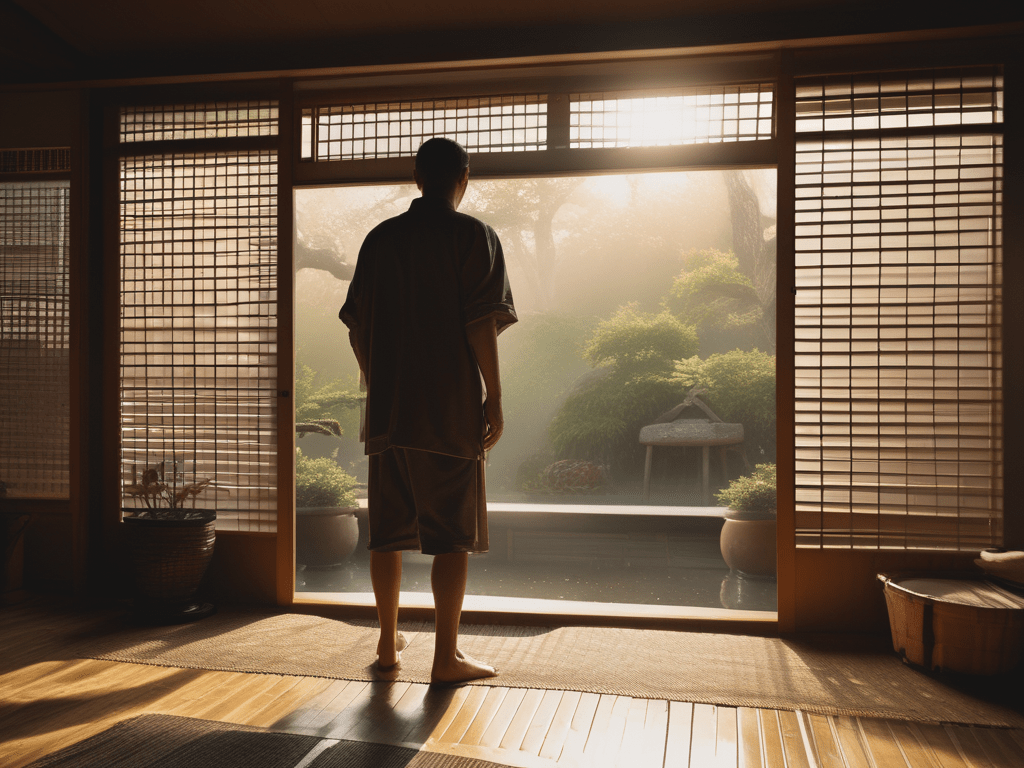
Shoichi decided that he was going to brave the heat before it got too fierce and that a walk around the lake would do him some good. It had taken a few weeks following Kimiko’s stroke for him to get over the guilt of doing anything in his life other than being at the hospital waiting for a change in her condition. One of the nurses kindly suggested that as important as it was for him to be there to support his wife, it was equally as important for his own health to take a break from what, in all likelihood, would be a lengthy recovery process.

As he opened the front door, the air hit him like an industrial heater and although still early in the day the sun was getting ever brighter as it rose into the sky, causing him to squint. It smelled much fresher than when he had returned from Tokyo the night before and the fragrance from some sweet honeysuckle growing in an earthenware pot by the entrance caught his nostrils. The honeysuckle was given to his wife as a present by a neighbour in return for the help that Kimiko had given her when she had moved into the neighbourhood from the outskirts of Tokyo following the death of her husband. She had become very good friends with Naomi and over the years had spent many days together scouring the plant nurseries for flowers to brighten up their days as well as their respective gardens. Shoichi closed his eyes to picture their smiling faces and to recall their laughs as they sat in the shade at the front of the house drinking chilled wheat tea and gossiping about the local news which they had heard courtesy of the proprietor of the Beauty Wai Wai hair salon they both frequented.

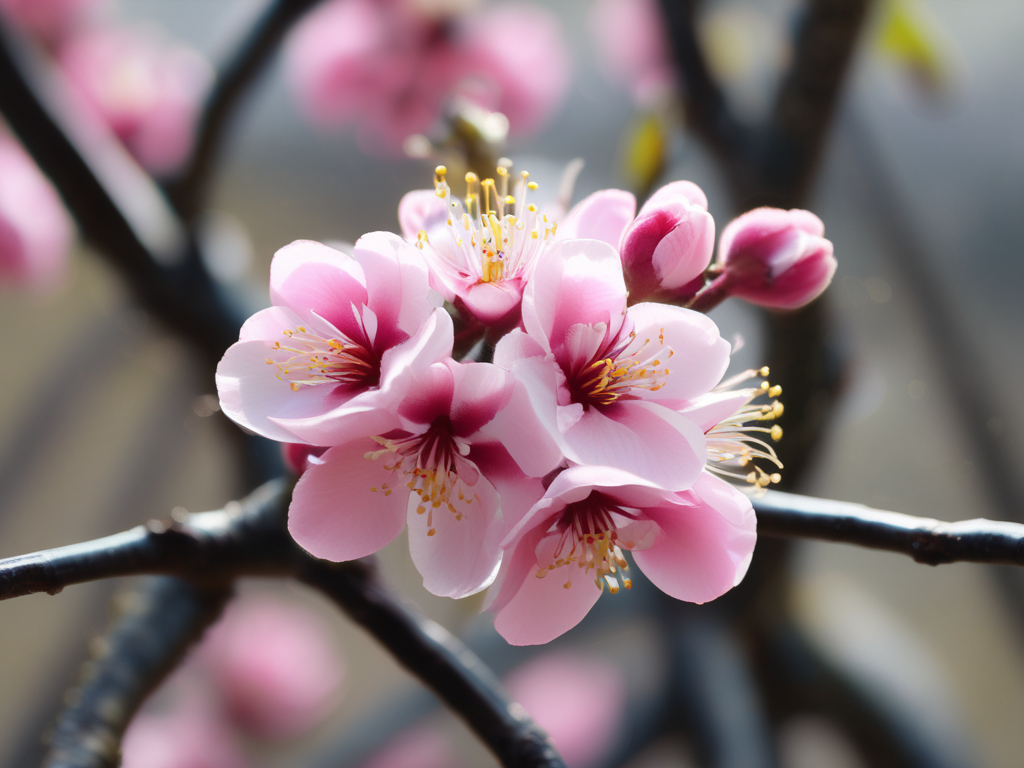
The cicadas seemed to be increasing in number and subsequently volume as he walked along one of the tree-lined streets from their house towards Lake Semba. Mito was a pleasant place to live; a decent sized city with a population of a quarter of a million that had all the shops and local amenities one could want but at the same time managed to retain a country feel that reminded Kimiko and him of their roots in Ōfunato. However, it was the sheer beauty of the plum blossom trees in Kairakuen Park, to the north east of the lake that had swung it for them when looking for a plot of land on which to build the home that they would live in through to retirement and, if fortunate enough, old age. Three thousand plum trees had been planted in what was still widely regarded as one of Japan’s top three landscaped gardens and home to the annual Ume Matsuri Plum Festival held in March to coincide with the opening of the buds to reveal a variety of blossoms from white through to dark pink. A somewhat more robust flower that the better known sakura cherry blossom, but equally as beautiful and evocative as visitors reflected on the year now coming to an end and cast their minds towards April and what the following year might bring. The trees were now cloaked in dark green leaves and some bore the beginning of what would later in the summer become plums to be picked and pickled in salt with akajiso leaves to give them a blood-red colour.

A light breeze had picked up providing some welcome relief to the heat and humidity that hung in the air. Shoichi stopped at a vending machine and bought a bottle of sports drink to keep himself hydrated before making his way towards the lake that had started to ripple with the wind.

Sitting on a bench, Shoichi thought about the first time that he had paid any attention to Kimiko as a person in her own right and not just identified with her as the best friend of his little sister, Haruka. 

When they had all been growing up, he was already in his third year of elementary school by the time that Haruka and Kimiko had even started in formal education and, for much of his early childhood, his only interaction with her was perfunctory politeness whenever Kimiko came around to their house after school. It was not until he was twenty years old and visiting his parents during the spring holiday from university, that seventeen-year-old Kimiko caught his eye in a very different way.

She had always been a very happy child which somewhat surprised him considering that her father had left when she was young but her mother had done a fabulous job of bringing Kimiko up on her own. She had been heavily into volleyball throughout her time in education and as a result had a very athletic physique from years of training before and after school.  This healthy build together with an attractive face – large tear-shaped brown eyes, a small nose with a flat bridge and broad base and a shapely mouth with pale pink lips – that could be described as almost feline meant that perhaps it was no surprise that he would feel some physical attraction towards her. However, even during his early teenage years when rampant hormones sparked an interest in a variety of girls, many far less pretty than Kimiko, she was always off his radar.

He was at the Ōfunato Tsunami Remembrance Monument paying his respects to friends and relatives who had lost their lives in the earthquake and tsunami that had wiped out large parts of the town in 2011, when Kimiko tapped him on the shoulder.

‘Shoichi-san?’ she asked, peering up at him unsurely.

‘Yes,’ Shoichi replied without turning his head, slightly distracted as he was deep in thought, before realising who was standing in front of him. ‘Kimiko-chan. Is that really you? Great to see you, it’s been a while.’

‘When did you get into town?’ Kimiko asked.

‘Oh, I arrived on the train this morning,’ Shoichi replied. ‘How are you?’

‘I’m great thanks,’ Kimiko said. ‘How are you?’ 

‘I’m alright, thank you,’ Shoichi replied.

‘And how are your family? Are they all well?’

‘They’re all fine, thank you.’

‘That’s good. And is your father still fishing?’

‘Well, not commercially, as it was getting too tough for him, but now he spends most of his days sitting by a river with a fishing rod in his hand.’

‘Why am I not surprised to hear that?’ Kimiko said letting out a small laugh.

‘Some things never change, you know.’

‘Yes, that’s true.’

‘They’ve done a great job with this monument, don’t you think? A really beautiful and fitting tribute.’

‘Yes, they have,’ Kimiko agreed. ‘Is this the first time you have been here?’

‘No, I’ve visited a few times now, always in spring,’ Shoichi said.

‘But it’s hard at this time of the year, isn’t it?’ Kimiko said whilst shaking her head. ‘As the blossoms start to open it’s like nature’s way of reminding us all of what happened back then and I can’t avoid feeling a great sadness thinking about so many of the people in our town who lost their lives.’

‘I know. No matter how many years pass, it seems just like yesterday,’ Shoichi added as he turned towards the monument again silently reading the names of those confirmed dead. ‘I walked around the town earlier and there are many buildings that have not yet been rebuilt. How many years will it be before Ōfunato fully recovers?’

‘So, so sad,’ Kimiko said thinking about the event that changed the face of not just Ōfunato but towns and cities up and down the east coast of Japan. ‘Do you know, I’ve considered leaving so many times to make a clean break but this is where I’ve grown up and I want to stay to see out my childhood here. To leave would feel like a betrayal, like I was walking away to forget, which is something I’m not ready to do.’

‘But you can understand those who did move on. So many difficult memories, a town so different to the one that existed before the earthquake,’ Shoichi replied, now looking out across the bay.

As they continued to talk, Shoichi noticed that Kimiko had not got any taller than when he had last seen her, at a distance, a couple of years ago but her body was no longer the slender angular frame of a volleyball player, it had become more curved and soft-edged. He momentarily tuned out of their conversation as his brain started to tingle – experiencing something he would later find out is called an “Autonomous Sensory Meridian Response” – and focused in on her face as he found himself transfixed, looking at her features with a new and different perspective, noticing things about her like the small freckle on the left side of her nose and the angle of her ears that stuck out ever so slightly through her hair, things that he had never noticed before now. Her face was still unmistakeably Kimiko but the kitten had become a cat. 

Perhaps after the intense experience that they had shared, there was almost an inevitability that the two of them would get together but it was not until he was in his late twenties had Shoichi plucked up enough courage to ask his then girlfriend for her hand in marriage.

They both knew that day in April 2018 that they would not speak about their personal losses. The strong emotion of overwhelming sorrow that lay deep inside them would come rushing out through mention of name alone and they were not yet close enough to share such raw feelings with each other.  

Knowing that they would never again see those whom they had both loved so dearly was still too much to come to terms with.

***

Can’t wait to find out what happens next?


Washing Over Me is available as a download for Kindle or as a printed paperback, both from Amazon:


Kindle Version – Amazon UK
Paperback – Amazon UK
Kindle Version – Amazon US
Paperback – Amazon US

Or search for “Washing Over Me Benjamin Brook” from your country’s Amazon homepage.

Standard
Japan, Writing

Washing Over Me: Chapter 4

第四章

11 March 2011 07:58

I stepped out of the door and into the small garden at the front of our house. Running alongside the garden was a narrow driveway which led out onto the road that wound down the hill to my school, Ōfunato Elementary, along which I walked every weekday. Although the front garden really was quite modest, Okāsan spent lots of her time out here tending to the plants she had carefully nurtured, many from seeds and saplings: fragrant pine bonsai, dwarf azaleas and Japanese maple as well as many others that I had not yet learnt the names of. Later in the year, the sakura cherry tree that she had planted to celebrate my first day at school would be in full bloom and no doubt we would sit out here with our bentō lunchboxes eating and chatting with each other as we had done every year since then. For now, the garden was neat and tidy but in the main lying dormant until the weather warmed up a bit and coaxed it into life.

After about five minutes I was at my friend Haruka’s house, a fairly large traditional Japanese farmhouse with wood panelling around much of the base and swooping curved roofs that were covered in green-grey tiles and finished with open mouthed fish end-tiles. She was already outside waiting for me so that we could walk to school together. Haruka had three older brothers, two who were in junior high and one who was in the final year of elementary school. They had already left to get there in time for the early morning clubs that they had signed up for; Shōki and Shōta did baseball whilst Shoichi – named in memory of his great-grandfather and so had a name that was typically associated with the first- not third-born son – played clarinet in the school band.

‘Morning, Kimiko. How are you?’ Haruka asked, waving to me as I approached.

‘I’m fine thanks,’ I replied. ‘How are you?’

‘Oh, a little tired but I’m good, thanks.’

We started to walk back towards the main road, the gravel drive crunching beneath our feet. To the east and in the distance, the mountains that sat further inland behind Ōfunato rose into the sky looking like scenery in a play, mainly green on account of the generous covering with matsu pine trees, but most still topped with snow as a reminder that winter had not quite let go.

After a few minutes more, we passed “The Living House,” as we liked to call it. For some reason it was surrounded in scaffolding and it was actually difficult to see the building itself because in every available space were pots of flowers and plants growing wildly as they sat  on platforms at different levels created by whatever the owners could get their hands on: old pieces of wood, bricks, breeze blocks, plastic crates. Even the scaffolding was adorned with hanging baskets and winding vines. Although we had passed this house hundreds of times, it always made us happy and I enjoyed watching the flowers come into bloom as winter moved into spring and then into summer.

‘It’s so cold isn’t it? I couldn’t get of bed this morning,’ I said. ‘If it wasn’t for Okāsan making my favourite breakfast I think I would have stayed there all day long!’

‘Me, too. I can’t wait for spring to arrive and for the weather to warm up a bit,’ Haruka said turning towards me. ‘I really don’t like our old paraffin heaters and dad refuses to pay for more modern ones. He says that the heaters we’ve already got do the job and why should he replace them with newer ones that have a built-in fan.  He even suggested that if I wanted blown hot air so badly that he would get my brothers to take it in turns to sit behind the heater and manually fan the air in my direction. He’s really missed the point.’

‘Although you have to admit, that’s pretty funny and such a typical thing for your dad to say!’ I said with a smile.

Her father was a local fisherman and tougher than most. Since his early childhood, he had followed in his own father’s footsteps entering the fishing trade and had made a decent living out of the abundance of saury fish found out in the Pacific. The arrival of a girl after three boys came as a bit of a shock, although I’ve seen that way that he treats her, she’s just like a princess to him.

‘By the way, how did you get on with the maths homework that we were set yesterday?’ I asked as I thought about my efforts from the night before.

‘Oh, it was really hard,’ Haruka replied. ‘It took me twice as long as Kinoshita-sensei suggested it would take and I got a headache by the time I had finished.’

‘Phew, glad it wasn’t just me!’ I said, genuinely relieved as I did find it very challenging.

I thoroughly enjoyed spending time with Haruka. We’d known each other since nursery and as both of our families had close ties with the area, we were pretty certain that we’d be moving up through junior high and then high school together. There was also a sense of balance that we brought to each other’s lives. I was an only child and my father had left Okāsan for another woman a year after I was born so as long as I can remember it has been just the two of us. I wasn’t lonely but I did sometimes dream of having a big family and whenever I went to her house after school to study or more often talk about the latest pop sensation or sentimental soap-opera it was like walking into a zoo and I loved it! Likewise, whenever Haruka wanted some peace and quiet or a bit of girl-only time, she would come to visit me.

Turning right at the bottom of the slope and then immediately left, we walked past a couple of empty plots of land that were waiting to be built on and eventually become someone’s home. A little further on, once we had passed the apartment building where some of our teachers lived, the wide open ground and the L-shaped three-storey concrete school building came into view. The weak sun gradually became obscured by cloud, just as the weather forecast on the television last night had said it would. It seemed that the day was going to be a little dreary and overcast but I wouldn’t let a bit of grey weather dampen my spirits.

I walked with Haruka through the teachers’ car park into the school’s genkan, changed from my outdoor shoes into white indoor plimsolls, marked with my family name Yasuda, and started to make my way up to our classroom on the third floor.

‘I wonder what sort of day we’re going to have?’ Haruka asked.

‘I don’t know but whatever happens I’m going to enjoy it!’ I replied, bounding ahead of her up the stairs.

***

…I wonder where I’ll go this time…

…it was fun going west…

…but perhaps I’ll head north if I can…

…somewhere a little cooler…

…if only I could get this damn stone off my head…

Standard
Japan, Writing

Washing Over Me: Chapter 3

第 三 章

25 August 2075

A genderless electronic voice from his watch told him that it was 07:25. The patterned flannel blanket that he had used to cover himself when he went to bed had been kicked towards the bottom of the futon and was now twisted around his feet. Although he had slept for longer than usual, it had not been a restful sleep and Shoichi recalled hazily having woken up frequently during the course of the night, sweating from the heat and becoming disorientated on account of his choice to sleep in the tatami room after last night’s hospital visit. The air conditioner could be set to come on if the temperature and humidity rose above a certain level, but Shoichi had chosen not to use this feature as it left his throat and nose feeling dry by the time morning came around.

The cicadas were singing in the trees. The drone of the kumazemi cicada interplayed with the high pitched revving motorbike of the minminzemi cicada; a swarm of insect-sized Hells Angels, different but equally complementary.

Waah waah waah waah !

Weee-oh weee-oh weee-oh weee-oh weeeeeeeeee!

If summer could have a sound it would be this; it was already heating up again outside.

Having freed his feet from the manacles of the blanket, Shoichi rose from the futon and loosened his back by stretching towards the wood panelled ceiling with both arms, leaning over to his right side then his left, enjoying the muffled clicks from his vertebrae. He felt thirsty so walked to the kitchen for a glass of water before heading through into the wet room for a lukewarm shower to wash away the latest film of sweat that had formed on his skin.

The bathroom had cost him a small fortune when the house was built. The construction company managing the build had included a very basic model of wetroom and standard acrylic bath in their original design, which Kimiko had quickly dismissed. She was not looking for something luxuriously appointed or ostentatious, rather, a design that would remind her of the bathroom that she enjoyed using as a child when she lived in Ōfunato, a coastal town about four hundred and fifty kilometres further north of Mito. The bath she recalled fondly had been made of hinoki cypress wood and gave off a wonderful fragrance as it filled with hot water. Using some pictures Kimiko provided of her childhood bath, the company went to great lengths to source a tub that came from the same region of Japan and that was made by local craftsmen as opposed to mass-production. Money was tight back then and Shoichi was reluctant to put them into an even more precarious financial position considering the size of the mortgage they were about to take on. However, later that evening, over dinner and a bottle of wine, Kimiko explained the sentimental value of the type of bath she wanted in their home, after which he had no further reservations about digging deeper into his pockets to pay for this pricey customisation to the build.

Temporarily refreshed from his shower, Shoichi walked upstairs and got dressed in front of a fan to try to get the fresh sweat to evaporate from his body before it had chance make his clothes damp, but which proved to be a thankless task. He then went down to the kitchen to make a drink and get something for breakfast.

To start, he ground up some coffee beans and spooned these into an antique looking metal stove-top espresso maker he had bought from a small family-run shop he came across whilst using up some spare time he had gained from a cancelled meeting during a business trip to Naples. There were modern versions of these available that ground the beans automatically and then extracted the coffee using a direct steam feed from the hot water system but the taste was somewhat too clinical, too perfect, lacking the rustic flavour that he was able to achieve from this low-tech model. He had also not fully washed his espresso maker for years, preferring instead to rinse out the bottom half that held the water and leaving the grounds in the upper bowl until he used it again the following day. Like an unwashed wok, where the flavours from the previous meals served to enrich the next one being cooked, the coffee contained a depth that he found comforting in a world where instant gratification continued to be the flavour of the day.

Not wanting to spend too much time on breakfast as he was not especially hungry, his appetite suppressed by the heat, Shoichi decided to make some toast which he ate with fresh butter from Hokkaido and a Tiptree brand of strawberry jam that he had picked up from the food court of a high-end department store in the Kichijōji district of Tokyo. The jam was made in England and while he ate he wondered about a life thousands of kilometres from his own, of someone working in the factory that produced this jam he had just spread onto his toast; an existence very different from his current daily routine travelling from home to hospital and back again.

How long would his life, their life, be on pause?

Standard
Japan, Writing

Washing Over Me: Chapter 2

第 二 章

11 March 2011 07:15

I could tell that it was time to get up and start getting ready for school as the sun had begun shining through a small gap in the curtains where I had not closed them fully the night before. It was cold outside and cold in the house but really warm in my bed.

 ‘Kimiko, it’s already past seven o’clock,’ Okāsan called up to me. ‘Wake up please!’

Just five more minutes, I thought to myself, head and body buried under a thick down quilt and two blankets.

If I wasn’t so hungry, and if the wonderful smell from her cooking hadn’t begun drifting up the stairs and under the bedroom door, I might have tried to sneak five minutes more but with a deep breath I threw back the covers and swung my legs out of bed and onto the floor. Wriggling out of my thick winter pyjamas, I shivered as the cold hit me but this made me move quickly and heave a thick grey sweater over my head and then pull on and fasten my jeans. The wool socks I had slept in last night weren’t coming off until later. I can’t stand having cold feet.

I opened the door and walked down the steep flight of wooden stairs into the open plan living room and kitchen.

Ohayō gozaimasu,’ Okāsan greeted me with a big smile and her usual cheerful voice. ‘Did you sleep well?’ 

‘Morning,’ I replied, rubbing the sleep out of my eyes. ‘Yes, I slept well, thanks.’

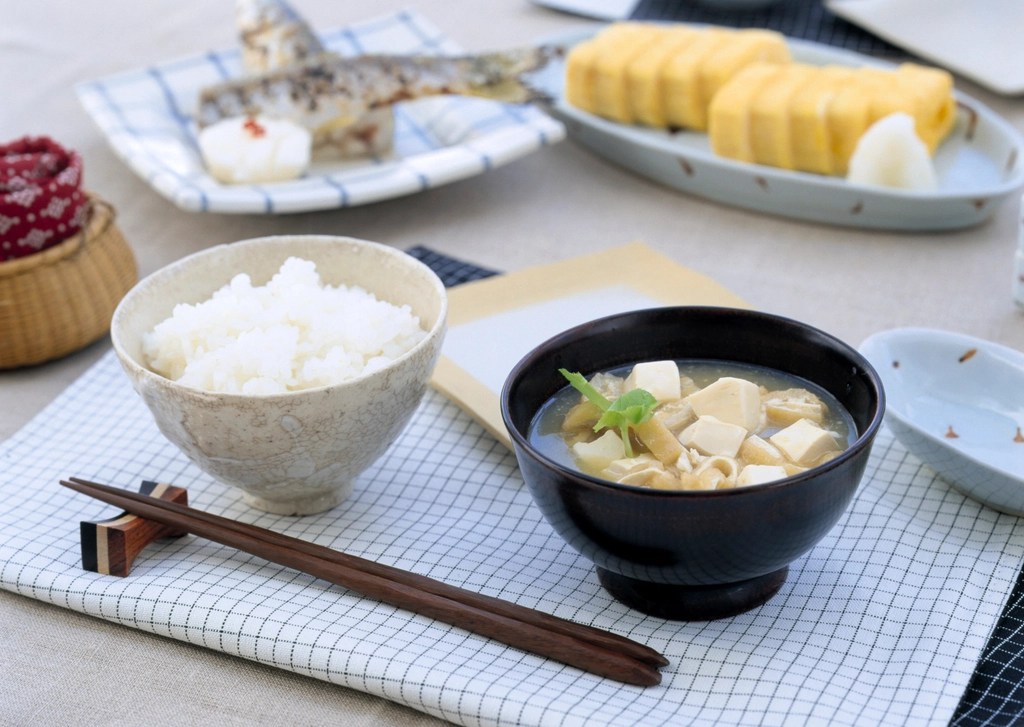
Breakfast was my favourite: grilled salmon, tamago-yaki sweet rolled omelette, nattō fermented soya beans, rice and miso soup. Many of my friends favoured a more Western-style breakfast of cereal or even toast with sausages and eggs, laughing at my preference for something very Japanese but then they hadn’t tasted Okāsan’s tamago-yaki which was to die for. I began devouring the food just put in front of me. In just ten minutes, I had eaten the lot and washed it all down with a cup of green tea from my favourite red and white Hello Kitty mug.

‘Don’t forget Kimiko that I have to work late tonight so you’ll have to let yourself into the house after school,’ she said. ‘I’ll set the rice cooker before I leave and there’s some leftover beef and vegetable stir-fry in the fridge for you to heat up in the microwave. Do you think that you’ll be OK?’

‘Mum, I’m ten years old now and this is not the first time that you’ve had to work late, is it?’

‘I know, but I’ll always think of you as my little baby,’ she said as she walked across the room and kissed me on the head.

Gochisōsama deshita ‘Thanks for cooking,’ I said as I got down from the table and went to the bathroom to have a quick wash, straighten out my hair, which was sticking out badly from where I had slept on it, and to clean my teeth.

It was approaching eight o’clock and I would have to leave shortly so I ran upstairs to change out of my sleeping socks and put on fresh ones for school. I grabbed my rucksack, hurried back down the stairs and, having given Okāsan a quick hug, put on my shoes in the genkan and opened the front door.

Ittekimasu! ‘I’m off now, see you later!’Itterasshai! ‘Have a good day!’

***

…I’ve got a blinding headache…

…can’t believe that it’s been over fifteen years since I last got out…

…I need a chance to stretch again…

Standard
Japan, Writing

Washing Over Me: Chapter 1

第 一 章

24 August 2075

Kimiko Tanaka lay in her bed in a private room in a hospital in central Tokyo. She had been in a coma for the past three months following a serious haemorrhage to the left side of her brain that struck as she was preparing a simple dinner of grilled mackerel, miso soup, pickled daikon radish and rice for herself and her husband.

Shoichi sat at the bedside holding his wife’s hand as it lay on top of the smooth white sheet, staring at the face that had remained unchanged since that day, unchanged since he heard  the crash of  plates from the kitchen and came running to find Kimiko lying on the wooden floor. Outside, the heat and humidity of summer was oppressive, even late into the evening. Inside, the air was cool and dry.  The only sounds were the gentle hum of the air conditioner mounted on the wall and the slow rhythmic beep emitting from the machine keeping Kimiko alive.

 ‘When will you wake up, Kimiko?’ he asked in a weary voice that was nevertheless still laced with hope.

Each time he mouthed the question, he longed desperately to see her eyes open slowly, for a smile to form across her face and for the doctors and nurses to come running into the room to congratulate the patient on a remarkable against-the-odds recovery. But this was not a Hollywood film, it was real life and this time, like the hundreds of times before, his question went unanswered.

Shoichi checked the time – the projection on the wall showed 22:17 – and he knew that he should make a move to get home for some sleep.

‘Goodnight,’ he whispered and kissed her gently on the cheek, in the space between the ventilation tube supporting her breathing and the myriad of wires running around her face that were monitoring the activity of Kimiko’s brain.

He left the room and made his way along the corridor, with its shiny slate-grey linoleum floor and whitewashed walls, towards the overnight nurses’ station where he was bid farewell by a droid that watched over the entrance as well as monitoring the vital signs of all the patients under its care, ready to alert the medical teams who slept in pods, like bees in a hive, located away from the wards but still on the hospital site.

Ikebukuro station was a short walk away but in no time the light cotton summer shirt he was wearing had begun to stick to his body, especially his back. This year the rainy season had come late and even by mid-August the annual tsuyu was holding on. But the summer had finally arrived and all the moisture now hung in the ether as it evaporated from the sodden ground which made moving around in any non-climate-controlled environment an uncomfortable experience, rather like being stood, fully clothed, at the edge of a heated indoor swimming pool.

The transition from the relative darkness of night – his walk was punctuated by headlights from an occasional passing car and red paper lanterns hanging outside izakaya bars – into Ikebukuro station made his eyelids narrow as the bright overhead banks of LEDs and plethora of advertising images flooding into his pupils. Although he knew the way to the train, having done this journey many times before, he allowed himself to be led by the personalised under floor directional lighting, snaking from the entrance barrier to platform three to board the 22:38 Yamanote line train to Ueno where he would change to a Jōban line train to their home in central Mito.

The sleek metal tube glided into the station at 22:37 and as it did he recalled reading something in a newspaper recently that it had been twenty years since the last late arrival across the whole of Japan, such was the reliability of the fully-automated computer controlled and operated JR network. A minute later the train left Ikebukuro and Shoichi sat in the middle of a bench seat that ran the full length of the carriage. He spent the journey to Ueno staring at the window opposite him which, due to the dark, was like an elongated mirror in which all he could see was his own reflection. He noted that he looked tired, an empty shell such was his life at present. Once the train pulled into Ueno station, Shoichi stepped off the carriage and walked across the platform to board the Jōban line train that was already there waiting to depart.

The carriage he was now on was relatively empty, perhaps not surprising considering the time, and he was joined by about a dozen other passengers, mostly snoozing, as they made their way out through the sprawling suburbs of the metropolis into the wide open spaces of rice fields to the north east. As he began to fall asleep he could vaguely hear a conversation being held in what he guessed was English between two Caucasian foreign men also making their own journey from the sensory overload of Tokyo back to a slower-paced life in the countryside.

The vibration on his wrist shook Shoichi out of his slumber just seconds before the animated Den-Den customer host bowed respectfully and announced their arrival in Mito. The travel companion timepiece was a present from his wife to celebrate his seventieth birthday and retirement, given to him with more than a hint of mischief as he had, during his working life, frequently fallen asleep on the train home either from exhaustion as an overworked middle-manager or due to one too many beers at the end of the day, causing him to miss his stop and end up in Hitachi, six stations further north than his intended destination. He hadn’t needed it much since retiring but was grateful he hadn’t been left to sleep through tonight especially as he was on the last train and a ride back in a driver-less Navi-cab would have been an unnecessary expense and delay to getting home.

The doors opened noiselessly, he stepped off the train onto the platform, ascended the stairs to the exit gates which he passed through with a touch of his hand on the scanner and out again into the night. The station clock’s analogue hands showed just after midnight. The air smelt damp, heavy, and slightly rotten as he made his way up a shallow slope, heading back to their home which stood at the edge of Lake Senba, close to Kairakuen Park. There were a handful of karaoke bars and hostess pubs still open and the silence of the night was broken by an opening door through which passed a group of drunk but cheerful work colleagues who piled out onto the street in search of a steaming hot bowl of ramen noodles, gyōza dumplings and more heavily chilled beer.

As Shoichi turned off the main road that ran from the station in the south of the city towards the northwest and then directly west towards the traditional Japanese ceramics town of Kasama, the light levels dropped and he had to stop momentarily to allow his eyes to re-adjust to the darkness. The densely populated residential districts were characterised by narrow streets cluttered with bicycles, pot plants on multi-tiered aluminium shelving and vending machines selling e-cigarettes, synthetic alcohol and sugar-free soft drinks. The sky was clear and even with some light pollution from the street lamps and neon advertising panels further back on the main road, there were plenty of stars visible. He picked out some of the constellations that he found easy to locate such as Cassiopeia, The Plough and Hercules as well as those that were trickier, including Boötes, Cygnus and Delphinus. Although Shoichi had often thought about, but never made the commitment to buying a telescope, he nevertheless found staring up towards the heavens a peaceful and calming experience that brought some perspective on any challenges he may be facing in his life.  Kimiko in hospital in a serious but stable condition was by far his biggest personal challenge to date. The movement of a cat jumping off a grey mottle-textured brick wall broke his moment of contemplation of life and the workings of the universe and brought his head back down to earth as he made his way further into the neighbourhood of mainly high-end pre-fabricated kit houses of which his own home was one.

Opening the small gate next to the sign on the border wall to the house that let everyone know this was where the Tanakas lived, Shoichi walked up the short path to the front door, positioned his eye in front of the retina scanning equipment – installed as state-of-the-art domestic security when the house was built forty years ago – and pulled open the door once the cartoon bulldog security guard in the small screen mounted under the scanner confirmed his identity, saluted and welcomed him home.

Motion sensors picked up his presence, the lights turned on and the air conditioner beeped, the small flap at the front to direct the air flow opened and emitted the familiar creak of gases moving as the unit fired into life. Shoichi removed his shoes in the genkan entrance, stepped up into the house and padded across the perfectly smooth and level dark-brown stained wooden floorboards into the kitchen to wash his hands and gargle before fetching himself a beer from the refrigerator. As he removed the can from the shelf, a Z-code scanner registered the beer as the second from last one and sent an order through to the local supermarket to add to the list for the next grocery delivery in a few days’ time. Twisting the lid, a hole opened in the top of the can and he poured two-thirds of the beer into a cut-crystal glass given to him as part of a gift set commemorating one hundred and fifty years of the Kirin brewery that also contained twelve cans of Kirin Original Brew.  He ran his fingers over the laser etching of a mythical Chinese chimerical creature called a Qilin, after which the company was named, before bringing the glass to his lips and taking a couple of deep drafts. The chilled liquid was almost painful as it ran down his throat but it was a welcome sensation, in contrast to the numbness of recent months, and he closed his eyes to savour this small sensory pleasure.

Moving through to the living room area of the house and flicking on the holovision with a wave of his hand, he caught the tail end of a late night news broadcast. There was a feature about a man who had been arrested for killing three of his neighbours over a five year period. The familiar shots of police investigators carrying out sealed boxes of evidence from the man’s apartment filled the image field and the story concluded with a summary of events leading up to the arrest from the station’s visibly sleep-deprived reporter. Shoichi felt detached from the emotion he knew he should be feeling towards yet another murder case, his body drained.

Beer finished, Shoichi was too tired to climb the stairs to the bedroom he shared with Kimiko let alone have a shower, so instead unfolded a futon in the Japanese-style tatami room on the ground floor, got undressed, crawled under a light blanket and fell asleep as soon his head hit the buckwheat-filled pillow.

***

Back at the hospital, a part of Kimiko’s brain was waking up. Deep inside the hippocampus were electrical pulses so weak that the doctors would not notice them for another day through the scans they were running routinely to check for any signs of healing but strong enough for Kimiko to start to recall memories from long ago.

Standard
Japan, Writing

Washing Over Me: Prologue

序章

1 January 2011

Steam filled the room as I sat motionless in the bath. Water that was almost too hot for me to bear came right up to my neck, with just my head sticking out above the surface. I had slid open the window that I was now facing and, through the orange glow of a streetlight, could see the snow falling silently onto the roofs of houses across the road from mine. This was my favourite place to be in winter. Temperatures falling to as low as minus ten degrees Celsius at night, and without central heating, I thought to myself that living in the north of Japan was tough.

New Year’s Day had been a typical one and my stomach bulged from all the food that Okāsan, my mother, had prepared and that I had eaten. When I spoke with friends at school about their New Year, I was often jealous of the size of their families and the liveliness of their celebrations. However, when it came down to it, I would not want to spend the time any other way.

Lost in my own thoughts, staring out into the night, I jumped at first when I heard the sliding door to the bathroom opening slowly. Once I saw the outline of Okāsan’s head peeking around the white plastic frame, I breathed a sigh of relief.

 ‘You startled me!’ 

‘Sorry Kimiko, I didn’t mean to scare you,’ Okāsan said. ‘It’s cold, isn’t it? Would you mind if I got into the bath?’

‘Of course, come in. It’s really hot in here!’ I replied.

Okāsan undressed just outside in the senmenjo changing area that contained a top loading washing machine and a fairly modern but well-used vanity sink unit and then stepped into the wetroom to get washed before joining me in the bath. It had been a while, probably close to six months, since we had last bathed together and I couldn’t help but notice that she looked thinner than before. For as long as I can remember taking notice of such things, her body had always been slim, her breasts small, her hips narrow – she was certainly not as curvy as some of the women that I watched in films on television – but the skin seemed to hang a little more from her frame as if the fat had just melted away.

She sat down on the low wooden stool in front of the shower unit and turned it on. I once asked her why hot water smelled different to cold and she told me she thought that it was something to do with minerals in the water giving off odours when heated up.  We were going to look it up on the computer but something distracted us that night and we didn’t get around to it.

I loved the way that she washed her hair; she gave it a real soaking to start with and then spent a long time working in the shampoo using her fingertips, moving in small circles from front to back and then side to side, always four times in each direction. Having done this, she rinsed and then carried out exactly the same movements using some coconut-scented conditioner. For the final rinse, she pushed all of her hair forward and let the water run over it whilst massaging away the little bubbles and soap suds.

As she lowered herself into the bath, the water level rose and some of it sloshed over the side and onto the wetroom floor before draining away. Her face flushed with the heat and it looked as though she had put on some of the rouge that she liked to dab onto her cheeks, especially during the winter when the cold bleached any colour out of her complexion.

‘Oh, that feels good!’ she exclaimed, rubbing the base of her neck, loosening the muscles. ‘This really is the best way to relax. Have you had a good day, Kimiko?’

‘It’s been great, thanks. The food you made was delicious,’ I said, thinking about all that I had eaten.

‘I’m glad that you enjoyed it,’ she said as she gently held my face in her hands to get a closer look at me.

‘Yes, I really did. Look how much I ate!’ I added as I stood up to show her my rounded belly, hard from all the rice, simmered shrimp, grilled sea bream, sweet black beans and pickled vegetables.

‘Wow, I knew that you were getting stuck in but I didn’t realise how full you had got! That makes me very happy to know that you still enjoy my cooking,’ she said patting my stomach.

‘It’s the best. I don’t know what I’d do without you,’ I told her as I sat down again in the water with a splash.

‘Oh well, at least I have my uses!’ Okāsan replied and started laughing.

I don’t know how long we were in the bath that night but by the time we got out our skin was all wrinkled, especially our fingers which looked like umeboshi pickled plums. I can’t even remember what else we talked about but that moment with her is a memory that sticks in my mind. It was the last ever time that Okāsan and I bathed together.

Standard
Japan, Writing

Washing Over Me: Serialising my novel through weekly blog posts

I have decided to serialise my novel, Washing Over Me which I wrote and self-published in 2016, through a series of blogs on this website. Writing this book gave me a huge amount of pleasure and helped me through a tricky stage of my life when I was doing some soul searching, wanting to create something that would define me (as opposed to how I was defined through my family role or through work).

Although it is available on Amazon, where you can purchase a version for Kindle or a print version as well as read through KindleUnlimited, I never shifted the sorts of volumes that meant the algorithm brought this one to the top. Nevertheless, I think it is a story worth telling and sharing more widely.

And so, starting with the synopsis below to whet appetites, I will be creating a new post each week to get my work out there for anyone to read, should they so wish. Enjoy!

Synopsis

In the height of the Tokyo summer, Shoichi sits at his wife’s bedside hoping that today will be the day when she wakes from her coma. Without Kimiko he finds himself lost in the modern world. Frequently daydreaming, his mind wanders back through the past to key moments in their life together: breaded pork cutlets, unusually coloured tomatoes and the most beautiful sunrise he has ever seen. Shoichi also lives in fear. How will he cope with the loss of yet another person whom he loves so dearly?

In the depths of her mind, it is early spring and Kimiko is in Ofunato, a small coastal town in the northeast of Japan. As ten-year-old Kimiko wakes up that morning all she can think about is the cold and how much longer she can stay in bed before succumbing to the aroma from breakfast that is drifting up the stairs. Right up to the point when the earthquake strikes, she has no idea that this is the day when her world will be turned upside down. There is only one person who understands what she went through and she needs to get back to Shoichi again, wherever and whenever he may be.

Standard